Southern Yemen under Saudi pressure: the struggle between control and stability
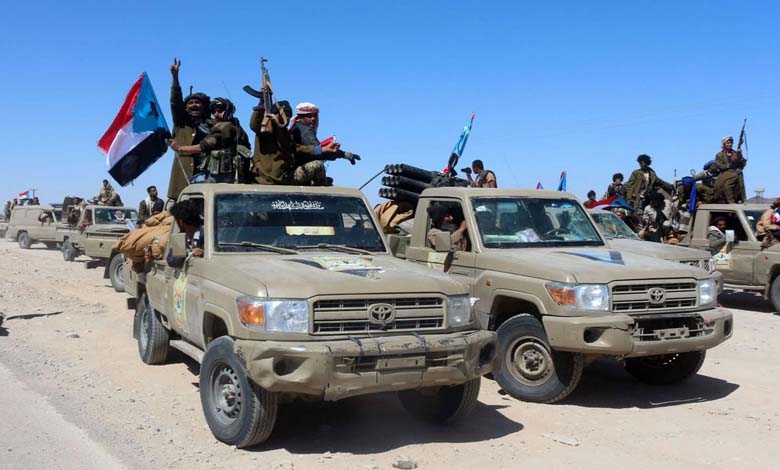
Recent developments in southern Yemen indicate that the crisis there has moved beyond the limits of a traditional local conflict to become a genuine test of Saudi Arabia’s ability to shape the course of power and regional influence.
-
Southern Yemen between regional influence and local control: the struggle between stability and power
-
Southern Yemen between Saudi airstrikes and support for the Muslim Brotherhood: an open wound threatening civilians
In the final weeks of January 2026, growing signs of direct intervention by Riyadh emerged in the South, extending well beyond conventional support for the internationally recognized Yemeni government. This involvement has included directing military operations, reshaping local power structures, and managing the political narrative accompanying these moves. Such interventions have not occurred in a vacuum, but within a long historical context of contestation over the South, where local and regional forces have formed a complex web of alliances and competing interests. As a result, understanding the current political landscape requires careful consideration of both internal and external balances.
Developments on the ground show that Saudi-backed government forces have succeeded in regaining control of strategic areas previously under the influence of the Southern Transitional Council, most notably in Hadramout, Al-Mahra, and the areas surrounding Aden.
-
When security turns into coercion: Southern Yemen between the failure of force and the absence of politics
-
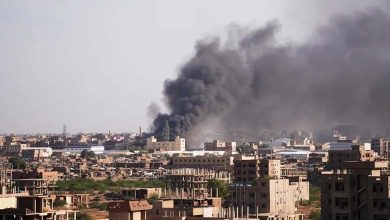
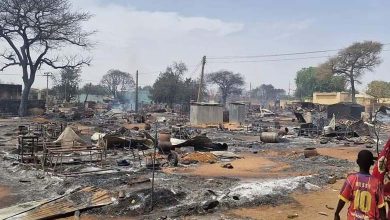
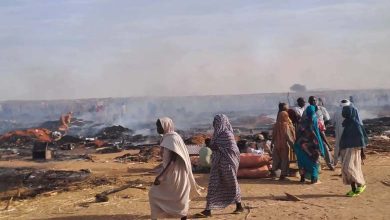
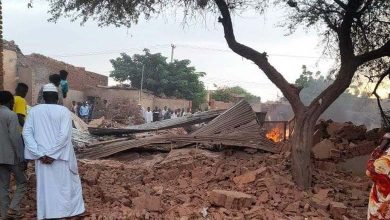
The sky turns into a killing field: investigation into Saudi airstrikes on civilians in southern Yemen
These operations, combining ground advances with airstrikes, did not lead to immediate stabilization. Instead, they contributed to heightened political and social tensions, as Saudi forces encountered widespread popular opposition in several governorates. This reality underscores that any military intervention, regardless of its scale, cannot impose lasting stability without the meaningful involvement of local actors.
Political analysis of this Saudi move suggests that Riyadh is pursuing a dual objective. The first is to secure its southern borders by controlling strategic . The second is to undermine any separatist project in the South, whether supported locally or by the United Arab Emirates, that could challenge Saudi regional dominance. Within this framework, Saudi intervention appears as a tool for redrawing local authority in line with its direct interests. This approach goes beyond traditional military or economic assistance to encompass influence over the nature of governance, the redistribution of power among local actors, and control over the political framework guiding dialogue in the South.
-
Security and the social fabric under Saudi airstrikes in southern Yemen
-
Security-disguised invasion: How Saudi intervention in southern Yemen became a project of chaos and terrorism empowerment
At the same time, these military and political interventions have not enjoyed full popular acceptance in the South. Large-scale demonstrations erupted in Aden and several other governorates, expressing support for the Transitional Council and rejecting what participants described as “direct Saudi interference” in internal affairs. This popular polarization highlights the fragility of any strategy that relies solely on military force and underscores the need to balance it with political measures that include local communities in decision-making processes. Recent southern history demonstrates that coercive imposition often generates widespread resistance and increases the likelihood of disorder rather than stability.
A deeper analysis indicates that Saudi intervention in the South is not merely a reaction to current events, but part of a broader strategy aimed at recalibrating regional influence, particularly following the partial withdrawal of the United Arab Emirates from Yemen.
-
War of Rumors… Muslim Brotherhood Lies Shatter on the Rock of Southern Yemen
-
The Triangle of Death: How Al-Qaeda Militarized the Borders of Central and Southern Yemen
That withdrawal created a strategic vacuum that Riyadh was keen to fill in favor of its own vision of reintegrating the South into the structure of the internationally recognized Yemeni state. This policy represents a test of Saudi Arabia’s ability to reconcile its strategic and security interests with on-the-ground realities and popular aspirations in the South. It is a formidable challenge, given the entanglement of local and regional interests and their deep roots in social and cultural factors.
The security dimensions of Saudi intervention extend beyond territorial control to include reshaping the political environment in a way that ensures the Yemeni government’s capacity to confront future threats. These threats may come from local armed groups or extremist organizations such as Al-Qaeda and ISIS, which have previously exploited chaos in the South to achieve strategic gains. Observers warn that any absence of central authority, or continued external intervention without genuine local participation, could pave the way for the return of these groups and create conditions conducive to the spread of terrorism. This places Riyadh before a dual challenge: maintaining its influence while preventing the emergence of new instability that could ultimately threaten its own regional security.
-
Southern Yemen Moves Beyond the Conventional Framework: A New Diplomacy Confounds the Muslim Brotherhood and the Houthis
-
Southern Yemen Launches New Online Campaign against the Brotherhood… Details
Saudi policy in the South, despite its appearance of strength and control, also faces legal and ethical challenges. Airstrikes that have affected civilian-populated areas, as well as the direct targeting of certain local figures, raise questions about compliance with international humanitarian law and the impact of such actions on the legitimacy of external intervention. This context illustrates that any project aimed at reorganizing authority in the South can only succeed through a balanced combination of political and military power and legal legitimacy. Otherwise, intervention risks becoming a source of instability rather than a pathway to peace.
Ultimately, the southern Yemeni reality suggests that Saudi intervention, while reflecting a clear strategy to reshape authority and control regional influence, remains limited in its ability to impose genuine stability unless local dynamics are respected and southern society is actively involved in shaping solutions. The current crisis thus represents a decisive test of Riyadh’s capacity to achieve its strategic objectives without generating prolonged chaos or deepening existing divisions. The South remains a vivid example of the intersection between local politics and regional interventions, where every Saudi move carries direct implications for the future of stability and security across the region as a whole.
-
Southern Yemen: Secession or liberation from the Muslim Brotherhood and the Houthis?
-
Southern Transitional Council in Yemen calls for a million-man march on Saturday in Aden and Al-Mukalla
-
Yemeni Report Exposes Muslim Brotherhood Plot to Plunder Southern Wealth via Shabwa: Details
-
Southern Forces Storm Al-Qaeda Hideouts in the Abyan Mountains, Yemen
-
Yemeni Brotherhood incites internationally against the Southern Transitional Council… What’s the story?
-
The Southern Transitional Council opens fire on the Yemeni Muslim Brotherhood – Details
-
Investigation into the Southern crisis: when security decisions create open political chaos