Terrorism in the African Sahel: Mines Open the Way to Money and Territorial Control
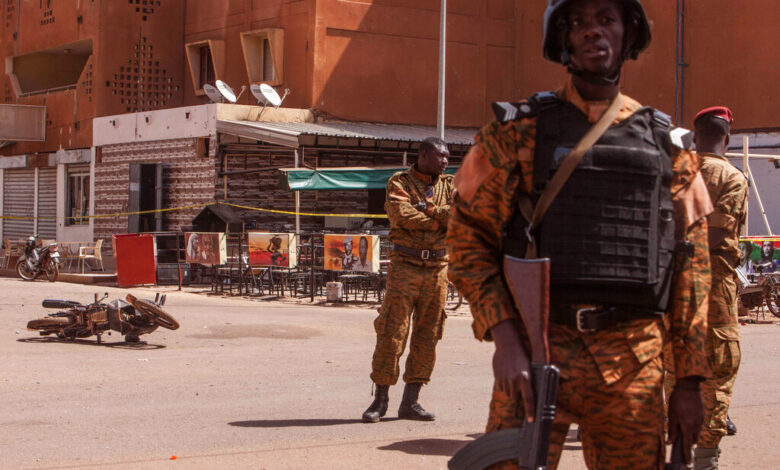
Mining sites play a multidimensional role in terrorist groups’ strategy across the Sahel, enabling them to generate revenue, challenge state authority and expand their territorial control.
A new study published by the Counter Extremism Project examines the likely future of conflict over mining areas in Sahel countries. It argues that these territories could soon become launchpads for terrorist organisations seeking to broaden their control and influence across the region.
-
Al-Qaeda’s threats to Mali: A geopolitical shockwave endangering the African Sahel
-
Gold and Drones: Alternative Funding and New Maps of Terrorist Threats in the African Sahel
The activities of Jama’at Nusrat al-Islam wal-Muslimin (JNIM), an Al-Qaeda affiliate, and Islamic State’s Sahel Province have evolved beyond local extortion operations and attacks on individual gold mines in Burkina Faso.
The two organisations have progressively established sustained control over mining communities, their sources of income and their supply chains across the Sahel.
The groups initially competed for mining areas by attacking government forces and local self-defence units. JNIM and Islamic State’s Sahel Province are now expected to intensify their efforts to strengthen their control over mining regions in Burkina Faso, Mali and Niger.
According to the study, the limited security response and weak state presence outside Burkina Faso’s capital could allow both organisations to move beyond competing for individual mines and assume a dominant role in the regional economy.
-
Breach of Fortified Cities and Strategic Attacks: Terrorism Unsettles the African Sahel
-
Arming Dynamics of Extremist Groups in the African Sahel: What Is the Source of Their Arsenal?
A Growing Challenge to State Authority
The study also found that expanded control over mining sites could provide JNIM and Islamic State’s Sahel Province with a short-term source of income through extortion and the illicit cross-border gold trade. The proceeds could then be used to finance weapons purchases.
These groups may consequently become increasingly capable of challenging state authority in Burkina Faso, Mali and Niger. Their activities could also undermine government legitimacy in mining areas across the Sahel, weakening the authorities’ ability to maintain control over these territories.
Over the next 30 to 90 days, JNIM’s growing challenge to state authority at industrial mining sites is likely to further reduce the affected governments’ ability to exercise consistent control over extraction areas.
According to the study, this could erode the states’ daily control over government-owned sites and create a permanent operating space for JNIM.
-
The African Sahel: The deadliest hotspot of violence on the continent for the fourth consecutive year
-
Rising Terrorist Activities in the African Sahel… “Global Report”
Sustained Targeting of Mining Areas
A report published last August by the Armed Conflict Location & Event Data Project (ACLED) found that terrorist groups were intensifying their attacks on roads, communities and commercial centres located within ten kilometres of mines across the Sahel.
JNIM, a coalition of extremist groups aligned with Al-Qaeda, currently holds the strongest position in the region’s mining sector.
According to the report, the group is competing with Islamic State, the governments of Burkina Faso, Mali and Niger, and their Russian partners from the Africa Corps for access to and control over mining sites.
-
Mauritania Warns: The “African Sahel” Region among the World’s Most Severe Crisis Hotspots
-
Rise in Al-Qaeda activities in the African Sahel… What factors led to this?
Burkina Faso records the highest proportion of mining-related violent incidents in the Sahel. It accounted for 75 per cent of the incidents documented by ACLED between January 2015 and June 2026, compared with 15 per cent in Mali and 10 per cent in Niger.
The report said the global rise in gold prices had intensified competition for the precious metal in the Sahel, turning the mining sector into another source of fuel for terrorist activity.
Control over mining areas allows terrorist groups to generate revenue through taxation and protection payments. It also provides opportunities to recruit fighters, gather intelligence and expand their influence.
-
Behind-the-Scenes Diplomacy: Alleged Methods Used by the Port Sudan Authorities to Win Over the African Union
-
30 Women at His Residence: France Investigates Its Ambassador to the Central African Republic
-
Terrorism in Africa’s Sahel: Cities at the Heart of the Threat and a Worrying Evolution in Combat Methods