The Chinese dragon dons a uniform: how is Beijing filling Africa’s security vacuum?
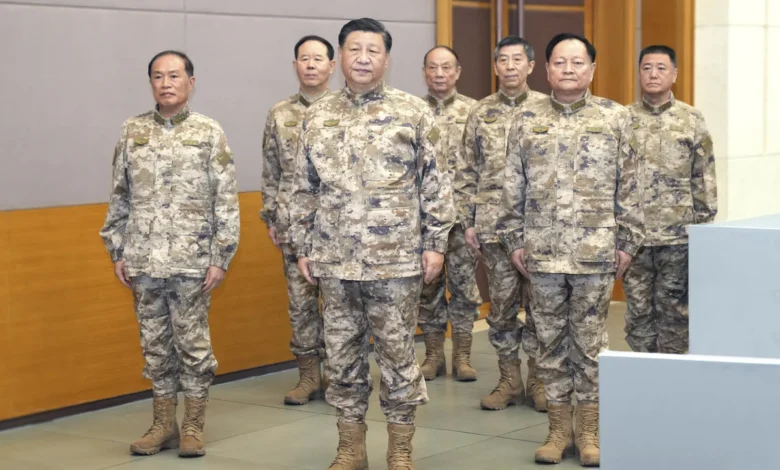
China’s delivery of combat vehicles to Burkina Faso has raised questions about whether Beijing intends to invest in African security after decades of investment concentrated on infrastructure, airports, railways and mineral resources.
Beijing’s recent security assistance has not been confined to Burkina Faso. China has also supplied drones to Côte d’Ivoire and advanced air-defence systems to Mali. In Tanzania, it has become the dominant supplier, accounting for more than 90 per cent of military equipment supplies.
This development in defence cooperation between China and African countries raises serious questions about the significance of the shift. It comes as security challenges intensify across the continent, with armed conflicts shaking countries including Mali, Niger, Burkina Faso, the Central African Republic and Ethiopia.
Filling the vacuum
Several African countries, including Niger, Mali and Burkina Faso, have experienced a wave of military coups in recent years. These upheavals brought to power authorities hostile to Western powers, which turned to Russia for support: initially through the Wagner paramilitary group, then through the Africa Corps, which reports directly to the Russian Defence Ministry.
“The defence agreements China has recently concluded with African countries are striking and reflect an effort to fill the vacuum left by Western withdrawals from many parts of the continent,” said Amrou Diallo, a military expert specialising in African affairs. “Beijing no longer wants to limit itself to investment in minerals and infrastructure.”
He added: “This is one of the few occasions on which China has sought to establish security influence in high-risk areas experiencing bloody conflicts. Its ability to navigate conditions in these countries is therefore difficult to predict, particularly because the instability is not confined to fighting between regular armies and extremist or rebel groups. It also extends into the armies themselves.”
Diallo stressed that “this presents China with an unprecedented challenge, especially in the absence of indications that it might deploy military personnel to countries such as Tanzania, Burkina Faso or Mali. It is therefore difficult to predict the trajectory and limits of China’s security and military involvement on the continent.”
A calculated risk
So far, Beijing has announced no change in its policy towards Africa. Nevertheless, these agreements and the supply of advanced military equipment to several countries have fuelled speculation about a possible shift.
Mohamed Idriss, a political analyst specialising in African affairs, described the development as “a calculated risk for China”.
“It is not sending troops or military units to African countries, but limiting its involvement to supplying weapons and equipment, which theoretically shields it from casualties and battlefield confrontations,” he said.
He explained: “The risk lies in China putting its image and reputation on the continent at stake. Beijing has been known for keeping its distance from internal African conflicts. Simply supplying certain armies with military equipment could threaten its economic influence. We have already seen signs of this in attacks on Chinese companies’ exploration and mining sites in numerous countries, as well as the kidnapping of Chinese nationals.”