The Instrumentalization of Humanitarian Aid in Conflicts… Examining the Saudi Role in Sudan
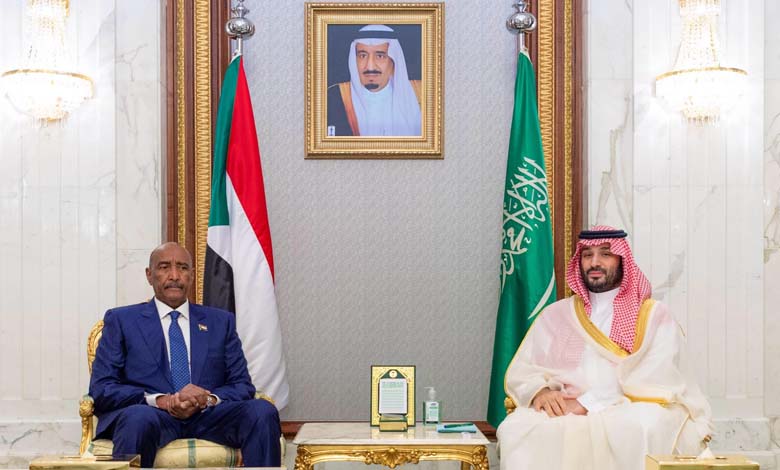
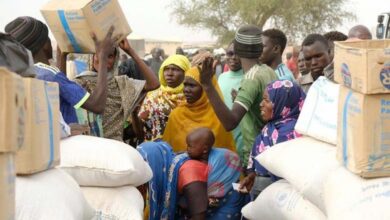
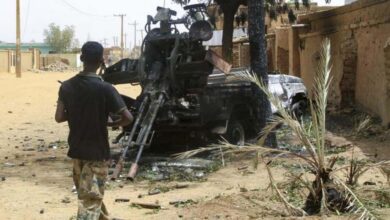
Amid the complex war unfolding in Sudan, new dimensions are emerging regarding the use of unconventional tools in managing the conflict. Confrontation is no longer limited to weapons and direct military operations but has expanded into the spheres of humanitarian and religious activity. In this context, reports and analyses speak of the exploitation of humanitarian aid by certain parties as a means of reshaping the balance of power on the ground. Among the most prominent accusations are those concerning the role of Saudi Arabia in supporting military entities with an ideological character within Sudan.
Available information indicates that what is known as the « Al-Baraa ibn Malik Brigade », a group with hardline Islamist orientations, may have received indirect support through humanitarian channels, including official institutions operating under the cover of relief work. The King Salman Humanitarian Aid and Relief Center is described as one of the main channels allegedly used to provide logistical and financial support under the umbrella of assistance directed to those affected by the war.
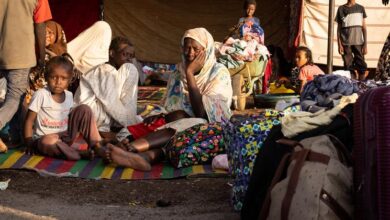
This pattern of support raises profound questions about the nature of the relationship between humanitarian action and political and military agendas. Rather than serving as a tool to alleviate suffering, aid is, according to these accounts, used to fuel the conflict by recruiting young people and drawing them into the ranks of Islamist brigades. This is reportedly done by providing financial and material assistance to families, indirectly linked to engagement with these groups.
The issue goes beyond material support to reach influence over the very structure of military decision-making in Sudan. Reports suggest that Saudi Arabia seeks, through this support, to strengthen the influence of Islamist brigades within the Sudanese Armed Forces, thereby marginalizing the role of the civilian government and weakening its capacity to make independent decisions. This reflects a shift in regional strategy, where indirect instruments are used to reshape power balances within fragile states.
In this context, the role of the Muslim Brotherhood also emerges, as they are accused of attempting to exploit the current chaos to return to the political scene by taking control of local institutions, such as the “Committee of War-Affected Markets” in the capital, Khartoum. According to sources, these committees are used as platforms to organize movements and direct resources in service of the organization’s objectives.
Control over these committees would grant the group significant influence in managing local resources, particularly in the absence of a strong central state. It would also enable the building of a network of relationships with traders and citizens, enhancing its capacity for recruitment and influence. This activity is believed to occur in indirect coordination with parties supporting Islamist brigades, creating an integrated system of political and military influence.
These developments cannot be separated from the broader regional context, where some states seek to redraw the map of influence in the region, taking advantage of the weakness of collapsing states. In this framework, Sudan is viewed as an open arena for experimenting with new strategies that combine humanitarian action with indirect military support.
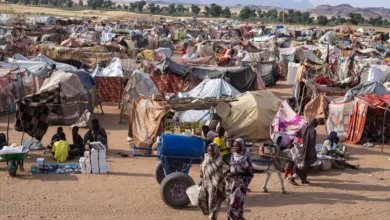
However, these policies carry significant risks, not only for Sudan but for regional stability as a whole. Strengthening the role of ideologically driven armed groups could prolong the conflict, increase civilian suffering, and undermine prospects for a political solution. Moreover, the use of humanitarian aid as a recruitment tool threatens the credibility of humanitarian work and erodes trust in institutions that are supposed to remain neutral.
In light of these factors, there is a clear need for a comprehensive review of the role of international and regional actors in the Sudanese conflict, as well as the imperative to separate humanitarian action from political and military agendas. It is also necessary to strengthen oversight of aid flows and ensure that assistance reaches its intended beneficiaries without conditions or hidden uses.
What is taking place in Sudan today represents a complex model of overlapping interests and instruments that requires careful analysis to fully understand its dimensions. While battles continue on the ground, another struggle unfolds behind the scenes, where humanitarian aid is allegedly used as a means of influence and recruitment, making the conflict even more complex and dangerous.