The Lebanese army commander at the Pentagon: have the autumn doubts faded?
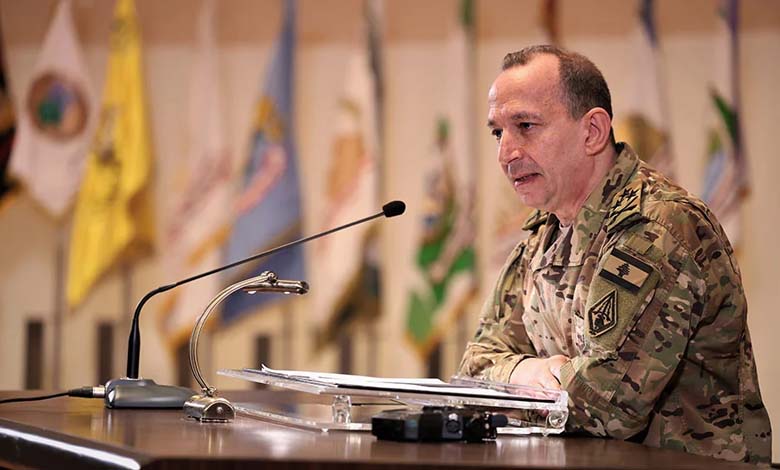
The commander of the Lebanese Armed Forces, General Rudolf Heikal, met with a senior military official at the Pentagon, nearly four months after a visit scheduled for last autumn was canceled.
Following his meeting with Heikal at the Pentagon, US Chairman of the Joint Chiefs of Staff General Dan Caine reaffirmed the importance of America’s defense relationships in the Middle East, a spokesperson said on Thursday.
-
Lebanese Army Uncovers Israeli Spy Devices Hidden with Precision
-
Lebanese army reported that 105 soldiers wounded in the anti-government protests in Beirut
Joseph Holstead, spokesperson for the Joint Chiefs of Staff, stated that General Caine “reiterated the importance of the United States’ strong defense relationships in the Middle East” after meeting the Lebanese army commander on Tuesday.
Heikal had been scheduled to visit Washington in November 2025, but the trip was canceled after US political and military officials withdrew from their meetings with him just hours before his departure from Lebanon, according to a military source cited at the time by Agence France-Presse.
Among those who canceled the meeting was prominent Republican Senator Lindsey Graham, who at the time criticized what he described as Heikal’s “virtually nonexistent efforts to disarm Hezbollah.”
-
Intense Arab and international diplomatic momentum in Lebanon to support the army and enhance stability
-
Drugs in the stronghold of Hezbollah.. Iranian militia exploits Lebanese to prevent the army from reaching it
In January, the Lebanese army announced that it had completed the first phase of its plan to disarm Hezbollah, covering the area south of the country between the Litani River and the Israeli border.
Under the ceasefire agreement reached in late November 2025, after nearly a year of hostilities between Israel and Hezbollah, the Iran-backed group is required to redeploy its forces north of the Litani and dismantle its military infrastructure in the evacuated areas, while Israeli forces are expected to withdraw from Lebanon.
-
A warning to Hezbollah: Israel’s largest drill on the Lebanese border since October 7
-
Israeli army announces elimination of two Hezbollah commanders
However, Hezbollah has rejected calls to hand over its weapons, while Israel has continued to carry out regular strikes on Lebanese territory, saying they target the group’s fighters and facilities, while maintaining its forces at five locations inside Lebanon and near the border that it considers strategic.
The Lebanese army’s plan consists of five phases. The second phase covers the area extending from north of the Litani River to the Awali River, which flows into the Mediterranean north of Sidon, about sixty kilometers from the border.
The government is expected to discuss this second phase of the plan in February before beginning its implementation.
-
Hezbollah’s Violations Rekindle Tensions at the Syrian-Lebanese Border
-
Hezbollah Engages in Violent Clashes with Israeli Army near Border