The war against Iran turns investors into giant economic whales
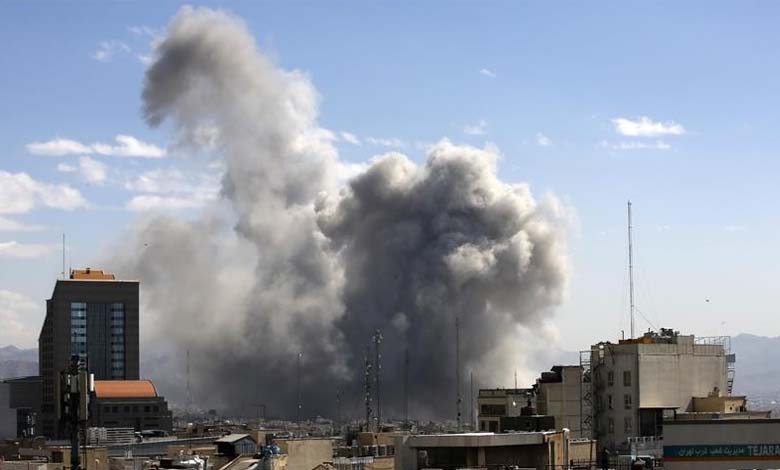
Some investors are benefiting from price fluctuations to make substantial profits, while arms companies’ revenues are rising and pressure on the global economy is increasing.
The rapid developments of the US-Israeli war against Iran are raising growing questions about suspicious movements in global financial markets, amid indications that some investors are taking advantage of price volatility to generate significant gains.
These suspicions coincided with unusual trading activity in stock and energy markets, reinforcing speculation about the existence of investments based on leaked insider information, while arms companies’ profits rise and pressure on the global economy intensifies.
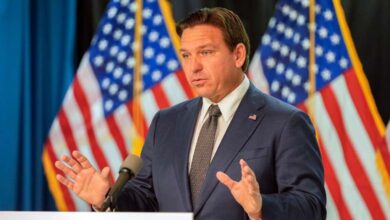
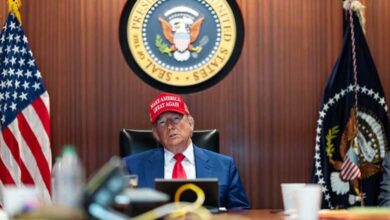
Trump’s announcement on March 23 to postpone the bombing of Iran can be seen as a clear example of this hypothesis, as heavy buying activity was observed on Wall Street about ten minutes before his statement regarding the delay of strikes against Iran, allowing investors to reap huge profits after the stocks they purchased surged following his remarks.
The American news website Axios confirmed that “an abnormal phenomenon occurred in financial markets alongside the escalation of the war,” pointing to “the possibility of financial trading based on insider information, suggesting that some investors may have had prior knowledge of what was going to happen.”
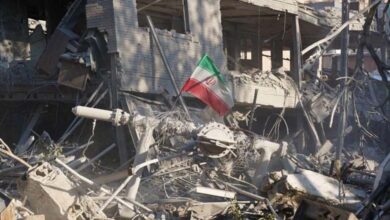
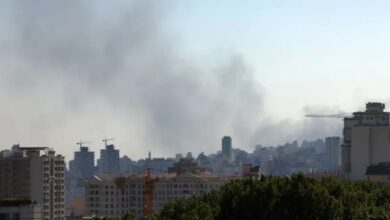
Since February 28, Israel and the United States have been waging a war against Iran that has resulted in thousands of deaths and injuries, while Tehran responds by launching missiles and drones toward Israel.
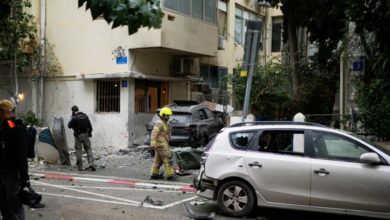
Iran also targets, according to its statements, American sites and interests in Arab countries, but some attacks have caused casualties and damage to civilian property, which has been condemned by the affected countries.
According to Axios, a “suspicious” phenomenon in financial markets accompanied the escalation of the war against Iran.
The outlet added that “unusual movements in the markets, especially in oil stocks, defense stocks, and some sensitive stocks before or at the beginning of the military escalation, suggest that some investors may have had prior knowledge of what was going to happen.”
For his part, Iran’s Parliament Speaker Mohammad Bagher Ghalibaf warned against statements made before markets open, urging investors to make decisions contrary to such statements.
In a post on the X platform in March, he wrote: “Pay attention to so-called news before the market opens; it is often merely preparation for profit-taking. Do the opposite.”
These remarks came after observers said that Trump’s statements cause sharp fluctuations that are exploited for quick profits.
In March, the British Financial Times reported, citing sources, that US Defense Secretary Pete Hegseth had attempted a major investment in defense companies before the war against Iran, which the Pentagon denied.
Global energy markets are experiencing major volatility due to the aggression against Iran and its response, contributing to rising oil and gas prices and higher inflation levels, amid rapid government measures in many countries to mitigate the impact on economies and individuals.
Trading data showed that the market capitalization of major US arms companies increased by between $5 billion and $17 billion in a single day, driven by a rise in their stock prices.
According to trading on March 3, shares of the three largest companies rose in tandem with the continuation of the US-Israeli offensive against Iran.
Financial reports indicated that the three leading arms companies saw a sharp increase in market value: Northrop Grumman rose by about $5.8 billion to reach $105 billion, Lockheed Martin by about $5.5 billion to reach $100 billion, and RTX by about $17 billion to reach $270 billion, all in a single day.
Moroccan economist Mohamed Jadri said that “every war has its whales and beneficiaries.”
He stated that “some countries contribute to the outbreak of wars and push other states to participate in them in order to increase their arms sales during and after the conflict,” explaining that what is new in the aggression against Iran under US President Donald Trump is that “economic warfare is no longer hidden but exposed.”
He noted that this war has contributed to financial market volatility since its outbreak, pointing out that due to the US president’s statements about the existence of negotiations, oil prices fall and financial markets recover, allowing some investors to make large profits, before it later becomes clear that such news was inaccurate, once again negatively affecting the global economy.
According to Jadri, these facts show that “behind the war against Iran lie economic motives from which certain large whales benefit, whether in gold trading, arms trading, or financial markets.”
He explained that “the ordinary consumer ultimately pays the price of this war, while major powers and blocs enjoy considerable economic room for maneuver.”
Mohamed Yaouhi, professor of economics at Mohammed V University in Rabat, said that “every war has economic winners and losers.”
Yaouhi said that the president is originally a businessman, acting with a “merchant’s mentality,” where priority is given to economic and commercial interests.
He added that “Trump knows when to speak and when to remain silent, placing his country’s interests first regardless of whether his statements are accurate,” adding, “Trump keeps in mind the benefit of his country and its companies, directly or indirectly.”
He explained that negotiations with Iran would only occur when the interests of the US economy are harmed, stressing that Iran, China, or any other country matter little to Trump.
He concluded that the most affected Asian countries could pressure the United States by abandoning the dollar in favor of other currencies, or that Japan could threaten to align with Russia and China, adding that Washington cannot afford to lose Japan as an ally.