The yellow line on the ground differs from the maps… images reveal the terror in Gaza
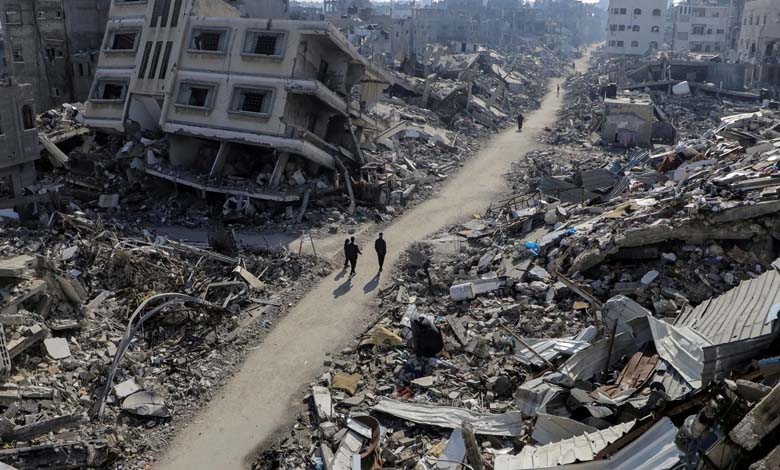
The yellow line shown on Israeli maps of Gaza differs from the reality on the ground, where barriers have been moved several times, leaving Palestinians in a state of fear and uncertainty.
Satellite images reviewed by the BBC show that Israel has moved the barriers intended to mark the line of control after the ceasefire agreement, pushing them deeper into the Gaza Strip at several locations.
-
The yellow line on the ground differs from the maps… images reveal the terror in Gaza
-
Invitations and announcement of participants: developments in the Gaza Peace Council
According to the report on the BBC website, Israel placed blocks in at least three areas, before later repositioning them further inside the enclave.
Under a ceasefire agreement in the Gaza Strip brokered by the United States last October, Israel was supposed to withdraw behind a specific line shown on Israeli military maps, which was marked on the ground by yellow concrete barriers.
However, the images reveal that the Israeli army moved the barriers in the areas of Beit Lahia, Jabalia and Al-Tuffah by an average of up to 295 metres inside the strip. In total, 16 sites were relocated.
-
Washington close to forming a Palestinian committee to administer the Gaza Strip
-
Circulating formation of the Gaza Administration Committee: 15 members headed by Ali Shaath
Israeli forces installing yellow concrete barriers in Gaza
Defence Minister Israel Katz had repeatedly warned that anyone crossing the yellow line would be met with live fire.
Since those statements, a series of deadly incidents has occurred around the dividing line.
In the Al-Tuffah neighbourhood of Gaza City, satellite images show that Israeli forces moved at least seven previously installed barriers between 27 November and 25 December.
In addition to the relocated barriers, the BBC’s verification service identified 205 other barriers, noting that more than half of them were placed far deeper inside the strip than the line drawn on the maps.
The Israeli army denied moving the line or crossing it, stating that the placement of barriers is carried out based on “ongoing field assessments”.
An analysis of satellite images up to 11 January indicates that some sections of the yellow line – described by the Israeli army chief as a “new border line” – remain unmarked on the ground more than three months after the ceasefire began.
Israeli forces installing yellow concrete barriers in Gaza
-
Israel and the ban on relief organizations in Gaza: a UN alarm and calls to reverse the decision
-
Israeli media reveal approval of three countries to send forces to Gaza
Palestinian confusion
The latest satellite images reviewed by the BBC’s verification service show that barriers have not been installed along approximately 10 kilometres of land, making it difficult for some Gaza residents to determine where what the Israeli army calls a “dangerous combat zone” begins.
Last month, a 23-year-old man near Khan Younis said Israeli forces suddenly moved barriers near his location beyond the designated line, leaving him “trapped”.
He added: “We are now living inside the yellow line, but behind the yellow blocks, without knowing what the future holds for us. The atmosphere at night is terrifying. We hear shelling, advancing soldiers, gunfire, and drones hovering over our heads nonstop. We are also subjected to direct fire.”
-
Gaza residents under bombardment: fear of displacement east of the yellow line
-
Advanced Israeli-American consultations on an independent Palestinian government in Gaza
Professor Andreas Krieg, a Middle East security expert at King’s College London, described the movement of the blocks as “a tool of territorial engineering”.
He said: “By keeping the legal line on the map and the physical blocks hundreds of metres away, Israel maintains its ability to alter where Gaza’s residents live, move and farm, without officially announcing a change of borders.”
Efraim Inbar, president of the Jerusalem Institute for Strategy and Security, noted that the line drawn on the map may not account for natural obstacles that prevent marking, and that Israeli military engineers may place the blocks where they “find it easier”.
Israeli forces installing yellow concrete barriers in Gaza
-
Gaza exits the famine stage and enters the critical emergency zone
-
Sunrise: Details of the U.S. Plan for the Gaza Riviera and the Expected Challenges
Deadly incidents along the yellow line
Since Katz’s warning in October, the Israeli army has fired at people crossing the yellow line on at least 69 occasions, according to an analysis of Israeli army posts on Telegram and data provided to the BBC.
On 19 December, the Israeli army carried out a strike on a school sheltering displaced people in the Al-Tuffah neighbourhood of Gaza City, about 330 metres inside the Palestinian side of the line according to military maps, but only a few metres from a yellow building that had been moved there.
Witnesses said the incident occurred while a wedding celebration was taking place near the school building. Gaza’s Hamas-run civil defence reported that five people, including children, were killed in the explosion.
-
Rainwater floods Gaza’s largest hospital
-
Control and surveillance: What are American AI companies doing in Gaza?
In a statement issued that day, the Israeli army said it had fired at “suspicious individuals” west of the yellow line, adding that the incident was under review and that it “regrets any harm caused to innocent civilians”.
In another deadly incident, 17-year-old Zahir Nasser Shamieh was killed near the yellow buildings in the Jabalia camp in northern Gaza. His father said Israeli forces shot him before running him over with a tank on 10 December.
With the start of the second phase of the ceasefire plan, further withdrawals of Israeli forces from other parts of the strip are expected, despite the absence of a specific timetable linked to the “disarmament” of Hamas as stipulated in the agreement.
-
Gaza buried under 68 million tons of rubble… and a shocking reconstruction timeline
-
A critical phase begins… Mediators reveal developments in the second phase of the Gaza agreement