Israel Accelerates Settlement Policy to Undermine the Two-State Solution
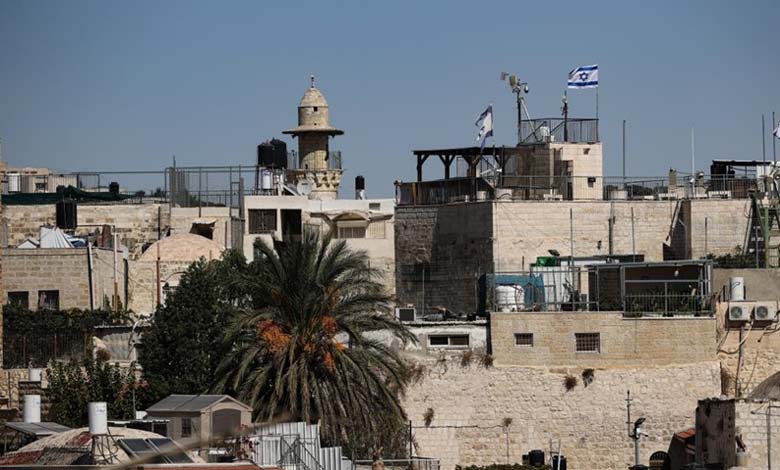
Israeli decisions facilitate settlers’ land purchases by making West Bank land registries accessible, previously confidential, and by repealing a Jordanian law regulating such purchases.
Israel is taking steps to ease settler acquisitions in the occupied West Bank and to expand its authority over areas where Palestinians have some degree of self-rule. Palestinians say these measures aim to undermine the prospect of a two-state solution.
This represents the latest blow to the idea of a Palestinian state coexisting peacefully with Israel on territories occupied since the 1967 war. The vision has long enjoyed global support and formed the basis of the US-backed peace process that began with the Oslo Accords in 1993.
However, obstacles have increased over time, including accelerated Jewish settlement in occupied territories and rigid positions on core issues such as borders, the fate of Palestinian refugees, and the status of Jerusalem.
These decisions will accelerate settler land purchases by granting access to West Bank land registries, previously secret, and by repealing a Jordanian law regulating purchases of land under Jordanian control from 1948 to 1967.
In addition, a joint statement from the Israeli ministers of Finance and Defense announced that Israel will expand “monitoring and enforcement measures” to parts of the West Bank known as Areas A and B, specifically regarding water violations, damage to archaeological sites, and environmental risks affecting the entire region.
Under the Oslo Accords, the West Bank was divided into Areas A, B, and C. The Palestinian Authority has full administrative and security control in Area A, which covers 18 percent of the West Bank. In Area B, covering approximately 22 percent, the Palestinian Authority manages civil affairs while Israel controls security. Most Palestinians live in Areas A and B.
Moutaz Bisharat, the settlement official in Tubas and the Jordan Valley, stated on Friday that the Jordan Valley is now fully open to Israeli control. Israel maintains full control over the remaining land in Area C, which accounts for 60 percent of the West Bank, including the border with Jordan.
Palestinian President Mahmoud Abbas said these measures violate international law and aim to undermine Palestinian institutions and the two-state solution. Israeli Finance Minister Bezalel Smotrich, an extremist nationalist, described the decision as a “real revolution” and stated, “We will continue to eliminate the idea of a Palestinian state.”
The conflict in Palestine dates back to the British mandate, involving Arabs and Jews who immigrated seeking a national homeland after fleeing persecution in Europe, citing biblical ties to the land.
In 1947, the UN approved a plan to partition Palestine into an Arab and a Jewish state, with Jerusalem under international administration. Jewish leaders accepted the plan, gaining 56 percent of the land, while the Arab League rejected it.
On May 14, 1948, the State of Israel was declared. The following day, five Arab countries attacked it. The war ended with Israeli control over 77 percent of the land. Approximately 700,000 Palestinians fled or were expelled to Jordan, Lebanon, Syria, Gaza, the West Bank, and East Jerusalem.
In the 1967 war, Israel captured the West Bank and East Jerusalem from Jordan and Gaza from Egypt.
Although 157 out of 193 UN member states recognize Palestine, it is not a UN member, meaning most Palestinians are not recognized as citizens of any state. About nine million Palestinians live as refugees in Syria, Lebanon, Jordan, and the territories occupied since 1967. Two million more live in Israel as Israeli citizens.
The two-state solution was the cornerstone of the US-backed peace process initiated by the 1993 Oslo Accords, signed by Palestinian leader Yasser Arafat and Israeli Prime Minister Yitzhak Rabin. The accords recognized Israel’s right to exist, renounced violence, and established the Palestinian Authority.
Palestinians hoped this would lead to an independent state with East Jerusalem as its capital, but setbacks occurred on both sides.
The Israeli government claims Hamas killed 330 Israelis in suicide attacks from 1994 to 2005. In 2007, Hamas took control of Gaza from the Palestinian Authority in a brief civil war. Hamas’s 1988 charter calls for Israel’s elimination, though in recent years it has indicated acceptance of a Palestinian state within 1967 borders, which Israel considers a ruse.
In 1995, Rabin was assassinated by a Jewish extremist seeking to derail any territorial peace agreement. In 2000, US President Bill Clinton brought together Arafat and Israeli Prime Minister Ehud Barak at Camp David to reach an agreement, but negotiations failed.
The status of Jerusalem, which Israel considers its “eternal and indivisible” capital, remains the major obstacle.
Conflict escalated with the Second Intifada from 2000 to 2005. US administrations attempted to revive the peace process, unsuccessfully. The last peace talks collapsed in 2014.
After Israel withdrew settlers and troops from Gaza in 2005, Jewish settlements expanded in the West Bank and East Jerusalem. Peace Now reports the settler population grew from 250,000 in 1993 to 700,000 three decades later. Palestinians argue this undermines the viability of a future state.
Since the beginning of the war in Gaza, Jewish settlement in the West Bank has accelerated sharply.
During the Second Intifada, Israel also built a separation wall it claimed would stop Palestinian attacks, which Palestinians call land confiscation.
The Palestinian Authority, led by Mahmoud Abbas, governs isolated enclaves in the West Bank surrounded by areas under Israeli control, representing 60 percent of the land, including the border with Jordan and settlements, as stipulated in the Oslo Accords.
Netanyahu’s government is the most right-wing in Israel’s history and includes religious nationalists supported by settlers. Finance Minister Bezalel Smotrich has stated that there is no such thing as a Palestinian people. Since then, Hamas and Israel have fought several wars, culminating in Hamas-led attacks on southern Israel on October 7, 2023, sparking the Gaza war.