Lebanon Investigates Pilots’ Complaints Regarding Flight Safety
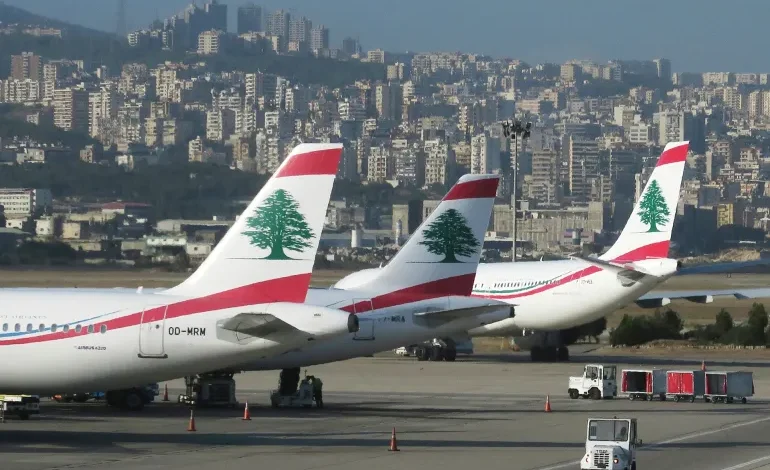
Groups of pilots have expressed concerns that flight crews are being required to fly near locations targeted by Israeli airstrikes and are being punished for reporting safety-related incidents.
The airline described the union’s allegations as “groundless” and stated that training assignments are conducted in accordance with regulatory requirements and “should not be interpreted as disciplinary or retaliatory measures.”
-
Peace Between Lebanon and Israel: Progress in Negotiations as the United States Identifies the Only Obstacle
-
Israel Continues Strikes on Lebanon as a New Round of Negotiations Looms
Safety concerns prompted pilot associations to contact the SkyTeam airline alliance, which includes carriers such as Middle East Airlines, Air France, and Delta Air Lines, in order to draw attention to the issue.
In an interview, Dara van Langen, President of the SkyTeam Pilots Association, said: “When you place your passengers on a partner airline’s aircraft, you naturally want to ensure that its safety standards meet the level you expect.”
Both the U.S. Federal Aviation Administration (FAA) and the European Union Aviation Safety Agency (EASA) require airlines under their jurisdiction to conduct audits of foreign carriers with which they maintain code-sharing agreements, ensuring that they meet equivalent safety standards.
-
New U.S. Plan to Contain Escalation Between Israel and Lebanon
-
Israel Expands Operations in Southern Lebanon in Preparation for Occupying New Areas
Air France, which has a code-sharing agreement with Middle East Airlines, stated that it conducts regular audits of all airlines with which it shares flight codes.
SkyTeam and Delta Air Lines, which maintains a less comprehensive aviation partnership with Middle East Airlines, indicated that they are aware of the pilots’ concerns and are closely monitoring the situation, emphasizing that safety remains of paramount importance.
The International Federation of Air Line Pilots’ Associations also expressed concern over payments reportedly made by the airline to employees of Lebanon’s Directorate General of Civil Aviation responsible for overseeing aviation safety.
-
Israel intensifies operations in Lebanon amid troop mobilization and airstrikes
-
Child recruitment: Hezbollah is undermining Lebanon’s future
Internal financial assistance spreadsheets for the month of November, reviewed by Reuters, showed that dozens of authority employees received payments from the airline, including three aviation safety officials.
Hay stated: “If the airline itself is paying part of the cost of overseeing its operations, then people may not feel comfortable speaking openly, would they?”
The airline said it had provided financial support in coordination with the Lebanese government to ensure the continued functioning of the country’s aviation infrastructure following the financial crisis that led to the collapse of the national currency.
-
Lebanon–Israel negotiations enter a complex security and political phase
-
Continuous strikes and stalled negotiations: Lebanon trapped in a cycle of escalation
It added that payments to air traffic controllers had fallen by more than 90 percent, leaving them with less than 100 dollars per month.
The company maintained that its support had no effect on the “independence, authority, or supervisory responsibilities” of the Directorate General of Civil Aviation, adding that inspectors and senior officials within the authority, including Aziz, had received no payments.
-
Southern Lebanon: Israel announces the death of its twentieth soldier and issues warnings to five villages
-
Military participation reflects the sensitivity of negotiations between Lebanon and Israel
-
Rubio on Hezbollah: an obstacle hindering peace between Lebanon and Israel