Disagreements over a U.S. fighter jet deal unsettle Peru: resignation of the Foreign and Defense Ministers
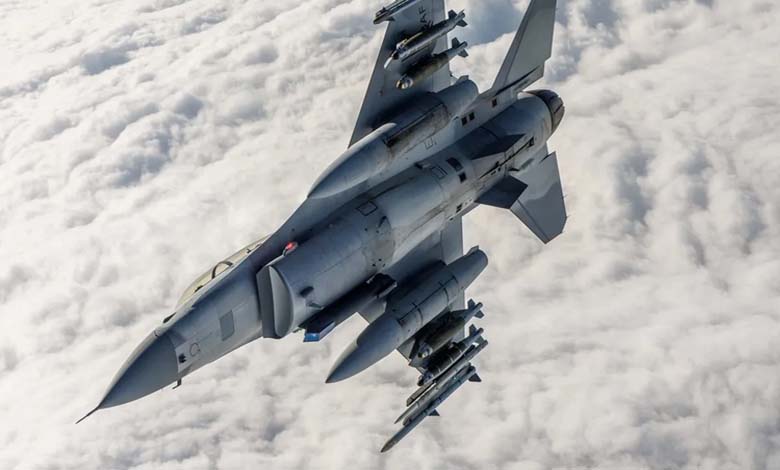
Peru’s Ministers of Foreign Affairs and Defense announced their resignation in protest against interim President José María Balcázar’s decision to postpone a deal for U.S.-made F-16 Fighting Falcon fighter jets worth 3.5 billion dollars.
The two ministers stated that the agreement had already been signed, warning that reconsidering it at this stage could damage Peru’s reputation as a reliable trading partner and weaken its credibility at the international level.
-
T-7A… A Revolutionary Fighter That Transforms U.S. Pilot Training
-
“Turkey and F-16s” What did US lawmakers ask Biden?
These sudden resignations come at a time when the country is experiencing political instability following elections that failed to produce an absolute majority, leading to a runoff scheduled for June 7.
On Tuesday, the interim president announced the postponement of the purchase of 24 fighter aircraft from the United States, stating that the final decision should be left to the next government, which will take office in July. He justified the move by the need to ensure that public funds are used “appropriately and reasonably,” given the social challenges facing the country.
Despite the postponement decision, the Ministry of Economy later announced the transfer of an initial payment of 462 million dollars to Lockheed Martin, emphasizing that honoring international commitments “is not an option but a duty.”
-
Midnight Hammer: How the F-35 took part in striking Iran
-
The Venezuelan Air Force: a symbolic power that would not withstand the United States
American warning
In a notable escalation, the U.S. ambassador to Peru warned that any negotiation conducted “in bad faith” that could harm American interests would be met with the use of “all available tools” to protect the security and prosperity of the United States and the region.
For his part, José María Balcázar sought to ease tensions, stressing that he was not seeking confrontation with the United States and that the postponement decision was solely intended to ensure proper management of resources.
However, outgoing Foreign Minister Hugo de Zela described the decision as one that “puts the country at risk and undermines its credibility,” noting that the fighter jet contracts had been signed after approval by the National Defense Council.
-
Gripen Fighter Jets Steal the Spotlight in the Thailand–Cambodia War
-
Spectacular Progress: How Did China Build Its Air Power on Its Own?
Defense Minister Carlos Díaz likewise stressed that the deal was essential for national security, emphasizing that it was not politically motivated but related to protecting the state and strengthening its defensive capabilities.
Conversely, the interim president denied that the deal had been conclusively finalized, while the U.S. Embassy in Lima confirmed that a “technical signature” had indeed taken place with the full knowledge of the highest levels of the Peruvian government.
-
Missile Defense: Iran or Russia? Ukraine Angered by Israel’s “Special Treatment”
-
Iranian MiG-29s: Can they fend off the impending Israeli attack?
The President of the Peruvian Congress called on the head of state to honor the agreement to avoid political, legal, and geopolitical repercussions, with some lawmakers going so far as to demand his removal, indicating the deepening crisis within state institutions.
The roots of the deal date back to Peru’s announcement in October 2024 of its plan to modernize its air fleet by acquiring modern fighter aircraft to strengthen its defense capabilities and fill existing military gaps.
However, the postponement decision has opened the door to a complex political and diplomatic crisis that may have consequences for Peru’s international relations and internal stability in the coming period.
-
A U.S. blockade is strangling Iranian ports: maritime trade comes to a halt
-
European countries in a difficult position due to a possible delay in U.S. weapons deliveries
-
The U.S. military will remain around Iran to ensure enforcement of the truce agreement