Terrorism escalates in Nigeria ahead of elections: a western hotspot and a struggle for influence
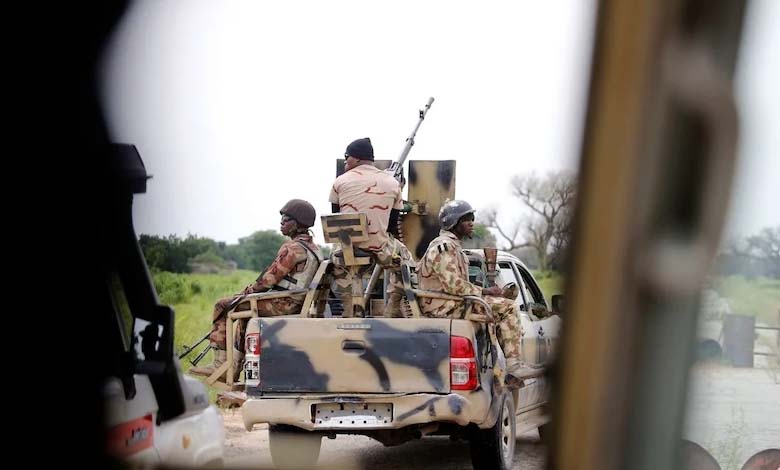
Nigeria is facing a renewed wave of violence by armed groups as elections approach, while analysts warn of the entrenchment of foreign terrorist groups in the western part of the country.
Security remains a chronic challenge in the country, ranging from kidnapping gangs known as “bandits,” to conflicts between farmers and herders, an ongoing separatist conflict in the southeast, and continuous terrorism for the past 17 years, according to Agence France-Presse.
-
Education challenges terrorism: schools reopen in northern Nigeria despite threats
-
Cooperation to Establish Security: 100 U.S. Soldiers Arrive in Nigeria
President Bola Tinubu, who is seeking re-election next January, is betting on wide-ranging economic reforms, but he has also overseen the deployment of U.S. forces in the country as rising violence draws international attention.
Mohammed Ali Ndume, a senator from Borno State in the northeast, told Agence France-Presse: “There is an increase in violence, whether the killing of civilians or military personnel, and of course kidnappings.”
He added that around 400 residents of his constituency in the village of Ngoshi are being held by terrorists after being abducted earlier in April.
-
Facing Boko Haram: Why is the Nigerian Army Struggling?
-
Black Monday in Nigeria: Stay Home or Risk Death
4518 dead
Terrorism in Nigeria began in 2009 with the group Boko Haram and peaked about a decade ago when it controlled vast territories, while forces now face several splinter factions, sometimes competing among themselves.
Researchers say the war has worsened over the past year, with two major generals killed within five months.
The city of Maiduguri, the capital of Borno State, witnessed two suicide bombings, one of them in a mosque in December, signaling a return of deadly attacks inside urban centers.
The U.S.-based monitoring group ACLED recorded around 4,518 deaths in terrorist-related incidents during 2025, the highest number since 2015, including civilians, government forces, armed groups, and terrorists.
-
Alarming Security Deterioration in Nigeria: Civilians Trapped Between Boko Haram and ISIS
-
Escalating Terrorism in Niger: A Security Crisis Threatening Regional Stability
In Borno State, more than 500 civilians were killed last year by terrorist groups, compared to 299 in 2024, according to the observatory.
Ndume attributed the escalation in violence partly to “retaliatory attacks” following the declaration of a state of emergency in November, during which “the army intensified its operations.”
Former director of domestic intelligence Mike Ejiofor said that “attacks tend to rise as elections approach,” adding that the government wants “to put an end to this,” but “it remains to be seen whether it is doing enough.”
-
“Borno Attack” in Nigeria: A Bloody Confrontation and Heavy Losses for Boko Haram
-
The Emergence of a New Jihadist Group Exacerbates Nigeria’s Security Woes
Security reforms
U.S. President Donald Trump criticized Abuja for not doing enough to protect Christians, a view that experts say oversimplifies the situation in a country where civilians from various religious backgrounds are killed.
Tinubu strengthened cooperation with Washington through arms deals, intelligence sharing, and the deployment of U.S. forces in a training mission.
However, the strategy of concentrating soldiers in fortified camps since 2019 has left rural areas vulnerable to attacks.
-
What are the implications of rising terrorism in Africa on Europe? An expert answers
-
Increasing Terrorism Activity in Africa: What Are the Implications and Solutions?
As terrorist groups adapted, attacks by the Islamic State in West Africa against military positions succeeded, aided by equipment such as night-vision devices and drones, according to researchers.
The government launched some reforms, including the creation of a new forest guard unit.
Tinubu also ordered the withdrawal of police from close protection duties for dignitaries, but researchers believe the decision “remained on paper.”
-
The Free Circulation of Weapons and the Infiltration of Terrorist Elements Have Aggravated Terrorism in Africa
-
Warnings of Escalating Terrorism in Mali After European Troops Withdraw
Entrenchment in the west
Meanwhile, analysts warn of the entrenchment of two major Sahel-based terrorist organizations in western Nigeria.
Videos this month showed clashes between members of the Group for Support of Islam and Muslims and the Islamic State in the Sahel in Kebbi State.
Neither side claimed responsibility, as infighting between terrorist groups is rarely publicized.
-
What are the implications of transnational terrorism, its boundaries, steps, and models? Experts explain
-
Senegal and the Threat of Terrorism
Researcher Wassim Nasr said these groups “move freely” in border areas between Niger, Nigeria, and Benin.
He noted that “the Islamic State in the Sahel seeks to strengthen its presence in northwestern Nigeria to reinforce its ties with the Islamic State in West Africa.”
Researcher James Barnett said that both sides “appear relatively comfortable in the area after having consolidated their presence enough to compete with other groups.”
Nasr added that “the greatest threat to each of them comes from the other, not from Nigerian forces.”
-
Mali and Al-Qaeda… Pragmatism Redefining Priorities (Two Experts)
-
Terrorists Out of Prison: A Backlash at the Heart of France
-
ISIS at the heart of Niger: messages written in blood map the infiltration