Russia in the African Sahel: logistical corridors and strategic gains
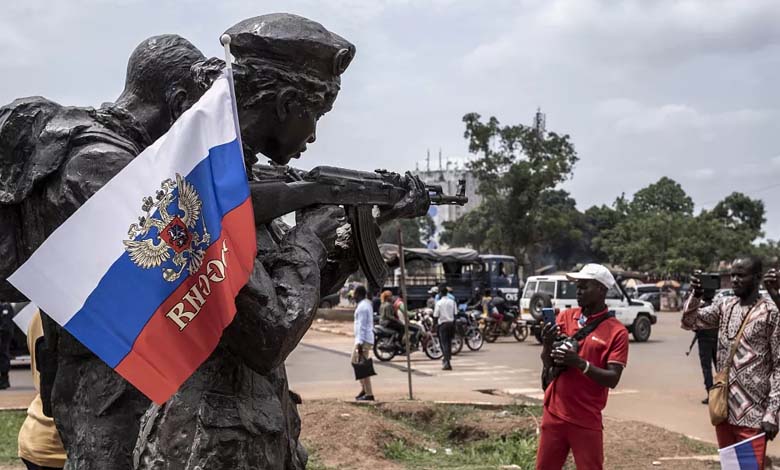
Russia is expanding its military presence in the African Sahel region, reflecting growing cooperation with countries in the area and creating significant strategic opportunities.
According to the French publication Courrier international, investigations indicate that Guinea is being used as an entry point by Moscow to supply the paramilitary group Africa Corps, strengthening the spread of Russian influence in the Sahel region.
-
A challenge in African waters: China, Russia and Iran launch naval drills
-
Russia Accuses Dbeibah’s Government of Supporting Ukraine to Spread Chaos in the African Sahel
Russia has recently sought to reinforce its presence in the Sahel following the decline of Paris’s influence, basing its move on France’s failure to achieve tangible results in combating terrorism.
Between January and May 2025, three large shipments of Russian military equipment, including trucks, tanks, armored vehicles, and boats, arrived in Bamako, the capital of Mali, according to an investigation published by The Sentry, which specializes in tracking, monitoring, and assessing conflicts.
The investigation reveals, as reported by Courrier international, that the Kremlin has established a logistical network stretching across West Africa via the port of Conakry, in what can be described as the “Guinean corridor.”
-
With Weapons and Soldiers, the Russian Bear Strengthens Its Influence in the African Sahel
-
With the “African Initiative,” Russia Strengthens Its Influence in Burkina Faso
The report notes that this system represents a strategic shift, as Africa Corps focuses on establishing rear bases to secure its expansion in the Sahel.
The influence of the Wagner Group previously, and now Africa Corps, expanded in the region after the gradual withdrawal of Western forces and the rise of military councils to power in Mali, Burkina Faso, and Niger.
Since then, these three countries, which formed a union under the name “Alliance of Sahel States,” have moved noticeably closer to Moscow amid a break with France.
-
The race for Africa… The rivalry between the US and Russia intensifies in the Central African Republic
-
The war on Iran: an unexpected lifeline for Russia
Opportunity
In this context, experts in African affairs believe that Russian expansion in the Sahel could represent an opportunity to strengthen local security capacities and develop new strategic partnerships, provided that relations are managed wisely in a way that serves regional stability.
Professor Mamadou Cissé, a specialist in international relations and regional security at the University of Dakar in Senegal, stated that “despite security concerns associated with Russian expansion, these moves provide Sahel countries with an opportunity to sustainably strengthen their military infrastructure.”
He added, “A logistical partnership with Moscow can serve as a pillar for developing local capabilities in transport and military supply, thereby supporting long-term regional security.”
-
Russia gains economic and geopolitical advantages from the war against Iran
-
Hidden massive figures: German intelligence reveals the scale of Russia’s military spending
Cissé explained that cooperation with Russian expertise could open the way to implementing international best practices in strategic planning, noting that Russia has a long history in developing armed forces capabilities, which could positively affect the training of local personnel and improve coordination among different military units in Sahel countries.
He also indicated that the presence of an advanced logistical network such as the “Guinean corridor” could enhance response speed to any security threat, strengthen states’ ability to protect their land and maritime borders, reduce reliance on traditional foreign support, and reinforce national sovereignty.
Cissé further noted that cooperation with Russia is not limited to the military aspect but may include the transfer of technology and modern techniques, creating opportunities to develop local defense industries, generate jobs, support Sahel economies, and stimulate growth.
-
Al-Qaeda’s threats to Mali: A geopolitical shockwave endangering the African Sahel
-
The Numbers Game in the Arms Race: Russia Shows Greater Efficiency While the West Maneuvers
Security efficiency
For his part, Dr. Aliou Keita, a researcher at the Center for Strategic and Security Studies in Mali, said that “Russian expansion opens prospects for establishing advanced training programs and enhancing the capabilities of local forces.”
He explained that “these initiatives can enable Sahel countries to protect their borders and combat armed groups more effectively, benefiting from Russian technical expertise in military logistics.”
Keita added that “partnership with Russia gives Sahel countries the opportunity to develop integrated monitoring and security systems, such as the use of satellite technology and advanced communication systems, which increases the effectiveness of field operations and reduces risks to civilians.”
-
A Neo-Colonial Tool of Repression: Three African Countries Withdraw from the International Criminal Court
-
Russia’s Expanding Influence in the Sahel via Libya Raises Western Concerns
He pointed out that cooperation with the Russians “can serve as a platform for exchanging expertise between local forces and their counterparts, contributing to improving military training efficiency, enhancing security procedures, and applying threat-management strategies in a scientific and systematic manner.”
He also clarified that Russian influence could act as a catalyst for developing vital infrastructure such as ports, airports, and logistical facilities, contributing to regional economic development and enhancing Sahel countries’ ability to better manage their resources.
-
Clashes in Northern Mali Between Tuareg Separatists and Russian-Backed Government Forces
-
The Black Ghosts Strike: Is Russia Returning to Guerrilla Warfare Through Syria?