Hanna Tetteh launches the small table process and signals possible alternative measures
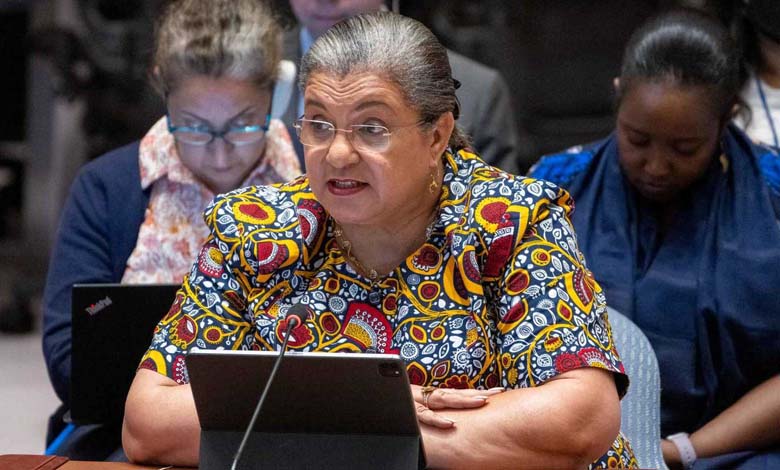
The UN envoy warns against creating parallel structures outside the framework of existing agreements, which could limit the effectiveness of the roadmap.
The United Nations Special Envoy to Libya, Hanna Tetteh, announced the launch of consultations with a small group of Libyan actors to break the political deadlock, signaling that an alternative plan may be presented if procrastination continues, amid local opposition to this new UN initiative.
-
UN Proposal to Hold Elections in Libya Within 18 Months
-
After Years of War… Libya Hosts the African Intelligence Summit
These remarks were made during a briefing before the United Nations Security Council on developments in Libya and on the “roadmap” she announced in August 2025, which is based on unifying institutions and forming a unified government to organize elections.
Tetteh stated: “We have not yet achieved the desired progress, and some parties continue to ignore the aspirations of the Libyan people.”
In this context, she stressed that “continuing business as usual grants legitimacy to the status quo rather than encouraging serious negotiations,” warning against “the creation of parallel structures outside the framework of existing agreements, which could limit the effectiveness of the roadmap.”
-
United Nations Advances Political Solution in Libya with Appointment of Swedish Richardson
-
Tetteh Identifies Key Obstacles to Resolving Libya’s Political Deadlock
She pointed to national and regional risks if inaction persists, noting that she has begun contacting “a small group of actors” to pave the way for Libyan institutions to implement the initial stages of the plan.
At the same time, she acknowledged the existence of “(local) reservations about proceeding in this manner.”
In this context, a parliamentary source confirmed the accuracy of leaks indicating that the UN mission sent correspondence to the command of the eastern forces and to the Government of National Unity (West) to nominate representatives for the “small table.”
-
Dbeibah blocks Western Libyan MPs from traveling to Benghazi to hinder budget approval
-
International Interface or Political Islam Tool? UN Mission in Libya Accused of Backing the Muslim Brotherhood
The source explained that both sides have already responded. The Government of National Unity nominated High Council of State members Ali Abdelaziz and Abdeljalil Chaouch, the Prime Minister’s adviser Mustafa Al-Manea, and Minister of State for Communications Walid Ellafi.
On the other side, the eastern forces are represented by MPs Adam Bousakhra and Zayed Hadiya, in addition to political figures Abdelrahman Al-Abbar and Al-Shaibani Bouhmoud.
This UN initiative has faced strong opposition from the head of the Presidential Council, Mohamed al-Menfi, and the head of the High Council of State, Mohamed Takala, who sent a letter to the UN Secretary-General, António Guterres, requesting “direct intervention to correct the course of the UN mission’s work.”
-
Tetteh set to present comprehensive roadmap on Libyan elections to the UN Security Council
-
Al-Mishri Denies New Session to Elect Head of Libya’s High Council of State
On Wednesday evening, the Libyan High Council of State voted to freeze the membership of any member involved in concluding agreements with any political party without authorization from the Council.
In a statement, the Council said it held an emergency session that witnessed “extensive discussion and exchange of views regarding the mechanism governing members’ participation and representation in dialogue sessions sponsored by the UN mission.”
It voted in favor of “freezing the membership of any member who participates in concluding or engaging in agreements with any political party without explicit authorization from the High Council of State,” citing the need to preserve “the unity of the institutional position, safeguard the Council’s prerogatives, and prevent any individual practices that could disrupt the political process or represent the Council outside its legitimate frameworks.”
-
Counterfeit Billions in Libya Prompt Dbeibah to Demand Immediate Investigation
-
Accusations of Bias Target UN Mission in Libya
The session also examined “ways to activate communication channels with various political parties to break the stalemate, resume dialogue, and enhance the prospects for consensus among institutions.”
Members stressed the need to form a committee from the Council to urgently contact the House of Representatives to activate the Cairo Agreement and revive the consensus track to overcome the current deadlock.
At the conclusion of her briefing, Tetteh signaled the possibility of resorting to other options, stating: “If sufficient progress is not achieved, I will return to this Council to present a proposal capable of advancing the political process based on the provisions of the existing agreements.”
-
Dbeibah Turns to the Muslim Brotherhood, Haftar Warns of Decisive Moment… Libya on a Knife’s Edge
-
Libyans Persist in Street Protests to Oust Dbeibeh — A Message to Tetteh
These moves are part of efforts to lead Libya to elections that could resolve the crisis stemming from the rivalry between two governments: the internationally recognized Government of National Unity headed by Abdul Hamid Dbeibeh in Tripoli, and the other government appointed by the House of Representatives in early 2022, currently headed by Osama Hammad in Benghazi.
Libyans hope that these long-awaited elections will put an end to political and armed conflicts and conclude the successive transitional periods that have persisted since the fall of the regime of Muammar Gaddafi (1969–2011).
-
Libyan Presidential Council Decrees: A Return Ticket to the Political Spotlight
-
Political Stalemate Brings Militias in Western Libya Back into the Spotlight