Transnational repression: Iran targets its opponents abroad
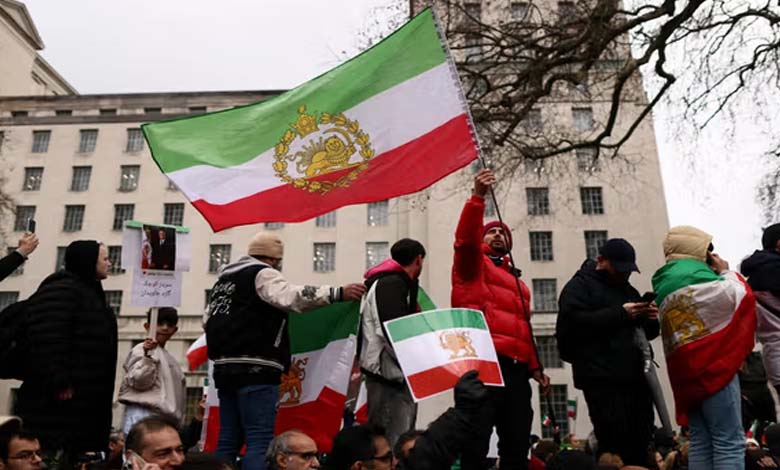
Iran has intensified its campaign against its citizens living abroad, going beyond the boundaries of domestic repression to what resembles an “open war” against opponents through asset freezes, restrictions on consular services, threats of citizenship revocation, and even direct threats of violence in Western capitals.
This escalation comes as the authorities in Tehran face unprecedented pressure due to a severe economic crisis, rising military costs, and the repercussions of widespread protests that erupted at the beginning of the year following a bloody crackdown on demonstrators.
As opposition activism grows outside the country, Tehran appears to be seeking to contain the increasing influence of the Iranian diaspora by targeting its financial and legal structures, according to the British newspaper The Guardian.
-
United Kingdom and the Islamic Revolutionary Guard Corps: imminent legislation to ban Iran’s military arm
-
Washington studies punitive measures within the North Atlantic Treaty Organization over the war with Iran
On the judicial level, statements by officials revealed an intention to examine the pursuit of Iranians’ assets abroad through international legal mechanisms, in coordination with the countries hosting those assets. This step follows internal measures already undertaken, including the confiscation and freezing of the assets of hundreds of individuals accused of “cooperating with hostile entities.”
This policy is based on directives issued by the head of the judiciary, Gholam Hossein Mohseni Ejei, who called for accelerating the pursuit of opponents’ assets within the framework of a law aimed at tightening sanctions related to national security.
Within this approach, the confiscation of the assets of more than 400 figures has been announced, including journalists and activists residing abroad.
-
Bombing Iran with a nuclear weapon: Donald Trump settles the debate
-
Washington imposes security restrictions on the Iranian team’s entourage at the World Cup
Authorities have also moved to undermine expatriates’ ability to manage their legal affairs by restricting consular services, particularly by disrupting certain functions of the “Mikhak” platform, a key tool for completing official procedures such as passport issuance and the legalization of powers of attorney.
This measure is seen as an indirect way to deprive opponents of their legal rights without resorting to formal decisions to revoke citizenship.
However, the issue of citizenship itself has entered public debate following parliamentary calls to turn it into a tool of political punishment. MP Hassan Ali Akhlaqi Amiri proposed stripping citizenship from anyone accused of cooperating with “hostile states,” a proposal that sparked internal criticism, with opponents arguing that it contradicts the Constitution, which regards citizenship as an inalienable right.
-
Iran announces the arrival of a cargo ship despite a U.S. claim of intercepting it
-
Doubts over the ability of U.S. sanctions to curb Iranian militias
In practice, cases resembling “de facto denationalization” have begun to appear through the suspension of the legal status of certain individuals.
Among these cases is filmmaker and activist Maryam Ebrahimvand, who stated that the Iranian consulate in Paris informed her that the status of her citizenship was “unclear” while confiscating her documents, leaving her without any legal identity.
Abroad, the escalation takes on a more serious dimension, where Iranian journalists in London face increasing threats that have escalated to physical violence. The offices of Iran International were targeted in an attempted arson attack, while staff members reported receiving direct death threats.
-
Israeli report: undeclared Chinese involvement in Iran–U.S. talks
-
Israel accuses two soldiers of spying for Iran
Previous incidents have also been recorded, including the stabbing of presenter Pouria Zeraati outside his home, which forced him to leave the country. Other journalists spoke of threats reaching their families inside Iran, indicating that family pressure is being used as a tool to silence dissenting voices.
Journalists at BBC Persian also confirmed an increase in threats, especially following recent regional tensions, noting that they no longer feel safe even within the United Kingdom.
According to experts, this reflects a growing pattern of “transnational repression,” where informal networks or local proxies are used to carry out intimidation operations that are difficult to trace.
-
Iron fist: Iran confronts the opposition through executions
-
Iran to Trump: we did not request the extension of the truce, and the loser does not set the terms
The pressure does not stop at individuals abroad but extends to their families inside Iran, where human rights reports have documented arrests and summonses of relatives of opponents, seen as a direct means of coercion.
Analysts affirm that this policy represents a strategic shift, moving the confrontation from inside the country to outside through intertwined legal and security tools.
These developments reveal a comprehensive approach aimed at redefining the relationship between the state and its citizens abroad, no longer as part of the national fabric, but as an extension of a political conflict that Tehran seeks to settle, even beyond its borders.
-
Trump: Iran faces financial collapse due to the blockade
-
We destroyed their forces and nuclear laboratories: Trump outlines the results of the war against Iran
-
Iran warns Trump of a decisive response if the war resumes