Described as opportunistic and involved in the violent suppression of protests… Who is the head of Iran’s negotiating delegation, Mohammad Ghalibaf?
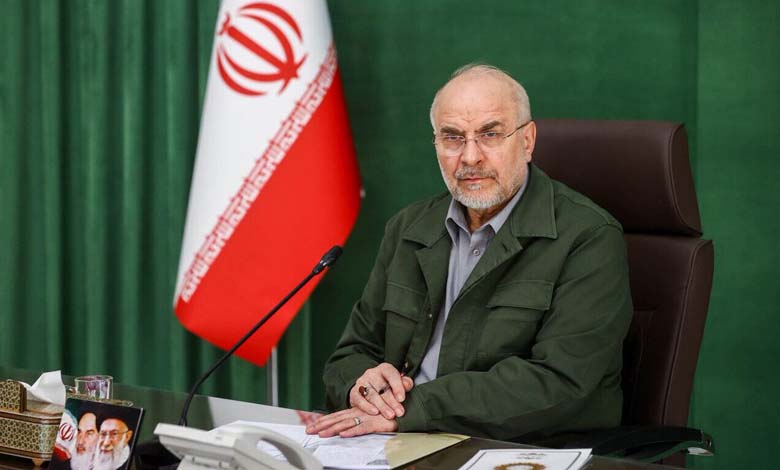
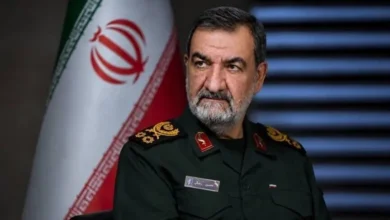
The name of the Speaker of the Iranian Parliament, Mohammad Bagher Ghalibaf, has emerged as the chief negotiator and official face of Iran after the U.S.–Israeli war removed several senior leaders. He now leads the negotiation track with Washington in what marks the first high-level contact between the two countries since 1979, amid uncertainty over Iran’s governing mechanisms and renewed political ambitions among several leaders.
Ghalibaf imposed himself as the principal negotiator and dominant official figure in an Iran weakened by the loss of many of its leaders due to the war.
He appeared publicly for the first time last weekend at the head of the Iranian delegation during the Islamabad talks, where he met U.S. Vice President JD Vance, representing the highest level of contact between the two adversaries since before the 1979 Iranian Revolution.
A photo shared by Iranian embassies abroad on social media shows Ghalibaf at the front of the negotiating delegation, gesturing enthusiastically with his hand, while Iranian Foreign Minister Abbas Araghchi appeared preoccupied with tea cups.
However, the mechanisms of Iran’s leadership after Supreme Leader Ali Khamenei, who dominated governance for nearly four decades, remain unclear, despite the appointment of his son Mojtaba Khamenei as successor, who has not yet appeared publicly amid reports of severe injuries following an airstrike.
Ambitious and opportunistic… Who is Ghalibaf?
Ghalibaf’s career, combining military and civilian roles, includes positions such as commander within the Islamic Revolutionary Guard Corps, Tehran police chief, mayor of the capital, and ultimately his current role as Speaker of Parliament.
It remains uncertain whether he enjoys the full confidence of the new hardline leadership within the Revolutionary Guards, including commander-in-chief Ahmad Vahidi, and Mohammad Bagher Zolghadr, successor to Larijani as head of the Supreme National Security Council.
Ghalibaf is known for his strong ambition. He ran for the Iranian presidency multiple times without success, particularly in 2005 when hardline conservative Mahmoud Ahmadinejad won.
Politicians say of him: “As a politician, he has proven to be ambitious and opportunistic, yet cautious — a trait that helped him rise to the top of Iran’s power structure without being sidelined like many others.”
They add: “He will therefore show some flexibility to test Washington’s red lines and attempt to pull Tehran out of war, while remaining largely committed to the established framework and ensuring his negotiating positions are approved by key internal actors.”
Involvement in the violent suppression of protests
Mohammad Bagher Ghalibaf has a documented history of involvement in suppressing civil unrest in Iran through his roles in the Revolutionary Guards, national police forces, and later as Speaker of Parliament.
Human rights organizations accuse him of playing a key role in suppressing protests, from the 1999 student demonstrations to the 2009 Green Movement, and the widespread protests of January 2026.
1999 student protests
During the July 1999 student protests, Ghalibaf served as commander of the Revolutionary Guards’ air force. He was among 24 senior commanders who signed a threatening letter to then-President Mohammad Khatami, warning of military intervention if the government failed to suppress the student movement. The events resulted in several deaths, hundreds of injuries, and thousands of arrests.
In 2003, as national police chief, he participated in suppressing new student protests at the University of Tehran.
In a leaked audio recording from 2013, Ghalibaf acknowledged his personal involvement in field violence, stating: “There are photos of me on a motorcycle… beating [protesters] with wooden sticks.” He added that he was proud of his role as a “baton user” despite his high military rank.
In the same recording, he boasted about bypassing procedures of the Supreme National Security Council to issue orders authorizing live fire against protesters.
He also indicated that he pressured a meeting by saying he had “made a fuss” to obtain permission for police to enter student dormitories and “open fire” on protesters.
Iranian anti-regime protests 2025–2026
As Speaker of Parliament, Mohammad Bagher Ghalibaf was one of the most prominent government figures involved in handling the 2025–2026 Iranian protests, described by human rights organizations and international media as a violent crackdown that resulted in the deaths of more than 12,000 protesters.
Reports indicate that these operations were carried out on direct orders from Supreme Leader Ali Khamenei, with the knowledge and approval of the heads of the three branches of power, and with authorization to use live ammunition issued by the Supreme National Security Council, of which Ghalibaf was a member.