From Hassan al-Banna to ISIS: how was the intellectual architecture of global jihad formed?
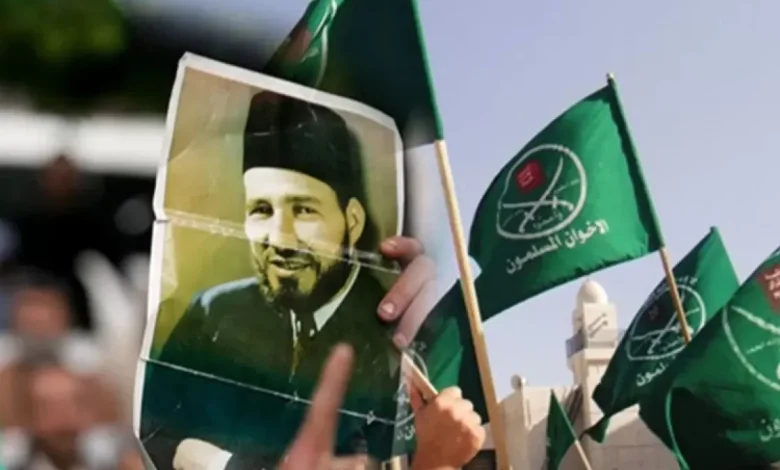
Transnational terrorism did not emerge suddenly, and modern jihadist organizations were not born in an intellectual or political vacuum. Behind military slogans and armed operations lies a complex ideological system that took shape over decades and evolved through successive stages of activist, organizational, and religious thought. For this reason, many Western and American circles view extremist groups as an extension of a long intellectual trajectory that began with the rise of political Islam movements in the twentieth century and gradually evolved into more radical and violent forms.
At the center of this debate stands the Muslim Brotherhood, regarded as the most influential organization in shaping modern Islamic movements, whether through its organizational structure, ideological discourse, or political literature. While the Brotherhood’s leaders reject any connection with armed terrorist organizations, some currents within Western security institutions believe that part of the ideas adopted by contemporary jihadist groups emerged from the intellectual environment established by activist Islamic movements since the early twentieth century.
Today, with the issue of “ideological extremism” returning to the forefront of Western counterterrorism strategies, debate has been renewed over the intellectual relationship between the Muslim Brotherhood and organizations such as al-Qaeda and ISIS, and how concepts such as “divine sovereignty” (hakimiyya), “jahiliyyah,” and “empowerment” (tamkeen) became foundations upon which jihadist groups justified transnational violence.
Beginnings: Hassan al-Banna’s project and the construction of the doctrinal organization
The Muslim Brotherhood was founded in 1928 by Hassan al-Banna at a time when the Arab and Islamic world was undergoing profound transformations following the fall of the Ottoman Caliphate and the rise of European colonial influence.
From the outset, al-Banna raised the slogan “Islam is religion and state,” proposing a project aimed at reshaping society and the state according to a comprehensive Islamic vision. The Brotherhood was not merely a preaching movement, but an activist organization with a strict doctrinal structure based on obedience, discipline, and gradual progression toward “empowerment.”
This organizational model profoundly influenced most Islamic movements that later emerged, many of which adopted the idea of a “closed doctrinal organization” combining religious activity, political engagement, and ideological mobilization.
During the 1940s, the Brotherhood began building what became known as the “Special Apparatus,” a secret wing associated with several assassinations and acts of political violence in Egypt, leading to a direct confrontation with the Egyptian authorities at the time.
Although the Brotherhood later presented itself as a political reform movement, the experience of the “Special Apparatus” remained present in Western discussions about the historical relationship between organization and clandestine action.
Sayyid Qutb and the shift toward intellectual radicalism
If Hassan al-Banna laid the organizational foundations of the movement, Sayyid Qutb is considered the most influential figure in shaping the intellectual framework upon which later jihadist movements relied.
In his writings, especially “Milestones,” Qutb introduced ideas that marked a fundamental shift in activist Islamic thought, including:
The concept of “modern jahiliyyah.”
Rejection of existing political systems.
The idea of “divine sovereignty.”
The necessity of establishing a “true Islamic society.”
Although the Brotherhood later attempted to present more moderate interpretations of Qutb’s ideas, jihadist organizations treated his writings as a foundational reference justifying confrontation with regimes and states.
Several leaders of extremist groups were directly influenced by Qutb’s ideas, including figures later associated with al-Qaeda and Salafi-jihadist organizations.
Many Western studies argue that the transition from “activist political Islam” to “global jihadism” was not a sudden leap, but a gradual evolution within the same intellectual environment.
Afghanistan: the birth of global jihad
The Afghan war against the Soviet Union in the 1980s marked a major turning point in the history of armed Islamic movements. There, networks of political Islam intersected with Salafi-jihadist currents, and the idea of “transnational jihad” appeared for the first time.
At this stage, individuals linked to Brotherhood backgrounds or influenced by political Islam literature played important roles in mobilization, recruitment, and logistical support.
Out of this war emerged al-Qaeda under the leadership of Osama bin Laden, which adopted a more radical discourse directly targeting the West and identifying the United States as the “far enemy.”
Despite organizational differences between al-Qaeda and the Muslim Brotherhood, many Western scholars argue that the two shared a common intellectual ground regarding the idea of “Islamizing the state and society” and rejecting existing political systems.
From al-Qaeda to ISIS
After the September 11 attacks, the world entered a new phase in the war on terror, but the weakening of al-Qaeda did not end the jihadist phenomenon. A more extreme and brutal organization emerged: ISIS, which sought to establish a “caliphate state” through armed force.
ISIS took jihadist thought to a higher level of violence while retaining several central concepts formed within radical political Islam literature, such as:
Divine sovereignty.
Excommunication of regimes.
Rejection of the nation-state.
The caliphate project.
Western research centers argue that ISIS was not a complete deviation from activist Islamic currents, but rather the most extreme version of the idea of establishing an Islamic state by force.
In this context, debate within Western institutions shifted from focusing solely on armed organizations to examining the “intellectual roots” that enabled their emergence.
At the same time, a broad current of scholars and Islamic movements rejects this linkage, emphasizing that the Muslim Brotherhood has participated in political and electoral processes in several countries, and that holding it responsible for jihadist organizations constitutes an oversimplification of the region’s political and intellectual history.
Islam is not the problem
Despite intensified debates over political Islam, American and Western institutions are careful to stress that the struggle targets extremism, not Islam as a religion.
Washington recognizes that conflating Islam with terrorism could produce counterproductive results and provide extremist groups with an opportunity to fuel narratives about the “targeting of Muslims.”
Modern Western strategies therefore focus on distinguishing between:
Islam as a global religion.
Muslims have diverse societies.
Political or armed groups that use religion for ideological purposes.
This distinction is viewed as essential to maintaining the balance between counterterrorism and the protection of religious freedoms.
Toward a new understanding of extremism
Counterterrorism is no longer merely the pursuit of armed cells or extremist leaders, but has evolved into a long-term confrontation with transnational intellectual, organizational, and media networks.
Within this framework, debate over the Muslim Brotherhood has returned to the center of Western discussions, not only because of its political and organizational presence, but also because of its historical influence in shaping the intellectual environment from which modern jihadist movements emerged.
As debate continues over the nature and limits of this relationship, the United States and its allies appear to be moving toward a new phase of counterterrorism focused as much on “dismantling intellectual systems” as on defeating armed organizations.
In the next installment, attention turns to an even more complex arena: how the battle over classifying the Muslim Brotherhood in the United States evolved into a political and legal confrontation involving security, liberties, and international interests.