Hamas and the Muslim Brotherhood: How the war in Gaza reopened the file of the international organization in Washington
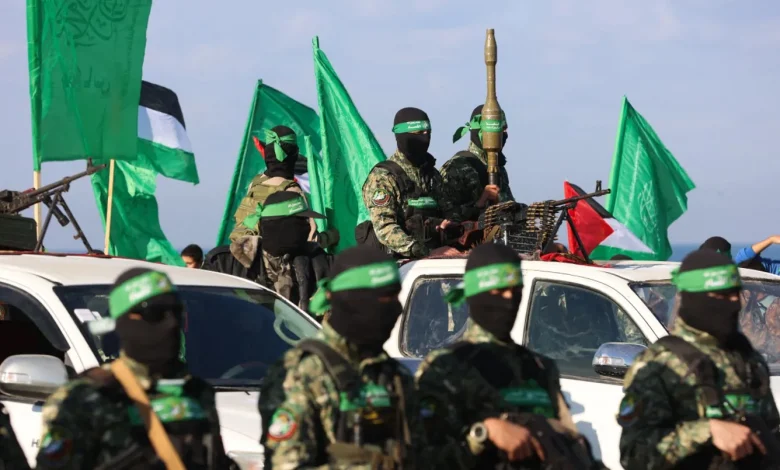
The war in Gaza is no longer viewed in the United States as a localized confrontation limited solely to Hamas and Israel; it has evolved into an event that has reopened broader files concerning the structure of transnational Islamist movements and the complex relationship between armed organizations and international networks of political Islam. At the center of this debate, the name of the Muslim Brotherhood has returned to the American forefront with unprecedented intensity in recent years, particularly as discussions have intensified within security institutions and research centers about the ideological, organizational, and financial links connecting Hamas to the historical structure of the Brotherhood.
This shift was not merely a political reaction to developments in the war; rather, it reflects a gradual accumulation within Washington, where certain American circles have begun to view armed Islamist movements as part of a broader system in which ideology, funding, media, and cross-border mobilization intersect. With the escalation of regional tensions after October 7, calls have grown within the United States to reassess the relationship between the Muslim Brotherhood and organizations associated with armed violence in the Middle East.
American circles believe that the recent war has exposed the extent of the interconnection between the military dimension and the media and political dimensions within contemporary Islamist movements. The confrontation is no longer confined to the battlefield; it also unfolds in the digital sphere, across funding networks and transnational media platforms, reviving a question that has long been present in the West: can political Islam truly be entirely separated from armed jihadist movements?
Historically, Hamas is regarded as the most prominent Palestinian extension of the Muslim Brotherhood. Since its establishment in the late 1980s, the movement has presented itself as part of the activist Islamic project embraced by the Brotherhood, even as it later evolved within more complex Palestinian and regional contexts. This connection enabled Hamas to benefit from extensive networks of political, media, and financial support stretching across the Middle East and beyond.
Over the decades, the United States has treated Hamas as a terrorist organization while maintaining a political and legal distinction between the movement and the Muslim Brotherhood as a global organization. However, recent developments have prompted more hardline currents in Washington to call for reconsidering this separation, arguing that the ideological and organizational relationship between the two makes it difficult to treat Hamas as a case entirely detached from the broader structure of political Islam.
This debate has intensified amid growing American concerns about the ability of movements linked to political Islam to exploit regional crises in order to expand their global media and political influence. U.S. security institutions view the war in Gaza not only as a military confrontation but also as a massive digital mobilization and propaganda battle in which online platforms were used in unprecedented ways to influence global public opinion.
Western circles believe that groups associated with political Islam have, in recent years, developed advanced tools of media influence, enabling them to transform regional conflicts into cross-border mobilization campaigns that combine religious, political, and rights-based discourse simultaneously. This development has led Washington to regard media networks and digital platforms linked to transnational ideological movements with increasing concern.
Conversely, opponents of this approach within the United States argue that automatically linking the Muslim Brotherhood to Hamas oversimplifies the complex political reality of the Middle East, particularly since the Brotherhood comprises multiple currents and branches whose nature and alliances vary from one country to another. They also warn that expanding the concept of “association with extremism” may blur the line between political activity and armed action, creating significant legal and diplomatic complications.
However, the more hardline current in Washington contends that the real challenge lies not only in direct military action but in the ideological and organizational networks that enable armed movements to endure and regenerate. As a result, discussion within American institutions has increasingly focused on confronting the “ecosystems supporting extremism,” rather than solely targeting the organizations that carry out armed operations.
This shift has been clearly reflected in the renewed American approach to financing, propaganda, and mobilization. In recent months, the U.S. Department of the Treasury has intensified efforts to track financial transfers linked to networks suspected of supporting extremist movements, while intelligence cooperation with European and Arab countries has increased to monitor associations and platforms believed to be involved in mobilization campaigns or political financing connected to political Islam.
At the same time, information warfare has become a central pillar of U.S. strategy. Washington believes that groups linked to political Islam have successfully leveraged the global digital environment to construct political and emotional narratives capable of influencing broad segments of youth, both in the Middle East and within Western societies. Consequently, American institutions have expanded investment in monitoring digital activity and strengthened cooperation with technology companies to detect content associated with extremism or ideological mobilization.
The war in Gaza has also brought renewed attention to the complex relationship between armed Islamist movements and certain regional powers, particularly Iran and the networks of militias associated with it in the region. Despite doctrinal and political differences, some American circles argue that shared interests have led to forms of pragmatic coordination across multiple arenas, which Washington considers an increasing threat to regional stability.
U.S. security institutions believe that this intertwining of ideological movements, armed militias, and regional powers represents a new model of transnational threats, in which conventional warfare blends with information warfare, financing, and digital networks. Accordingly, the United States has begun adopting a more comprehensive approach aimed at targeting the full structure of networks associated with extremism, rather than focusing solely on the military dimension.
In Europe as well, the war in Gaza has revived debate over the role of movements linked to political Islam within Western societies. In France, Germany, and Austria, concerns have grown regarding the impact of war-related polarization on the rise of radical discourse within certain youth and university environments. Several European governments have therefore tightened oversight of media platforms and associations linked to extremist rhetoric or cross-border political mobilization.
Nevertheless, the United States and European countries seek to maintain an official discourse emphasizing the distinction between Islam as a religion and movements that use religion to pursue political or military objectives. Washington recognizes that conflating Muslims with extremist organizations could prove counterproductive and provide radical groups with an opportunity to fuel a narrative of “Islam being targeted.”
What is clear, however, is that the recent war has significantly altered Western calculations. The debate is no longer limited to how to contain Hamas militarily, but extends to how networks of political Islam have evolved over the past decades and how they have become capable of combining organization, armed action, media, and digital influence within a transnational system.
In this context, the Muslim Brotherhood file appears to have returned to the core of the American security debate, not as a purely Middle Eastern issue, but as part of a broader global struggle concerning the future of transnational extremism and the nature of ideological networks reshaping international conflicts in the twenty-first century.