Field reports reveal the rising influence of Islamist brigades within the Sudanese army
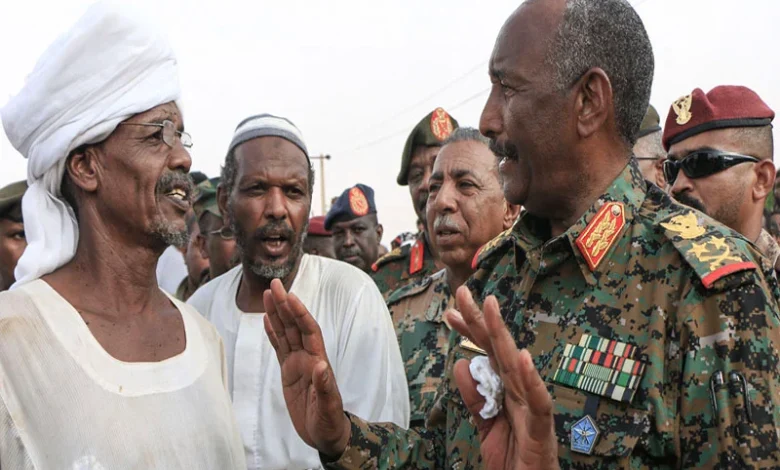
Field and political developments in Sudan indicate a growing influence of Islamist brigades within the military establishment, amid the ongoing war between the Sudanese Armed Forces and the Rapid Support Forces. This trend raises increasing concerns about the future of political and security balances in the country. In this context, movements linked to the integration of elements from the Al‑Baraa ibn Malik Brigade and other Islamist formations into forces operating under various military umbrellas—most notably the Sudan Shield Forces led by Abu Aqla Kikal—stand out. Observers view this as an attempt to reorganize the influence of the Islamist movement within the army and the state.
This comes amid growing accusations that the Sudanese army is using these formations as a cover to avoid pressures and sanctions linked to Islamist groups, especially following increasing reports of the return of figures associated with the regime of former president Omar al‑Bashir to positions of influence within security and military institutions.
Transformations in the structure of military alliances
Since the outbreak of the war in Sudan, the Sudanese army has adopted a policy of expanding the circle of field allies to compensate for human losses and enhance its combat capabilities. As fighting expanded in Khartoum, the central states, and Al Jazirah, armed groups with ideological and religious backgrounds emerged as part of the new military equation.
At the forefront of these formations is the Al-Baraa ibn Malik Brigade, which gained notable prominence during recent military operations by participating in multiple battles alongside the army, particularly in areas of high combat intensity.
Political and military sources indicate that the army has moved toward integrating elements of these brigades into units with a national or tribal character, in order to reduce international sensitivity related to directly dealing with groups linked to the Islamist movement.
Observers believe that incorporating these elements into the Sudan Shield Forces is part of a broader strategy to redistribute Islamist forces within the military institution in a way that provides them with political and legal protection while preserving their operational role in the war.
The Al-Baraa ibn Malik Brigade and its growing role
In recent months, the Al-Baraa ibn Malik Brigade has become one of the most visible formations in military and media discourse related to the Sudanese war. The brigade is known for its mobilizing rhetoric based on religious references and for relying on mobilization networks linked to currents within the Islamist movement.
Local reports indicate that brigade members played direct roles in combat operations in Khartoum and appeared in video recordings linked to army movements on several military fronts.
Analysts argue that the growing role of this brigade reflects not only the army’s need for fighters but also the presence of a current within the military institution pushing toward rebuilding the traditional alliance between the army and the Islamist movement.
This alliance is believed to have re-emerged more clearly after the political process in Sudan stalled and civilian forces failed to build a national consensus capable of ending polarization.
Attempts to circumvent sanctions
Groups linked to the Islamist movement in Sudan have faced increasing international pressure since the fall of Omar al-Bashir’s regime, particularly amid accusations related to the use of religion in military and political action, as well as concerns over the return of political Islam networks to state institutions.
In this context, observers consider the integration of Islamist brigade elements into official or semi-official military formations a clear attempt to circumvent potential sanctions that could directly target these groups.
Sudan analysts say that the use of new military names and configurations gives the army political maneuvering space, allowing it to present these forces as part of the national war effort rather than as extensions of specific ideological organizations.
This approach also helps reduce external pressure related to the Islamist file in Sudan, especially amid ongoing international debate over the future of power after the war.
The return of Islamists to state institutions
Alongside military transformations, indicators of the return of figures associated with the Islamist movement to influential positions within Sudanese state institutions are increasing.
Political estimates suggest that the current war has provided a suitable environment for the rehabilitation of some leaders linked to the former regime, taking advantage of the administrative vacuum and institutional collapse in the country.
Analysts also believe that the army’s reliance on Islamist brigades grants these groups growing influence in decision-making circles at both the security and political levels.
In the absence of a stable civilian authority, the military institution appears to be the main center for redistributing influence in Sudan, allowing the Islamist movement to gradually return to the scene through alliances with influential figures within the army.
Observers warn that continuing along this path could lead to the reconstruction of the power structure that existed under al-Bashir’s rule, but in a new form based on direct military alliances rather than traditional partisan dominance.
Implications within the military institution
The rising influence of Islamist brigades within the Sudanese army raises increasing concerns about the future internal cohesion of the military institution.
According to observers, the growing role of ideological formations could create divisions within the army, particularly between officers who oppose the politicization of the military institution and currents that view Islamists as a necessary ally against the Rapid Support Forces.
There are also concerns that the growing reliance on ideologically-driven groups may weaken the professional character of the army and turn it into an arena for political and doctrinal conflict.
These concerns intensify as civilian state institutions decline, increasing the likelihood that armed forces could become independent centers of political power.
Experts believe that continuing this dynamic could complicate any future effort to restructure the army or integrate armed forces into a unified national project.
The international community watches cautiously
International and regional actors are following developments in Sudan with growing concern, particularly as reports increase regarding the return of Islamist groups to the military and political forefront.
Some international parties fear that the continuation of the war could create an environment that allows political Islam networks to be reconstituted within state institutions, threatening prospects for political transition and regional stability.
The growing influence of Islamist brigades may also negatively affect Sudan’s external relations, especially with Western countries that tie political or economic support to adherence to a civilian path free from the dominance of ideological groups.
At the same time, it appears that the Sudanese army is attempting to balance its need for internal military support with the need to avoid direct confrontation with the international community over the Islamist issue.
However, observers believe that maintaining this balance may become increasingly difficult as more indications emerge about the actual role played by Islamist brigades in the ongoing battles.
Sudan at a complex crossroads
Recent developments show that the Sudanese war is no longer merely a traditional military conflict but has become a space for reshaping political and ideological power balances within the state.
With the rising influence of Islamist brigades within the army, concerns are growing that the continuation of the war may entrench the role of ideological groups in Sudan’s future political and military landscape.
Analysts consider the most worrying aspect of the current situation to be the absence of an inclusive national project capable of preventing the return of the old polarization between the military institution and the Islamist movement on one side, and civilian forces on the other.
As fighting continues and prospects for a political settlement diminish, Sudan appears to be entering an even more complex phase, where military calculations intertwine with projects aimed at regaining political influence, at a time when the country is facing one of the most serious crises in its modern history.