The war in Iran reverberates as a multi-headed crisis in Africa
African oil-importing countries are facing mounting pressure on their foreign currency reserves and fuel prices, while experts and international organizations warn of repercussions that could extend to food security and social stability across the continent.
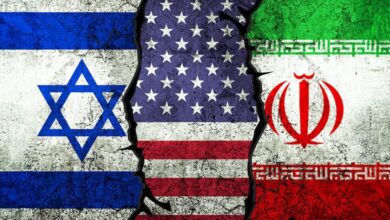
The U.S.–Israeli war against Iran has triggered a crisis for African economies, explaining the sharp slowdown in growth, rising inflation rates, and increasing prices of fuel and fertilizers, as several governments across the continent strive to mitigate these negative effects on their impoverished populations.
As African oil-importing countries confront growing pressure on foreign reserves and fuel prices, experts and international organizations caution that the repercussions may extend to food security and social stability throughout the continent.
The International Monetary Fund has downgraded its economic growth forecasts for 2026. Projections for North Africa fell from 3.9% to 1.1%, while Sub-Saharan Africa declined to 4.3%, about 0.3 percentage points below pre-war forecasts, due to disruptions in global supply chains and dramatic surges in fertilizer prices and shipping costs.
The severity of the impact varies between oil-importing countries facing the specter of “stagflation” (rising prices alongside weak demand) and some coastal nations that may relatively benefit from the rerouting of international shipping lanes.
Global markets are experiencing significant volatility due to the U.S.–Israeli war against Iran, which has contributed to higher oil prices and inflation levels.
Moroccan economic analyst Zakaria Aqnouch stated that the African continent has not remained immune to the financial and economic repercussions resulting from the closure of the Strait of Hormuz.
He stressed that the continent faces an “organic interconnection” of economic interests, such that any “spark” in the Strait of Hormuz is transmitted to its markets, explaining that the war led to an immediate rise in the cost of a barrel of oil, which translates in Africa into multiplied increases in fuel prices.
He noted that energy price increases in some African countries have reached 40%, describing this as a “forced tax imposed on the African citizen.”
The analyst emphasized that oil-importing countries are compelled to deplete their foreign currency reserves, leading to the collapse of local currencies against the dollar and contributing to negative social consequences, including rising poverty rates.
He added that the financial repercussions have also affected some oil-exporting countries such as Nigeria, Angola, and Libya due to their reliance on exporting crude oil rather than refined derivatives.
He explained that “this structural imbalance makes rising prices a burden on the public budget due to the swelling cost of social fuel subsidies, undermining any attempt at genuine development,” underscoring the need to invest in refining capacity to increase export revenues.
The Washington Institute for Near East Policy stated that repercussions could affect West African countries at both economic and social levels.
In a report issued last April, the institute noted that these countries rely on imports to secure their food needs, exposing them to food price volatility, adding that “worsening budget deficits and rising inflation could threaten social and political stability.”
The war coincides with the agricultural season in many African countries, increasing demand for fertilizers.
The United Nations Development Programme stated in a report last April that the war against Iran “will affect agricultural production, increasing the risk of reaching crisis and emergency levels of food insecurity, especially among low-income households and import-dependent economies.”
The World Food Programme also warned in a statement last April that an additional 45 million people worldwide could face acute hunger, particularly as the war coincides with a severe funding shortfall for humanitarian relief services.
The Moroccan researcher warned of worsening impacts of the war on the continent’s agricultural sector, given many countries’ reliance on agriculture.
He explained that the Strait of Hormuz is a major source of liquefied natural gas necessary for nitrogen fertilizer production, and that supply disruptions or global price increases would mean African farmers could be unable to fertilize their land.
He predicted a decline in agricultural productivity of between 20% and 30% due to fertilizer shortages, “which will lead to a food gap that cannot be filled by imports, as global food prices will have reached record levels.”
He argued that damage to the agricultural sector would contribute to forced rural migration toward cities, creating pockets of social and political tension and threatening the emergence of famine indicators.
He stressed the need for African countries to swiftly adopt programs to mitigate the effects of energy supply disruptions and their repercussions across sectors, calling for the declaration of an “industrial state of emergency” to localize fertilizer production and oil refining.
He added that the presence of phosphate in Morocco and gas in Algeria and Nigeria “must be transformed into a continental production bloc that ensures self-sufficiency, away from the fluctuations of international maritime routes.”
He continued: “It is time to activate trade in local currencies or through a smart barter system, such as oil for food or gas for minerals.”
He called for reducing dependence on the dollar in intra-African trade “as a shield against monetary shocks resulting from great-power wars.”
He considered investment in renewable energy an urgent necessity, by accelerating the transition to solar and wind energy to ensure energy security.
He concluded that “the war against Iran is not merely a regional conflict, but a historic turning point that forces Africa to choose between remaining a collateral victim of a turbulent globalization or emerging as a strategic pole based on its own resources,” explaining that “the future of the continent depends on the ability of its leaders to turn this crisis into an opportunity for final economic emancipation from transcontinental supply chains.”
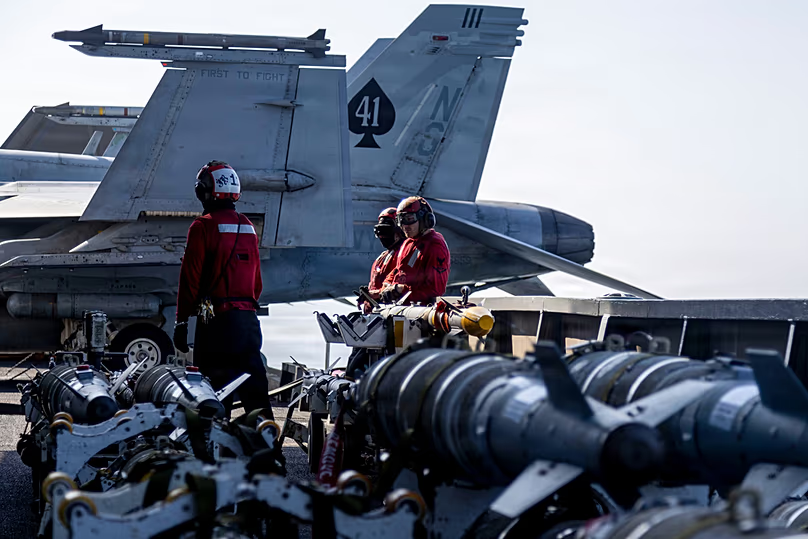
On February 28, the United States and Israel launched a war against Iran that resulted in more than three thousand deaths according to Tehran, which carried out attacks that killed and wounded Americans and Israelis, in addition to targeting Arab countries in the region.
The negotiation process aimed at ending the war remains stalled, despite a truce that began on April 8 under Pakistani mediation.
Following the failure of a first round of negotiations in Islamabad on April 11, Washington announced on the 13th of the same month the imposition of a blockade on Iranian ports, including those located on the Strait of Hormuz, vital to global energy supplies, to which Tehran responded by prohibiting passage without prior coordination with it.