Flights in the shadows… How has Sudanese airspace become a stage for opaque Egyptian movements?
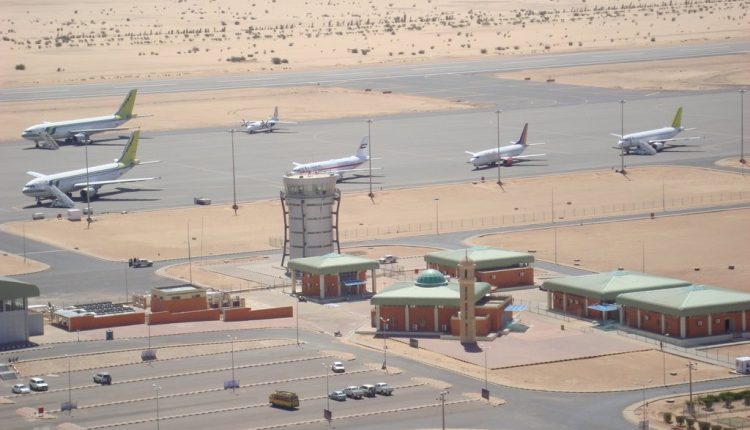
On the morning of 2 May 2026, air traffic observers tracked a cargo flight departing from Cairo International Airport bound for Port Sudan in eastern Sudan.
According to available tracking data, the aircraft took off from Cairo and headed south along a long route over Egyptian territory, passing through the southern regions of the country. It then crossed the Red Sea into Sudanese airspace from the east before continuing along the coastline and landing at Port Sudan Airport.
The unregistered private aircraft, however, followed a slightly different route. Aviation data indicates that it approached areas surrounding Khartoum before continuing toward eastern Sudan, raising questions about the nature of its mission. At the same time, additional reports pointed to another poorly identified private aircraft appearing on tracking systems, following a route from Cairo to Khartoum and then to Port Sudan.
At first glance, these flights may appear routine, but in a country that has been in open war for several years, every aerial movement becomes subject to scrutiny and questioning. Who is behind these flights? What is the nature of the cargo or passengers being transported? Why are such private and opaque flights to eastern Sudan becoming more frequent?
Investigating these routes leads to a broader picture linked to the transformations Port Sudan has undergone since it effectively became the country’s de facto seat of power following the collapse of security in Khartoum. The coastal city, once a commercial port, has now become a major political and military hub and Sudan’s primary gateway to the outside world.
Sources monitoring air traffic indicate that flights from Cairo to Port Sudan have significantly increased over the past two years, including both official civilian flights and cargo or private flights with limited public information available.
Aviation experts note that the use of private aircraft in conflict zones is not unusual; rather, it is a common tool for managing crises and warfare. Such aircraft are often used to transport sensitive figures, high-value equipment, or political and security messages that are not intended for public disclosure.
What stands out in the latest flight is the combination of two sensitive corridors: Cairo and Khartoum. Cairo is a key regional actor in the Sudanese file, while Khartoum remains the main epicentre of the conflict between the army and the Rapid Support Forces.
Tracking data further suggests that the private flight was not fully visible on some open platforms, leading observers to speculate about the use of technical measures that reduce aircraft visibility or operating systems that make continuous tracking more difficult.
Aviation security experts explain that some aircraft may temporarily disappear from tracking systems due to the deactivation of transponders, loss of coverage, or the use of special registration systems, particularly in conflict or military operation zones.
Beyond the technical details, a more important question emerges: why is Port Sudan seeing such a high volume of private and cargo flights?
The answer is likely linked to the city’s new role in the Sudanese equation. Port Sudan is no longer just a government seat; it has become a central hub for regional and international coordination on Sudan’s future. The city frequently hosts political and security meetings, foreign delegations, and operations linked to humanitarian aid and military-related issues.
Sudanese political sources report increasing behind-the-scenes activity, including informal meetings between domestic and regional actors aimed at reshaping the Sudanese landscape and preventing a full collapse of the state.
In this context, private flights become part of the hidden infrastructure of the conflict, used to transport information, individuals, and possibly informal negotiations.
It is notable that such opacity is common in other war zones such as Libya, Syria, and Ukraine, where private and cargo aircraft are used outside traditional media coverage.
The nature of the Sudanese war itself makes it difficult to obtain accurate information, given the multiplicity of actors involved and the entanglement of regional and international interests.
Researchers argue that monitoring air traffic has become an essential analytical tool in recent years for understanding developments behind the scenes, particularly through journalists and analysts relying on open flight-tracking platforms.
However, these tools do not always provide a complete picture. Some flights can be partially concealed or have manipulated data, and the presence of a cargo or private aircraft does not necessarily indicate illegal or covert activity.
In Sudan’s case, the situation is even more complex due to ongoing war, political fragmentation, and foreign interference. As a result, any unusual flight quickly becomes a subject of speculation.
As the conflict continues, Sudanese airspace appears likely to witness further opaque movements, while Port Sudan consolidates its role as the operational heart of the transitional Sudanese state.
Until official clarification is provided, flights between Cairo and Port Sudan will remain an open field of questions and another layer in a conflict unfolding not only on the ground, but also in the skies.