Why have Egyptian flights to Port Sudan become an indicator of shifts in the Sudanese conflict?
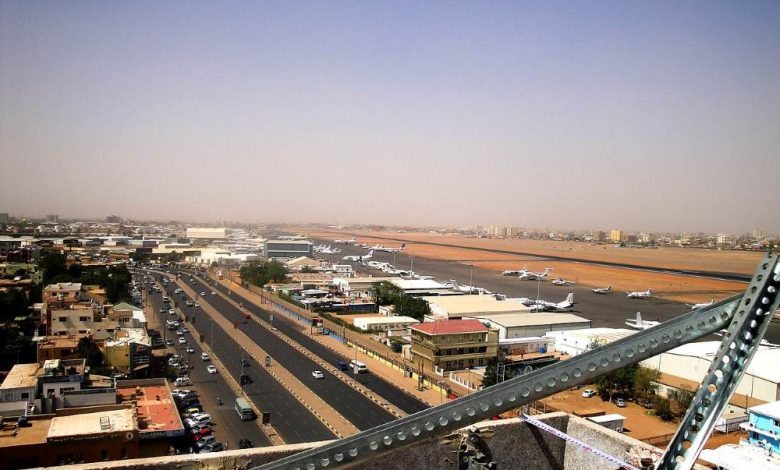
In modern warfare, it is not only battles that reveal the direction of a conflict, but also aircraft movements, ports, and supply lines. From this perspective, recent flights from Cairo to Sudan are not a minor detail; they are an indicator that can be read within the broader transformations taking place in the Sudanese landscape.
Information circulating about a cargo aircraft arriving from Cairo at Port Sudan on 2 May 2026, along with the movement of an unregistered private jet between Cairo, Khartoum, and Port Sudan, has opened a wide field of analysis regarding the current phase of the Sudanese crisis.
According to publicly available flight tracking maps, the cargo flight followed a clear route from Cairo to southern Egypt, then across the Red Sea to eastern Sudan, before landing in Port Sudan. The private aircraft, however, followed a more complex trajectory after entering Sudanese airspace, approaching areas near Khartoum before continuing toward the eastern coast.
These flight paths have led some observers to interpret the two journeys as evidence of political or security-related activity that goes beyond conventional air transport, particularly given the country’s sensitive conditions.
To understand the significance of these flights, one must first consider the geographical and political shift that has taken place in Sudan since the outbreak of war. Khartoum, once the administrative center of the state for decades, has lost much of its governing capacity due to fighting and security collapse. In contrast, Port Sudan has emerged as an alternative hub for governance, administration, and foreign relations.
This transformation has turned Port Sudan’s airport and seaport into a vital lifeline for the Sudanese state. As a result, any increase in air traffic to the city carries political and security implications that go far beyond logistics.
The first flight, the cargo aircraft from Cairo, can be understood in the context of growing needs for supply and coordination between Sudan and regional partners. Prolonged wars rely heavily on supply chains, whether humanitarian, technical, or administrative.
The second flight, the unregistered private jet, is more analytically significant. In conflict zones, private aircraft are often used to transport individuals, messages, or arrangements that are not intended for public disclosure. The lack of clear data on the flight opens the door to multiple interpretations.
Beyond speculation, what matters more is what these flights reveal about Sudan’s current reality. Sudan is no longer merely an internal crisis; it has become a regional file in which national security, energy, water resources, ports, and military influence intersect.
In this context, Cairo emerges as a key actor. Egypt views Sudan as a direct extension of its strategic security, particularly in relation to borders, the Nile, and Red Sea stability.
The continued air connectivity between Cairo and Port Sudan therefore reflects Egypt’s intent to maintain effective communication channels with Sudanese power centers amid uncertainty about the country’s future.
At the same time, these flights also highlight the fragility of the Sudanese situation. Countries engaged in prolonged wars often become dependent on external support and non-traditional logistical routes, including private flights and opaque transport networks.
Monitoring air traffic has thus become a tool of political and security analysis in its own right. Journalists and researchers increasingly rely on open-source flight tracking data to understand movements between states and conflict zones.
However, such data is not always conclusive. Some flights may be partially hidden or appear incomplete due to technical reasons or operational security measures. The presence of a cargo or private aircraft does not necessarily imply covert or military activity.
Still, the repeated movement of cargo and private flights toward Port Sudan suggests that the city has become a genuine center for managing the Sudanese crisis, and possibly a hub for restructuring political and military alliances.
These developments also reflect the growing strategic importance of the Red Sea in regional and international calculations. Sudan’s coastline has become a highly sensitive geopolitical space amid increasing competition over ports, trade routes, and energy corridors.
More broadly, these flights may also indicate the continued absence of a comprehensive political solution. The longer conflicts persist, the more non-conventional logistical and political movements increase, including private and cargo aviation activity.
Ultimately, these two flights may represent only a small fragment of a much larger picture: a country undergoing an extremely complex transition in which war and politics, regional dynamics and geography, and aircraft and hidden messages are deeply intertwined.
In this context, Sudan’s airspace remains a crucial field of observation, because what happens in the sky can sometimes be more revealing than what happens on the ground.
Editorial note: Information regarding flight paths is based on open-source tracking data and publicly available platforms, without official confirmation of the exact nature or purpose of the flights.
General sources used for flight path references:
Flightradar24
PlaneMapper
FlightMapper