Controversial flights between Cairo and Port Sudan raise questions about the nature of recent air movements
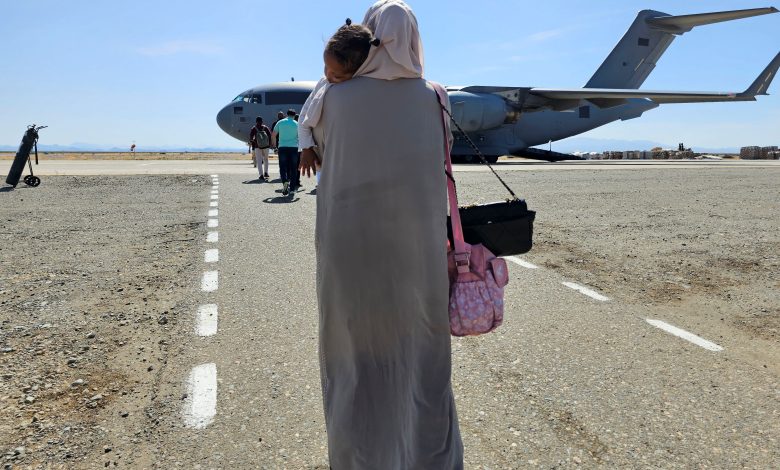
Information circulating about a cargo aircraft arriving from Cairo International Airport to Port Sudan Airport on May 2, 2026, along with reports of an unregistered private aircraft operating between Cairo, Khartoum, and Port Sudan, has triggered widespread political and media controversy. The developments come amid growing regional and international attention on air traffic linked to Sudan, as the country continues to face an internal crisis following the outbreak of war between the Sudanese army and the Rapid Support Forces.
According to air monitoring data shared by international flight-tracking platforms, the first flight followed a direct route from Cairo to Port Sudan in eastern Sudan. Over the past two years, the city has effectively become a de facto administrative capital and a hub for governmental and military activity, after Khartoum fell out of full state control due to ongoing fighting.
Flight trajectory data indicates that the aircraft departed Cairo International Airport in the morning, heading south through Egyptian airspace over Upper Egypt governorates, before passing near Aswan and proceeding toward the Red Sea. After entering Sudanese airspace, the flight continued along the western coastline of the Red Sea until it reached Port Sudan International Airport.
On tracking maps, the route appears as a standard logistical corridor between Egypt and eastern Sudan. However, the timing and cargo nature of the flight have drawn attention from observers, especially amid increasing discussion about intensified air activity toward Port Sudan in recent months.
The second flight, described as a privately operated aircraft not clearly registered in open aviation databases, has raised further questions due to the unconventional nature of its route.
According to flight-tracking sources, the private aircraft departed Cairo and initially followed a similar southern trajectory to the cargo flight, before diverting toward the interior of Sudan near Khartoum and later continuing eastward to Port Sudan.
Navigation maps suggest that the aircraft briefly flew over areas close to the Sudanese capital, which some analysts interpret as a possible technical stop or a mission involving the transport of individuals or field coordination, particularly amid ongoing security tensions in Khartoum. Early indications suggest the aircraft left Cairo bound for Khartoum before continuing to Port Sudan, a route that some observers believe may be linked to the transfer of personnel, equipment, or political messages between regional and Sudanese actors.
In the absence of detailed official statements from either Sudanese or Egyptian authorities regarding the nature of these flights, speculation has increased about their possible background, particularly as Sudan is currently undergoing a complex regional realignment linked to post-war arrangements and shifting political and military balances.
Observers argue that Port Sudan has recently become a key hub for diplomatic and military activity, receiving almost daily foreign delegations, security officials, and logistical shipments, amid continued political deadlock and growing fears of further escalation.
Aviation specialists also note that certain private or cargo flights operating in conflict zones may not appear fully on public tracking platforms, either for technical reasons involving disabled transponders or due to special flight permissions tied to mission sensitivity.
These developments come at a time of accelerating political activity surrounding the Sudan file, with international efforts to revive negotiations and secure a ceasefire, alongside continued military operations on several fronts, particularly in Khartoum and Darfur.
Political experts say that any unusual air activity between Cairo and Port Sudan carries particular significance given Egypt’s influential role in the Sudanese crisis, whether in security, political, or humanitarian terms. The continuation of air links between the two countries also reflects the strategic interconnection tied to Red Sea security and the future of the Sudanese state.
Some analysts believe the timing of the flights may be linked to behind-the-scenes diplomatic activity, amid discussions about new arrangements involving Sudan’s military establishment and certain civilian forces, as well as regional efforts aimed at preventing a full collapse of the Sudanese state.
Despite the volume of information circulating on social media, no official source has yet issued a statement clarifying the nature of the cargo, passenger identities, or the direct purpose of the flights, leaving room for further political interpretation.
Regional security experts stress that monitoring air traffic has become a key tool for understanding political and military developments in conflict zones, particularly given the reliance on private flights and air cargo to handle sensitive matters away from public scrutiny.
At the same time, concerns are growing that Sudan could evolve into an open arena of regional competition, driven by increasing external involvement and the multiplicity of actors within the crisis. The recent air movements may therefore be seen as another indicator of a deepening and increasingly complex situation rather than routine logistical activity.
Questions therefore remain regarding the exact nature of these flights and whether they are part of broader humanitarian, political, or security-related operations, pending further information that may shed light on their background and the parties involved.