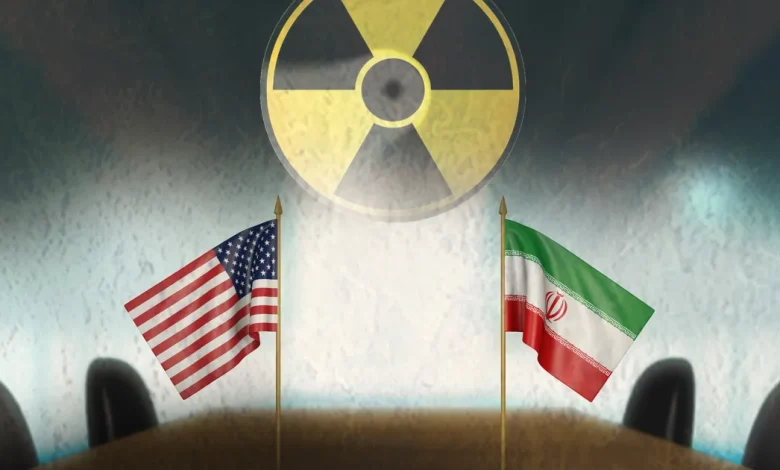
United States and Iran: Uranium Enrichment and Stockpile Become the Sticking Point of a Very Close Agreement
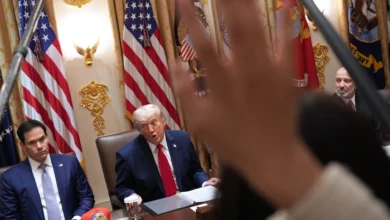
Amid reports of a preliminary agreement between the United States and Iran on a potential deal, still awaiting approval from President Donald Trump, the vice president revealed that two issues remain unresolved despite “significant progress.”
Speaking to reporters on the tarmac at Joint Base Andrews, Vice President J. D. Vance said: “The two countries are very close to signing an agreement, but it is difficult to say exactly when or whether the president will sign the memorandum of understanding. We are exchanging views back and forth on two wording issues.”
While emphasizing the progress achieved, Vance explained that several key points related to Iran’s nuclear program and highly enriched uranium remain under discussion.
He added: “There are two issues regarding the nuclear file: the stockpile of highly enriched uranium, as well as the issue of enrichment itself. So we are going back and forth with them on these matters. And we believe they are negotiating, at least so far, in good faith.”
Vance clarified that President Trump’s signing of a preliminary memorandum of understanding with Iran “is still to be determined,” noting that the two sides are still negotiating certain “wording issues.”
He continued: “We hope to keep making progress and for the president to be in a position to approve the agreement, but clearly that is still pending,” adding that he cannot yet guarantee such a deal will be reached.
Outstanding issues
He said: “We may reach a point where we can sit down and resolve these issues, but that requires a bit more progress. I cannot guarantee we will get there, but I am currently fairly optimistic.”
Despite recent exchanges of strikes, Vance confirmed that the ceasefire remains in place, while stressing that the United States retains the right to carry out defensive strikes.
Responding to a question from CNN, Vance said that “ceasefire agreements are always somewhat messy,” adding that “these situations sometimes see limited escalations.”
A U.S. official explained that one reason Trump wants to wait a few more days is to ensure that Iranian officials will sign the agreement and not back out.
He added that another reason is Trump’s desire to monitor the internal political debate surrounding the agreement before making his final decision.
The United States and Iran reached a preliminary agreement during ongoing talks, according to U.S. officials on Thursday, but President Donald Trump has not yet given his final approval, while tensions in the region remain high.
Officials confirmed that Trump’s approval will be decisive for any agreement, noting that the president had said a day earlier that he was not satisfied with the current state of the negotiations. It is also not yet clear whether Iran’s Supreme Leader has approved the deal, another necessary step to end the dispute.
However, finalizing the wording between the two countries was seen as a sign that the diplomatic track is still alive, despite direct hostilities between the United States and Iran this week.
The preliminary agreement includes the following provisions:
The inclusion of clauses lifting restrictions on the Strait of Hormuz, allowing unrestricted navigation for vessels and the lifting of the U.S. blockade.
The launch of a 60-day negotiation period to address Iran’s nuclear program, including the fate of its stockpile of highly enriched uranium. According to sources, the most complex nuclear issues still need to be resolved during those talks.
Meanwhile, Iran’s semi-official Tasnim news agency, citing unnamed sources close to the negotiating team, said the agreement text “has not yet been completed and is not final.” The sources added that Iran has not yet informed the Pakistani mediator that the text has been finalized.
Trump had previously expressed optimism about reaching a deal with Iran before later shifting his position. U.S. officials also warned that any progress in the talks could quickly collapse if Trump withholds his approval.
A person familiar with the matter said Trump is seeking guidance to ensure the agreement is “strong enough,” noting that he is particularly focused on presenting it as tougher than the 2015 nuclear deal negotiated under former President Barack Obama, from which Trump withdrew during his first term.