Zelensky’s Gamble: Attempts to Merge the War in Ukraine with the Iran Conflict
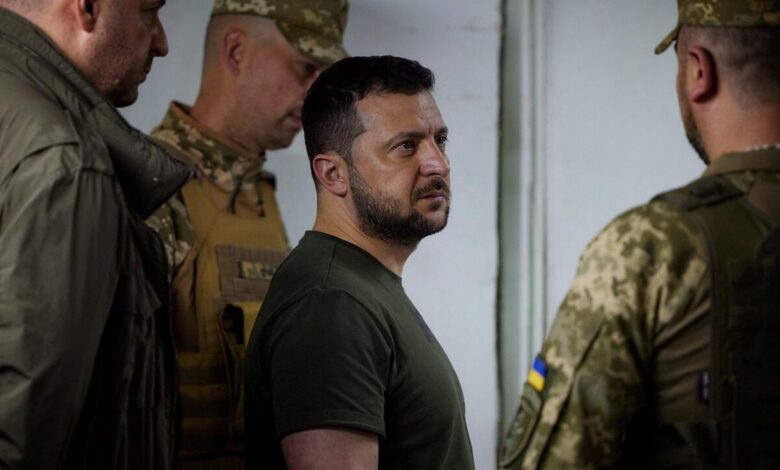
During his visit to Washington, Ukrainian President Volodymyr Zelensky is seeking to achieve an objective more ambitious than simply rallying support for his military: integrating the war in Ukraine with the conflict involving Iran into a single strategic front.
According to an analysis published by Responsible Statecraft, if the two wars were to merge, Ukraine would no longer be merely a recipient of U.S. military assistance but would become a direct participant in the war against Iran.
-
Zelensky’s Prediction: Ukrainian Air Defenses Repel a Russian Missile Attack
-
Message to the Kremlin: Zelensky Proposes a Meeting with Putin as Moscow Opens Its Doors
Likewise, the United States would no longer be merely Kyiv’s main weapons supplier. In other words, America would become a direct actor in the conflict with Russia through a confrontation stretching from the Black Sea to the Caspian Sea, the analysis argues.
For Kyiv, this would represent a strategic breakthrough that it has sought since the outbreak of the war in Ukraine in 2022, according to the analysis.
Since the beginning of the war, Ukrainian leaders have urged the North Atlantic Treaty Organization (NATO) to play a role extending beyond the provision of weapons and intelligence to Kyiv. Zelensky has repeatedly called on the alliance to establish a no-fly zone, warning that anything short of such a measure would allow Russia to bomb Ukrainian cities with impunity.
-
Zelensky dissatisfied with being sidelined: seeking a full seat at the EU table
-
Zelensky sends his envoy to Washington… Ukraine seeks a breakthrough in the wall of war
Zelensky has also pressured Western governments to provide Ukraine with advanced weapons systems, arguing that victory requires the West to abandon what he regarded as excessive self-restraint in the face of escalation.
Despite the sympathy shown toward Ukraine by former U.S. President Joe Biden’s administration, Washington consistently refused to cross several red lines. It rejected the deployment of U.S. ground troops because direct combat between American and Russian forces could trigger a broader war between nuclear powers.
Biden also rejected a no-fly zone because it would have required U.S. pilots to shoot down Russian aircraft. His administration initially refused to provide Kyiv with F-16 fighter jets, long-range ATACMS missiles, and other advanced systems. Some of these restrictions were gradually eased only after lengthy debates.
-
Zelensky warns of unusual activity on his country’s border with Belarus.
-
Patriot shortage worries Kyiv: Zelensky seeks alternatives
Nevertheless, Washington’s fundamental principle remained unchanged: to help Ukraine defend itself without allowing the United States to become a direct party to the fighting against Russia, while also avoiding diplomacy that could have brought the conflict to an end.
Today, however, the strategic landscape has changed amid the war involving Iran. Tehran has demonstrated its ability to expand the battlefield horizontally and impose costs across multiple fronts, creating a historic opportunity for Kyiv. Rather than appearing to be a country dependent on U.S. assistance, Ukraine can now present itself as a strategic asset capable of helping Washington.
Ukraine’s drone warfare capabilities have evolved faster than almost any other military innovation over the past three years. Kyiv’s experience in integrating low-cost autonomous systems into conventional warfare is unparalleled.
-
Intelligence support to Tehran… a new chapter in Zelensky’s accusations against Russia
-
Zelensky addresses Trump and Europe on the war and criticizes Hungary’s position
More importantly, Ukraine could offer Washington something it currently lacks: the opportunity to expand the conflict into an entirely new geographic theater — namely, to redirect Iran’s own horizontal escalation against it, according to Responsible Statecraft, which identified the Caspian Sea as a possible element in Kyiv’s strategic calculations.
Applying pressure on Iran from the north could complicate Tehran’s military plans and force it to redistribute its scarce resources. It would also reduce Iran’s ability to determine where the conflict is fought.
From Kyiv’s perspective, offering this capability would transform Ukraine from a U.S. ally into a strategic asset that could come to Washington’s aid. But the greatest strategic gain for Kyiv would be the merging of the two conflicts into a single war.
-
At the height of global focus on the Iran war, Zelensky travels 27 hours to the embattled east
-
Kyiv Under Fire… Zelensky Calls for Increased Pressure on Russia and Sets Conditions for Elections
Such a merger would fundamentally alter the political logic of both wars. It would lead to greater integration of U.S. personnel, intelligence assets, logistical supplies, and operational planning across the two fronts. Moreover, Russian-Iranian military cooperation would encourage Washington to treat the two countries as interconnected components of a single strategic challenge.
Once this threshold is crossed, distinguishing between supporting Ukraine and fighting Russia would become increasingly difficult. This situation could also appeal to Israel for several reasons.
First, it would give the war against Iran a new opportunity to continue. Second, it would internationalize the conflict by drawing European governments into the Iranian theater through their deep commitments to Ukraine. Third, and perhaps most importantly, it would change the political narrative: defeating Iran would no longer be framed as a necessity to defend Israel, but as a necessity to defend Ukraine.
-
Intensive Russian strikes paralyze Ukraine… Zelensky appeals to the United States
-
Ukraine abandons a Chinese drone… as a strike hits Zelensky’s hometown
Given the level of support Ukraine enjoys, such a merger would provide a more politically acceptable framework than focusing the war on Israel, whose standing in the West has declined because of accusations of “genocide” in Gaza and its central role in the outbreak of the war with Iran, according to the same outlet.
This does not mean, however, that Ukraine’s gamble will succeed. Trump may nevertheless be receptive to the idea given the impasse in the Strait of Hormuz. However, the absence of a press conference suggests that his meeting with Zelensky was not particularly productive.
Ultimately, the risk of a direct confrontation between NATO and Russia could lead to a broader and more catastrophic war. Attempts to solve one strategic problem by expanding the conflict have often made it more difficult to resolve both problems simultaneously.
The greatest danger today may therefore not lie in Trump choosing to fight two wars at once, but rather in the possibility that seemingly limited escalatory steps could gradually pave the way to catastrophe.
-
We do not want the end of Ukraine — Zelensky sticks to his conditions to stop the war
-
Fortress Belt… Zelensky’s card to break the territorial knot in the Ukrainian settlement
-
Zelensky outlines features of a peace plan… and awaits Russia’s response