Intensive U.S. strikes on Islamic Revolutionary Guard bases in Iran
The attacks aim to further reduce the threats posed by Iran and its proxies to American forces, commercial shipping routes, and neighboring Gulf states.
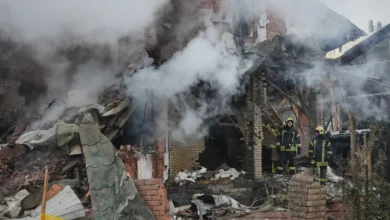
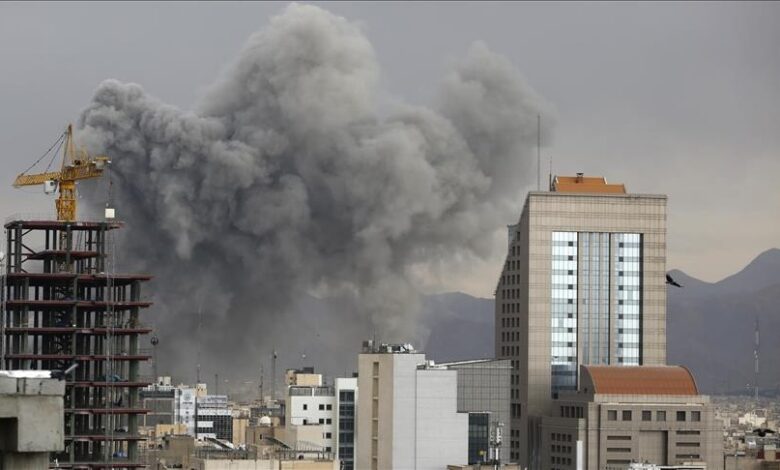
The United States Central Command (CENTCOM) announced that it had launched intensive strikes early Thursday against sites belonging to Iran’s Islamic Revolutionary Guard Corps, including military command centers, missile and drone facilities, coastal surveillance and defense positions, and naval assets, in response to attempted missile attacks targeting U.S. forces stationed in the Middle East.
-
Hardline American and Iranian positions dispel hopes for a near agreement
-
Sanctions on Iran and Aid to Israel… “American Representatives Swim Against the Biden Current”
CENTCOM stated that the operation was intended to further diminish the threats posed by Iran and its allies to American troops, international commercial shipping, and neighboring Gulf countries.
Meanwhile, Iranian media reported hearing explosions in several locations across southern Iran, particularly on Qeshm Island and in the cities of Bushehr, Abadan, and Ahvaz.
The raids mark the first U.S. strikes inside Iranian territory since President Donald Trump decided last Friday to suspend the bombing campaign in order to create a new opportunity for negotiations.
-
Netanyahu: We discussed three options for dealing with Iran, but the final decision rests with Trump
-
A war room above the runway: this is where Trump decided to resume strikes against Iran
The strikes came in retaliation for an Iranian missile attack targeting a U.S. military base in Jordan one day earlier. According to the U.S. military, all incoming missiles were successfully intercepted.
President Donald Trump vowed to “completely crush Iran” in response to the Iranian bombardment of American forces in Jordan, only days after suspending air strikes. Speaking to reporters at the White House, Trump declared, “Now it is our turn.”
He added that Washington would determine at a later stage whether an agreement with Tehran could be reached, but warned: “We will strike them hard… we will crush them completely.”
-
Trump Puts Iran’s Kharg Island Back in the Spotlight Through AI-Generated Images
-
Trump Threatens Iran with Broader Strikes as Beijing and Islamabad Open the Door to Negotiations
On Tuesday, Iran confirmed that it had launched attacks against U.S. bases in Jordan and against vessels transiting the Strait of Hormuz.
Iran was also at the center of discussions between Donald Trump and Israeli Prime Minister Benjamin Netanyahu, who explored every possible avenue for ending Iran’s nuclear program, including diplomatic efforts, economic pressure, and the use of military force.
During a press conference on Wednesday following the leaders’ meeting at the White House, a senior Israeli official stated that Netanyahu had not informed Trump that Israel favored launching a military attack against Iran.
Referring to Trump, the official said: “Ultimately, the decision is his.”
-
Washington and London Rally Allies: Western Plan to Secure the Strait of Hormuz and Contain Iran
-
Washington Uses Seized Iranian Funds to Compensate Damaged Ships
He added that three options had been examined in detail: “a negotiated agreement, the continuation of the blockade and economic pressure, or a large-scale military strike.”
According to the official, Netanyahu also presented additional proposals that have not been publicly disclosed.
Prior to their meeting, Trump reportedly expressed frustration with Netanyahu over the public disclosure of plans to discuss new intelligence regarding Picax Mountain, an underground facility linked to Iran’s nuclear program that Trump had previously threatened to bomb.
-
WarGames: The Film That Shook the Pentagon and Forever Changed America’s Nuclear Doctrine
-
Two Scenarios Could Draw Israel Back into Confrontation with Iran as Military Preparations Intensify
The Israeli official dismissed any suggestion of tensions between the two allies, emphasizing that intelligence is shared freely between them and denying that Netanyahu had pressured Trump to escalate military operations against Iran. He also left the door open to a diplomatic resolution.
At the same time, the official acknowledged that Trump is the “senior partner” while Netanyahu is the “junior partner” in the allies’ campaign against Iran.
According to the official, there are indications that Iran’s clerical leadership is unsettled by rising inflation and growing public discontent, although the impact on the global economy and oil markets also remains a major concern.
-
Iran’s Kharg Island: Carter’s Lesson That Continues to Haunt Trump
-
Infrastructure Comes Under Fire in the U.S.–Iran War
Oil prices surged sharply on Wednesday, recording one of their largest increases since the outbreak of the conflict on February 28, when a joint American-Israeli air campaign against Iran began. Tehran subsequently retaliated by launching attacks against Israel and Gulf countries.
Trump had abruptly halted the intensive bombing campaign after thirteen days, following military assessments that its objectives had been achieved.
Hostilities resumed earlier this month after the collapse of a temporary agreement reached between Washington and Tehran in June over disagreements concerning the future of the Strait of Hormuz, the world’s most important energy shipping corridor. Iran claims control over the strategic waterway and seeks to impose transit fees, a position rejected by both the United States and the international community.
-
Continuous U.S. Strikes and Naval Blockade: A Week of Fire Against Iran
-
U.S. Pressure Deepens Divisions Within Iran’s Decision-Making Circles