The Specter of the Darfur Scenario Looms Over El-Obeid
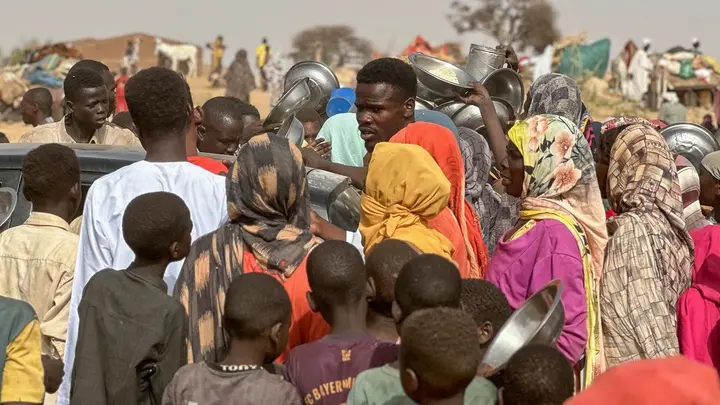
The Deputy Prosecutor of the International Criminal Court stated that many refugees witnessed the killing of their fathers or the rape of their mothers before their very eyes.
On Wednesday, Nazhat Shameem Khan, Deputy Prosecutor of the International Criminal Court (ICC), warned of the risk that the atrocities witnessed in Sudan’s Darfur region two decades ago could be repeated in El-Obeid, in central Sudan.
-
The Noise Around El-Obeid: A Smokescreen for Military Buildup in Northern Sudan
-
El-Obeid: An Open-Air Prison and Sudanese Civilians Used as Human Shields Under the Guise of Humanitarianism
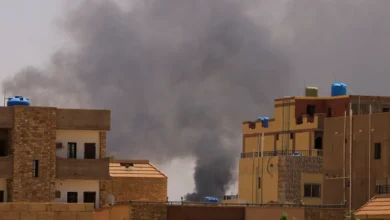
Ms. Khan stated that “the gravest international crimes may be on the verge of being committed in El-Obeid,” the capital of North Kordofan State in southern Sudan.
Her remarks were delivered during the semi-annual briefing she presented to the United Nations Security Council on Wednesday regarding the Court’s activities concerning the situation in Darfur, which the Security Council referred to the ICC in 2005, according to the United Nations’ official website.
In 2003, the Sudan Liberation Movement and the Justice and Equality Movement launched an armed rebellion against the Sudanese government, accusing it of marginalizing the Darfur region.
-
Between Loudspeakers and Checkpoints: The Plight of Sudanese Civilians Trapped in El-Obeid
-
How Is Egypt Reproducing Its Ideological Adversary Through the Sudanese Gateway?
As the conflict escalated, Western countries called for the deployment of a United Nations peacekeeping force to protect civilians in Darfur. Khartoum initially rejected the proposal before agreeing in 2004 to the deployment of African Union peacekeeping forces.
In 2005, the International Criminal Court opened an investigation into alleged war crimes committed in Darfur following a referral by the United Nations Security Council, although the Sudanese government refused to recognize the Court’s jurisdiction.
Speaking via video link, Ms. Khan said that she had recently visited eastern Chad, where she met refugees who had fled Darfur and listened to their testimonies regarding the abuses they had endured.
-
Investigation into the Siege of Sudanese Civilians and Their Alleged Use as Human Shields Behind the Media Noise
-
How Regional Zero-Sum Approaches Turned Sudan into an Endless Proxy War
She stated: “There is a genuine sense of despair throughout these camps, accompanied by a widespread belief that the world has largely forgotten them, that their lives are valued less than others, and that the magnitude of their suffering has not been met with any meaningful response.” She added that the testimonies reflected the suffering of the entire Darfur community.
She further noted that “many refugees witnessed the killing of their fathers or the rape of their mothers before their eyes, while children repeatedly suffered attacks and sexual violence and continue to endure severe psychological trauma.”
Ms. Khan stated: “What we heard reflects the very same widespread pattern of crimes that led the Security Council to refer the Darfur situation to this Council in 2005.” She added that the same crimes and the same methods of intimidation and humiliation are recurring once again, while civilians fear that “the worst is yet to come.”
-
The Evolution of Regional Involvement in Sudan (2019–2026)
-
Kordofan Bleeds in Silence: Investigation into Ethnic Cleansing Crimes in Al-Khuwai and Al-Hammadi
In the same context, Ms. Khan said that the Office of the Prosecutor shares the assessment of the United Nations High Commissioner for Human Rights that the gravest international crimes may be imminent in El-Obeid. She added, “We cannot say that we did not know.”
She urged the Security Council and Member States to take immediate action to prevent further atrocities, stating: “The responsibility now rests with this Council and all Member States to act in order to prevent further atrocities.”
On 12 May, the United Nations had already warned about the increasing number of drone attacks in the Kordofan region, reporting that these strikes had killed at least 880 civilians between January and April 2026.
-
Continuous Clashes in Sudan… Have Jeddah Negotiations Failed?
-
The catastrophe of Kutum deepens Darfur’s wounds: a drone strike raises questions about rules of engagement and civilian protection
The three Kordofan states—North Kordofan, West Kordofan, and South Kordofan—have witnessed intense fighting between the Sudanese Armed Forces and the Rapid Support Forces since 25 October.
Ms. Khan also emphasized: “Our Office continues to move forward at a rapid pace, and nothing will deter us from our objective of holding accountable those most responsible for the crimes committed in El-Fasher in 2025, as well as for the historical crimes that began more than two decades ago and whose consequences continue to fuel violence and bloodshed to this day.”
She explained that the Office of the Prosecutor had achieved “real and tangible progress” over recent months, including interviews with key witnesses that helped establish direct links between the crimes and those responsible.
She concluded: “This represents a fundamental breakthrough and a major milestone. It sends a clear message to those who direct these attacks, those who plan them, and those who support atrocities from afar while believing they will benefit from them: you are mistaken.”
-
The Sudanese army’s bombardment in Kutum opens an investigative inquiry into the targeting of a wedding ceremony and allegations of a catastrophic error in North Darfur
-
A new massacre in Darfur: army drones kill 12 civilians, including 6 children.
-
Between Darfur and Khartoum: Tracing Violations through Victims’ Stories
-
El-Fasher: the open investigation at the heart of Darfur
-
Sudan: Reliable Evidence Unveiled of Chemical Weapons Used to Kill and Maim Hundreds of Civilians Including Children in Darfur
-
Darfur Crimes Haunt Him… The ICC Demands Al-Bashir’s Surrender