Lana Nusseibeh: Targeting Commercial Ships or Using the Strait of Hormuz as a Tool of Coercion Is Unacceptable
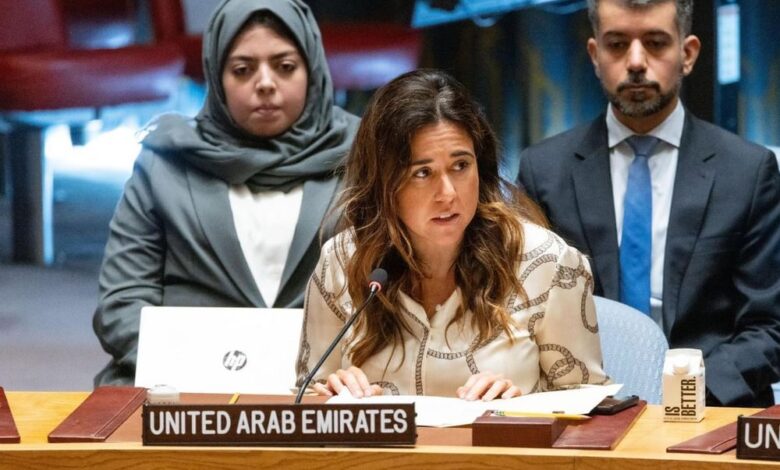
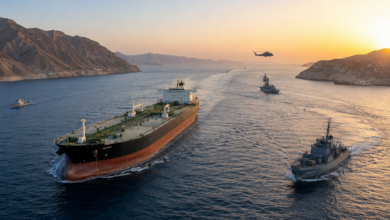
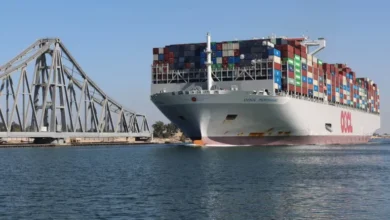
Lana Nusseibeh, UAE Minister of State, affirmed that the United Arab Emirates firmly rejects attacks on commercial vessels or the use of the Strait of Hormuz as a means of coercion or blackmail, describing such actions as unacceptable.
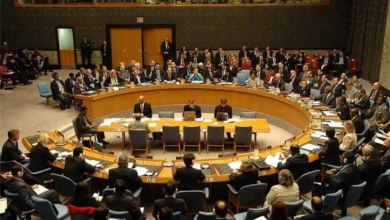
She made these remarks while participating in the High-Level European Union–Gulf Cooperation Council Forum on Regional Security and Cooperation, held in Brussels.
-
Iran’s Attacks Beyond Its Territorial Waters: Systematic Violations and Six Legal Options
-
Washington Launches a New Wave of Strikes as Iran Closes the Strait of Hormuz
According to the Emirates News Agency (WAM), the forum focused on regional developments in the Gulf and the Strait of Hormuz and brought together the foreign ministers of the Gulf Cooperation Council member states and the European Union on the sidelines of the EU Foreign Affairs Council meeting.
The forum was co-chaired by Kaja Kallas, the European Union’s High Representative for Foreign Affairs and Security Policy; Jassem Mohammed Albudaiwi, Secretary-General of the Gulf Cooperation Council; and Dr. Abdullatif bin Rashid Al Zayani, Minister of Foreign Affairs of the Kingdom of Bahrain.
-
Iran in the hands of a weaker and more divided regime… who actually rules?
-
Iran and the politics of terrorism: breaking the regime begins with dismantling four pillars
During her visit to Brussels, Lana Nusseibeh also held several high-level bilateral meetings with her European counterparts, including Chris Fearne, Malta’s Minister for Foreign Affairs; Kęstutis Budrys, Lithuania’s Minister of Foreign Affairs; Oana Silvia Țoiu, Romania’s Minister of Foreign Affairs; and Tanja Fajon, Slovenia’s Minister of Foreign Affairs. She also met with counterparts from Denmark, Norway, and Slovakia, as well as Maroš Šefčovič, the European Commissioner for Trade and Economic Security.
Regarding regional stability and geopolitical developments, Nusseibeh discussed the latest security developments in the Middle East and the Gulf, including the regional environment following recent events in the Strait of Hormuz.
-
Iran war threatens submarine cables in the Strait of Hormuz
-
U.S. threats push oil tankers to avoid the Strait of Hormuz
She stated: “We are fully aligned with our European partners on the importance of strengthening peace and security in the Arabian Gulf and safeguarding freedom of navigation through the Strait of Hormuz. The current situation is not merely a regional challenge; it has direct implications for global economic and security interests.”
She stressed that the United Arab Emirates considers attacks against commercial shipping or the use of the Strait of Hormuz as an instrument of coercion to be entirely unacceptable. Such actions, she said, constitute acts of piracy and pose a direct threat to regional stability, the security of the peoples of the region, and global energy security. She emphasized that the shared objective remains achieving lasting peace, stability, and security throughout the Gulf and its surrounding region.
-
An Iranian newspaper: Tehran expands its target bank in the Gulf
-
Trump mobilizes for a Hormuz alliance and broader international involvement in the war against Iran
As part of efforts to strengthen trade and economic partnerships, Nusseibeh met with European Commissioner Maroš Šefčovič to review the progress of negotiations on the Comprehensive Economic Partnership Agreement between the United Arab Emirates and the European Union. The agreement aims to remove a broad range of existing trade barriers. The UAE is the European Union’s largest export market and its leading investment partner in the Middle East and North Africa, with annual bilateral trade exceeding €94 billion.
Nusseibeh explained that the proposed agreement extends far beyond tariff reductions. According to her, the UAE and the European Union are not merely trading partners but strategic partners whose strengths complement one another. Europe offers leadership in technology, institutional excellence, and large consumer markets, while the UAE provides investment capital, global connectivity, resilient energy supplies, and access to the rapidly growing markets of the Middle East, Africa, and Asia.
-
Iran tightens its grip on the streets and escalates nighttime bombardments on multiple fronts
-
Dispute between the army and the Revolutionary Guard over closing the Strait of Hormuz
She further noted that Emirati investments contribute to semiconductor manufacturing in Europe, the establishment of data centers, and the development of clean energy infrastructure. She emphasized that shared challenges—including energy security, resilient supply chains, and economic competitiveness—require stronger cooperation, which remains the most effective path forward.
She said: “Since launching the Comprehensive Economic Partnership Agreement program in 2021, the United Arab Emirates has concluded more than thirty-seven agreements with strategic partners around the world, reflecting its enduring commitment to rules-based free trade and mutually beneficial economic cooperation. The UAE believes that the future Comprehensive Economic Partnership Agreement with the European Union will rank among the most significant of these agreements—not merely as a trade accord, but as the foundation of a broader strategic partnership built on trust, resilience, openness, and shared ambition. Once concluded, it will expand trade, create new investment opportunities, strengthen supply chains, and deepen business cooperation between both sides.”
-
No U.S. Withdrawal from the Region During Negotiations with Iran
-
Geopolitical risks unsettle global markets after Khamenei’s death
She added: “The current challenges facing our region have underscored the importance of close coordination between the United Arab Emirates and Europe. At a time of increasing geopolitical uncertainty, investing in sustainable partnerships has become essential for promoting stability, prosperity, and shared security. This is the path we are committed to building together.”
Lana Nusseibeh also participated in the Donors’ Group for Palestine meeting in Brussels, where participants reaffirmed their shared commitment to advancing peace efforts and addressing the urgent humanitarian needs in the Gaza Strip.
The discussions emphasized the importance of supporting the Peace Council and its recovery and governance plan for Gaza, while highlighting the need for continued international cooperation to create the conditions necessary for achieving lasting peace between Palestinians and Israelis.
-
The US National Security Advisor in Abu Dhabi to Discuss Iranian Threats
-
Hormuz Guarantees and Nuclear Dust: Washington Tightens the Conditions for an Agreement with Iran
-
From the Nuclear Issue to the Strait of Hormuz: Trump Reshapes the Confrontation with Iran as Escalation Knows No Limits