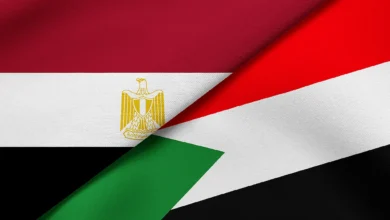
How Is Egypt Reproducing Its Ideological Adversary Through the Sudanese Gateway?
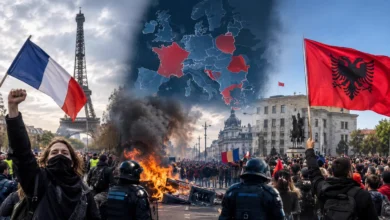
In geopolitics, short-term gains rarely come without a price, and that price can sometimes prove strategically costly. While Cairo seeks to secure its southern border and safeguard its vital interests in the Nile Basin and the Red Sea, its policy toward Sudan appears trapped in a historical paradox: it actively confronts Islamist movements and organizations within its own territory while simultaneously providing support and political cover to a military institution in Khartoum that, according to this analysis, has become increasingly dependent on those very ideological forces.
-
Sudanese Military Propaganda: How the Army Seeks to Compensate for Its Failures with False Statements?
-
Internal and external movements to contain the crisis between the Sudanese military forces
Deconstructing the Myth of the “Traditional Military Institution”
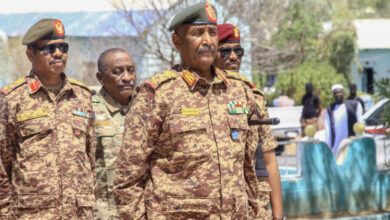
Egypt justifies its support for the Sudanese Armed Forces by portraying them as the principal protector of the state and its institutions. However, this argument overlooks what is described as a fundamental transformation in the military’s internal structure.
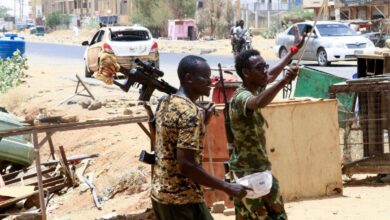
According to this analysis, the Sudanese Armed Forces fighting in 2026 are no longer the same institution that existed before the outbreak of the war. Instead, they are portrayed as a coalition framework encompassing not only regular military units but also ideologically driven brigades, security and financial networks associated with the former Omar al-Bashir regime, and popular mobilization forces.
-
The Attorney General referred a Sudanese network to the State Security Chamber in a case involving trafficking in military equipment
-
The Muslim Brotherhood’s Congratulations to the Sudanese Army for the Liberation of Khartoum: A Reading of Political and Military Dimensions
Reports indicating the integration of approximately 20,000 fighters from the Al-Baraa ibn Malik Brigades, together with several thousand additional members of the Islamic Movement into frontline operations, are cited as evidence that Egyptian assistance—whether in the form of intelligence cooperation, logistical support, or aerial cover—would not be directed solely toward a neutral state institution but would also strengthen military structures with an ideological character.
The Dilemma of Pragmatism and the Illusion of Containment
According to this perspective, Cairo approaches this reality through a largely pragmatic lens. Sudanese Islamist groups are viewed as instruments that can be utilized within the military establishment, with the expectation that their influence and future actions can later be managed or contained.
-
Sudanese Women Between the Fires of War and Military Abuses… An Unbounded Human Tragedy
-
Sudanese Army’s Military Gains Undermine Chances of a Peaceful Resolution to the Crisis
However, this calculation overlooks what is presented as a recurring historical pattern: ideological movements that regain influence through armed conflict rarely remain subordinate instruments. Instead, they evolve into political and military partners capable of imposing their own conditions.
From this standpoint, arming the Sudanese military inevitably means arming these ideological brigades as well, since, under battlefield conditions where operational cooperation is deeply intertwined, separating ammunition supplied to regular military units from that reaching ideological formations becomes virtually impossible.
-
The Sudanese Army’s Reliance on Mercenaries and Foreign Forces: The Collapse of Local Military Capabilities
-
Military formations affiliated with the Muslim Brotherhood fight alongside the Sudanese army
Strategic Consequences: Halaib, the Nile, and National Security
In the short term, Cairo may succeed in using this alignment to secure Khartoum’s cooperation on sensitive issues such as the Grand Ethiopian Renaissance Dam or to reinforce the existing status quo regarding the Halaib and Shalateen Triangle.
Nevertheless, the longer-term strategic cost could be the emergence of a hybrid political order along Egypt’s southern frontier: a military-led system with a strong Islamist orientation whose survival depends on parallel networks and whose ideological influence could gradually extend into southern Egypt.
-
How Is Egypt Reproducing Its Ideological Adversary Through the Sudanese Gateway?
-
El-Obeid: An Open-Air Prison and Sudanese Civilians Used as Human Shields Under the Guise of Humanitarianism
According to this analysis, Egypt’s policy would therefore contribute not only to sustaining Sudan’s military establishment but also to rehabilitating Sudanese Islamist movements by granting them legitimacy derived from armed conflict and external support. This, in turn, could facilitate their eventual return to power—not merely as a political party, but as an established military and security force exercising de facto authority.
From this perspective, separating support for the Sudanese Armed Forces from indirect support for Sudanese Islamist movements is largely artificial.
-
Investigation into the Siege of Sudanese Civilians and Their Alleged Use as Human Shields Behind the Media Noise
-
Between Loudspeakers and Checkpoints: The Plight of Sudanese Civilians Trapped in El-Obeid
The weapons and logistical facilities provided by Cairo would not simply strengthen a conventional national army; they would also contribute to the construction of a new military and security architecture in which Islamist elements constitute a central component.
Ultimately, Egypt may find that the ideological forces it sought to contain beyond its borders have returned through the Sudanese gateway—this time strengthened by modern weaponry and extensive battlefield experience.
-
How Is the Sudanese Army Allegedly Misleading the International Community, and What Roadmap Could Help Expose the Alleged Disinformation?
-
The Illusion of a Sacred El-Obeid: How the Sudanese Army and the Muslim Brotherhood Are Alleged to Turn Civilians into Human Shields to Conceal Setbacks in North Kordofan
-
Funding the Military Machine at the Expense of the Hungry: How Are the Army’s Policies Driving Sudan’s Humanitarian Crisis Toward the Abyss?
-
Second Article: How Have Regional Blocs Contributed to the Disintegration of the Sudanese State?