Iran Offers Concessions Under US Economic Pressure
Iran’s foreign minister has proposed allowing inspections of nuclear facilities bombed during the war with the United States in exchange for sanctions relief, reversing Tehran’s previous opposition to such access.
During meetings in New York, Iranian Foreign Minister Abbas Araghtchi proposed allowing inspectors from the International Atomic Energy Agency (IAEA) to access Iranian nuclear facilities damaged by bombing during the war in return for an easing of sanctions, Bloomberg reported on Thursday.
The proposal signals Tehran’s willingness to consider concessions under pressure from the economic crisis and US sanctions.
Iran had previously expressed categorical opposition to allowing international inspectors to visit several sites targeted by US and Israeli strikes during the conflict.
Diplomats familiar with the matter told Bloomberg that Araghtchi presented the idea during closed-door meetings with European and Middle Eastern officials on the sidelines of the United Nations General Assembly.
The sources said the confidential nature of the discussions prevented them from disclosing the identities of the participants.
The proposal comes as Iran faces mounting economic pressure caused by US sanctions and tighter restrictions on sectors and financial networks linked to the country.
Although Araghtchi did not provide extensive details about Iran’s domestic economic situation during the talks, diplomats said the proposal to link nuclear cooperation with sanctions relief reflected the scale of the pressure confronting Tehran.
Iran’s demands were not limited to US sanctions. Four sources told Bloomberg that Araghtchi had also asked European countries to reverse a decision taken last year that reinstated United Nations sanctions against Iran.
European officials have so far declined the request, creating another obstacle to any potential agreement between Tehran and Western powers.
The development comes as the diplomatic process suffered a further setback following the collapse of indirect negotiations between Iran and the United States.
According to Axios, US Secretary of State Marco Rubio asked the Iranian delegation led by Araghtchi to leave the United States on Thursday after the talks stalled without making progress.
The Iranian delegation reportedly departed only hours after hopes of achieving a diplomatic breakthrough faded. Qatari mediators nevertheless continued communicating with both sides in an effort to find a formula that would allow negotiations to resume and overcome the principal areas of disagreement.
Alongside the diplomatic process, Washington is continuing to broaden its economic pressure campaign against Tehran.
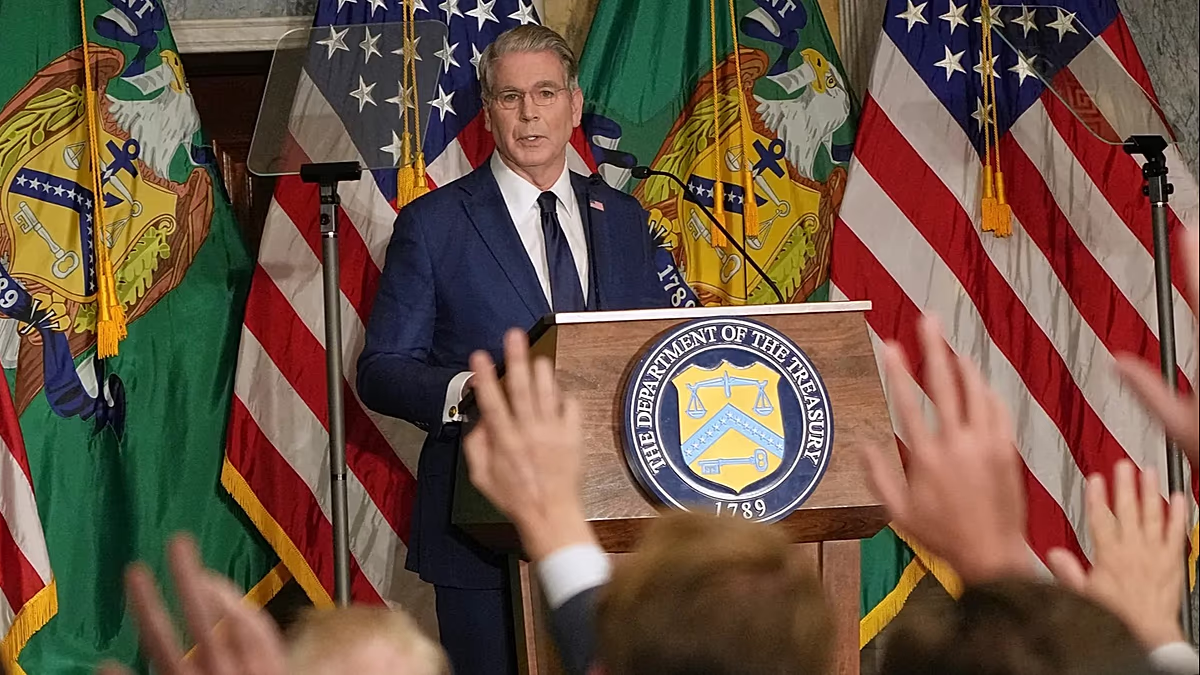
In August, the US Treasury Department launched a campaign called “Economic Outcast”, aimed at tightening restrictions on sectors and networks that Washington considers sources of financing and support for the Iranian economy.
US measures have recently expanded to additional economic sectors, including the automotive and railway industries.
The expansion comes as Iranians face declining purchasing power and the continuing depreciation of their national currency. This is placing the Iranian government under increasing domestic pressure while foreign sanctions remain in force and negotiations with Washington remain deadlocked.
Araghtchi’s proposal carries significance beyond the question of access to damaged nuclear facilities.
According to the information reported by Bloomberg, it raises for the first time the possibility of exchanging a concrete step on the nuclear issue for economic relief.
Tehran is therefore attempting to balance the requirements of international cooperation with the protection of its interests under the continuing sanctions regime.