When Weapons Turn Inward: Nabatieh Clash Raises Questions About Discipline Within Hezbollah
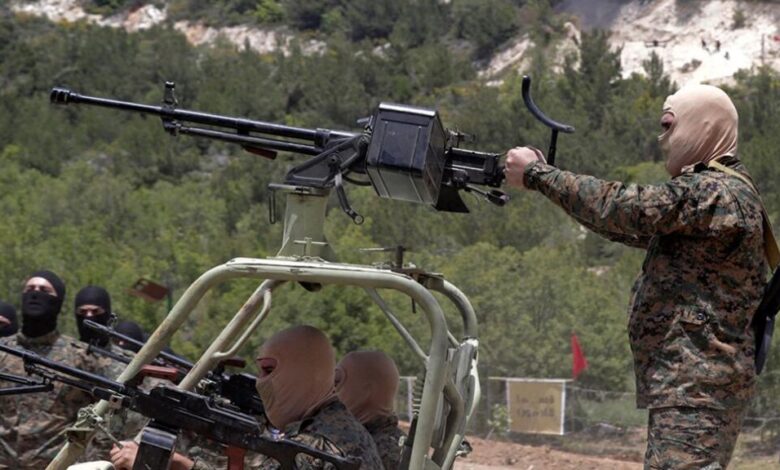
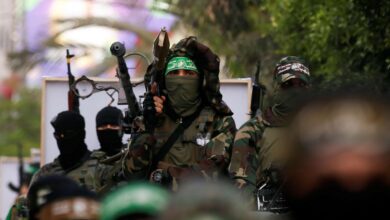
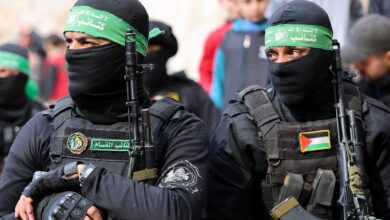
An armed confrontation between two groups of Hezbollah members in the centre of Nabatieh has opened a particularly sensitive issue for the movement: its ability to control its fighters and their weapons. The incident comes as Hezbollah undertakes an extensive reconstruction of its military and security structures following the heavy losses it sustained during the war.
The confrontation began as a personal dispute between two men from the Balhas and Shahrour families in Nabatieh’s central square.
The dispute did not remain confined to the two individuals. It escalated rapidly when other armed men intervened to support each side, with gunfire spreading towards the Serail neighbourhood before Hezbollah officials stepped in to halt the violence.
Sources said the Lebanese security services did not arrest any of the participants. Hezbollah instead detained several of those involved and opened an internal investigation. It remains unclear what disciplinary measures the movement intends to take against them.
The original cause of the dispute is still uncertain. It has not been established whether it involved money, competition for local influence or another matter. The organisational positions of the two men are also unknown, although sources said they did not work within the same sector.
Local sources confirmed that a member of the Balhas family was shot by someone from the Shahrour family. The confrontation reportedly left several people injured and caused widespread panic before party officials intervened to resolve the incident outside the framework of Lebanon’s official security institutions.
From a Personal Dispute to a Clash Between Armed Groups
The significance of the incident lies in the speed with which a personal disagreement developed into a confrontation between two armed groups.
According to sources following the matter, the involvement of additional gunmen raises a question that extends beyond the original cause of the dispute: can Hezbollah’s leadership control the weapons held by its members and prevent them from being used in conflicts unrelated to the confrontation with Israel?
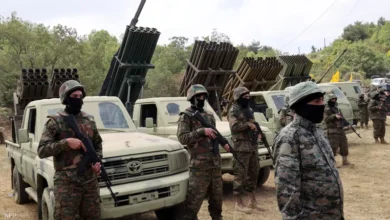
The incident comes at a sensitive time for Hezbollah, which has been carrying out a large-scale military and organisational rebuilding process since the war.
Reuters reported in March that Iran’s Islamic Revolutionary Guard Corps had participated in rebuilding Hezbollah’s military command. The new structure reportedly shifted towards smaller and more decentralised units to reduce their exposure to intelligence operations and preserve their ability to function following heavy losses among the movement’s leadership.
Sources close to Hezbollah have also spoken of a redistribution of responsibilities and authority, as well as internal investigations aimed at addressing weaknesses exposed during the war.
Yet while decentralisation gives smaller units a greater ability to survive and operate, it also creates a major challenge in managing thousands of members dispersed throughout their local communities, particularly in areas such as Nabatieh and Iqlim al-Tuffah.
Fighters Inside Cities
Security sources indicate that Hezbollah altered the deployment of its members following Israeli strikes. The movement evacuated certain concentrations and permanent sites before dispersing fighters among villages and towns.
Some returned to civilian employment while retaining their organisational affiliation and readiness to be called back into service.
This arrangement makes it more difficult to distinguish between military members and civilians, particularly when weapons remain accessible outside clearly designated military sites.
The Nabatieh incident alone is not sufficient evidence of a breakdown in Hezbollah’s organisational discipline. It nevertheless presents a different kind of practical test: weapons intended to form part of an organised military structure were used in an internal dispute, requiring the movement itself to intervene and bring the participants back under control.
The State Arrives Late
Another contradiction concerns the location of the confrontation.
In September, Nabatieh witnessed a broad civic campaign demanding a stronger presence by the Lebanese army and official security services. Additional patrols and military posts subsequently appeared across the city, although the army said its presence there was not new.
Military sources later stressed that the army’s deployment did not signal the beginning of a mission to bring all weapons under exclusive state control. The units stationed in Nabatieh had received no orders to carry out such a task.
Only weeks earlier, an altercation was reported in Arab Salim, in the Nabatieh district, allegedly involving individuals associated with Hezbollah and the Amal Movement. The municipality later said the incident had been personal and limited in scope, with no organisational dimension.
In the latest Nabatieh incident, however, the contradiction is clearer. Shots were fired, people were injured and some of the participants were identified. Yet who detained those involved and initiated disciplinary action? According to the information obtained, it was Hezbollah itself rather than the Lebanese security services.
A Test of Internal Discipline
Political researcher Mazen Bilal says it would be an exaggeration to treat such incidents automatically as evidence of a split within Hezbollah. Their significance lies instead in the new environment in which the movement has been operating since the war.
Bilal notes that Hezbollah has historically relied on local fighters who live in southern Lebanon’s villages and cities and form part of their social fabric.
This structure has provided the movement with considerable flexibility and freedom of movement. However, it makes discipline a more sensitive issue when the boundary between military activity and everyday life becomes less distinct.
The challenge Hezbollah faces today therefore extends beyond rebuilding its military capabilities. It must also keep weapons subject to a clear chain of command while restructuring its organisation, dividing its members into smaller units and dispersing them throughout their home regions.
Bilal added that repeated incidents in which Hezbollah members use their weapons in local disputes could transform an apparently individual problem into a much larger organisational and political challenge.
The risk would become especially serious if such cases continued to be handled internally by Hezbollah rather than through Lebanon’s official institutions.
The central responsibility, in line with demands from residents of Nabatieh and other areas, remains to ensure that security and weapons are held exclusively by legitimate state institutions. No political party or faction should be allowed to impose its own security arrangements at the expense of the presence and authority of the Lebanese state.