Islamist Influence Networks Under International Scrutiny: An Analysis of Western Legislative Decisions and Media Reports
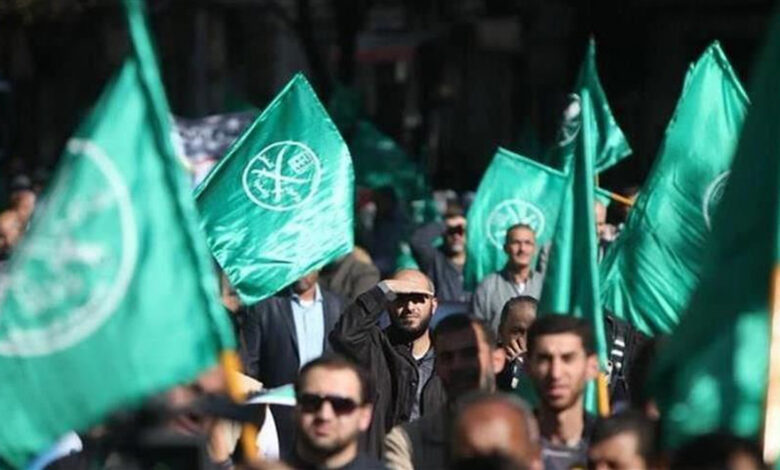
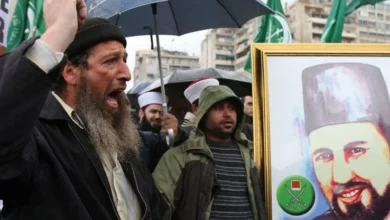
The Muslim Brotherhood is currently facing one of the most complex structural crises in its history in Europe and the United States. Strategies of “political dissimulation” and concealment behind charitable or rights advocacy fronts are no longer sufficient to shield the organisation from Western legal and security action.
Recent legislative developments reveal a clear shift: Western policymakers have moved from reacting to terrorist acts towards taking preventive action to cut off the ideological and financial environments that foster extremism. This new dynamic is reflected in stringent restrictions on financial flows, close oversight of schools and associations, and the enactment of designation laws that remove legal protections from the organisation’s longstanding branches.

This strategic shift has attracted considerable attention from major international media platforms seeking to unpack its implications. In this context, Le Pont de Genève, a prominent French-language Swiss outlet specialising in political and international affairs, published an extensive report entitled “Beyond Violence: Europe Now Focuses on Muslim Brotherhood Networks”. The report stated that European capitals no longer view the organisation solely through the narrow security lens of armed violence. Instead, they are increasingly focusing on “strategic political Islam”, which seeks to build parallel societies within Europe. The platform highlighted new legislative measures in France and heightened security warnings in Germany, driving demands for strict oversight of mosques, educational institutions and foreign funding to bring an end to the organisation’s ideological influence.
Italian journalism has followed this European momentum with analysis focused on the dimensions of long-term influence. The Italian newspaper Il Sole 24 Ore, described as the country’s leading economic and political media institution since its establishment in Milan in 1865, published an article entitled “Europe’s Muslim Brotherhood Debate Puts Its Influence Strategy Under Scrutiny”.

The newspaper, which carries substantial influence in European decision-making circles, warned that the organisation relies on a quiet, gradual strategy of expanding its presence by building financing networks and religious and social institutions capable of shaping a separate identity for European Muslims. It noted that current discussions in Brussels and Paris move between calls for decisive action to designate the organisation as terrorist and political concerns about the impact of such stringent decisions on Muslim communities that are not politically engaged.
For its part, the Brussels-based Belgian platform EU Reporter, widely followed by policymakers in the European Parliament, offered an in-depth assessment in an opinion piece entitled “Beyond Violence: Europe’s New Focus on Muslim Brotherhood Networks”. The article focused on the security environment in northern Europe, citing ongoing efforts in Ireland to restructure the management of the central Clonskeagh Mosque, historically funded by Gulf institutions, amid suspicions of close ties to the Muslim Brotherhood. The Belgian platform also discussed repeated efforts by organisations such as the Forum of European Muslim Youth and Student Organisations, or FEMYSO, to deny any ideological links to the organisation. It stressed that European oversight bodies no longer consider verbal denials sufficient and now demand complete financial and organisational transparency.

This wave of restrictions has not been confined to Europe. It reached its peak in the United States through unprecedented legislative decisions at state level. Illustrating this escalation, the Indian network News18, the digital outlet of the major TV18 media group in partnership with CNN International, published an exclusive report entitled “Florida Designates CAIR and the Muslim Brotherhood as Terrorist Groups and Imposes Sweeping Restrictions”. The report stated that Florida’s governor had signed HB 1471 into law, officially listing the Council on American-Islamic Relations, or CAIR, and the Muslim Brotherhood as domestic terrorist organisations. It described the law as a devastating blow to the organisation’s financial and social infrastructure in the state, barring it from receiving government contracts or public funding and prohibiting all its promotional and student activities on public university campuses.
The independent French platform L’Observatoire de l’Europe promptly examined the legal dimensions of this American decision in an article entitled “Florida Designates CAIR as a Terrorist Organisation”. The platform, which seeks to support debate on international policy, stated that the decision was issued on 29 September 2026 and took effect on 5 November of the same year. The report focused on the legal arguments advanced by Florida’s judicial and executive authorities concerning CAIR’s historical role in the 2007 Holy Land Foundation terrorism-financing case and its alleged links to Hamas. It also examined the counterarguments presented by American rights organisations, including the American Civil Liberties Union, or ACLU, challenging the law’s constitutionality on the grounds that it violated freedom of expression.

As part of the same French coverage, the political and geopolitical website Issues published a detailed report entitled “Florida Authorities Designate CAIR as a Terrorist Organisation”. It expanded on the background to the new legislation, explaining that Florida had added the radical left-wing movement Antifa alongside the Muslim Brotherhood and CAIR, while linking its state list to more than 90 organisations designated at the US federal level.
The outlet reported firm official statements from Governor Ron DeSantis and Attorney General James Uthmeier, alongside arguments from a legal expert who suggested that direct evidence of criminal activity might be insufficient to withstand scrutiny before the Supreme Court. It also recalled that the United Arab Emirates had been the first country to designate the council as a terrorist organisation, in 2014.
EU Reporter subsequently returned to the international dimensions of the American decision in a second report entitled “A New US Escalation Against the Muslim Brotherhood: Florida Designates CAIR as a Terrorist Organisation”. The platform placed the initiative within Washington’s continuing policy of containing the Muslim Brotherhood, which had previously included designations and sanctions targeting branches in the Middle East and Africa, notably Egypt, Jordan, Lebanon and Sudan. The report highlighted strong reactions from CAIR’s Florida chapter, which described the decision as unconstitutional political targeting based on unsubstantiated allegations and lacking a sound legal foundation.

Finally, the international Belgian platform Modern Diplomacy completed this analysis with a specialised assessment involving academics and diplomats, entitled “Florida Lists CAIR as a Terrorist Organisation and Reignites the First Amendment Dispute”. The platform stressed that the ongoing legal dispute in American courts extends beyond the designation of a particular organisation to raise a fundamental question about the limits of state authority to restrict institutional activities on the basis of security and intelligence assessments. This convergence and momentum in international media reporting confirm that the confrontation with the Muslim Brotherhood’s influence networks has entered a stringent legal and institutional phase in which traditional strategies of concealment will no longer prove effective.