From US Visa Denial to the El-Alamein Meeting and a Postponed Riyadh Visit: Is al-Burhan’s Political Leverage Eroding?
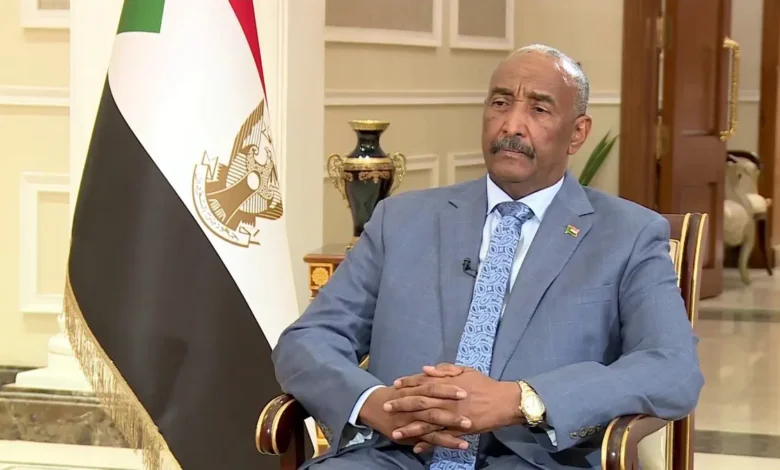
Between diplomatic setbacks in Washington, the circumstances of a secret meeting with Massad Boulos in Egypt and the postponement of an expected Riyadh visit, Abdel Fattah al-Burhan faces a complex political test. External pressure intersects with influence struggles within the Port Sudan camp, raising questions about who actually controls decisions over Sudan’s war.
The challenges facing Sudanese army chief Abdel Fattah al-Burhan are expanding. Confrontation with the Rapid Support Forces is no longer the only front determining his political future. Alongside continued war and deteriorating economic and humanitarian conditions, there are signs of stalled diplomatic efforts and growing international pressure for a humanitarian truce, coinciding with internal disagreements over managing the war and distributing power. Developments discussed in two analytical episodes portray a political landscape where Washington’s, Cairo’s, and Riyadh’s calculations intersect with internal balances in Port Sudan.
US Visa Denial: A Diplomatic Blow or a Political Message?
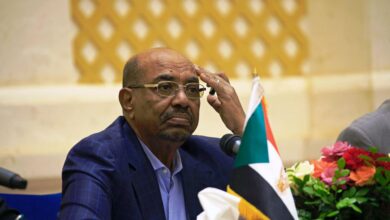
The United States’ refusal to grant al-Burhan a visa for UN General Assembly meetings was a central topic in the first episode. According to the transcript, the decision came amid disagreements over a proposed ninety-day humanitarian truce attributed to presidential adviser Massad Boulos, alongside accusations that Sudan’s military leadership was delaying its response.
The development matters beyond the army chief’s attendance at international meetings because of its timing and implications for future US engagement with the warring parties. Under the approach described by the episode, Washington seeks to end the fighting and create conditions for a political process. The army leadership maintains its military and political positions amid internal complexities that may restrict concessions.
The episode cited Cameron Hudson’s assessment that visa denial was an exceptional step, sending a political message to Port Sudan’s leadership. Treating it as an official withdrawal of recognition of Sudan’s governing institutions, however, requires examining the stated US position. Denying an official a visa does not itself constitute a formal change in diplomatic recognition.
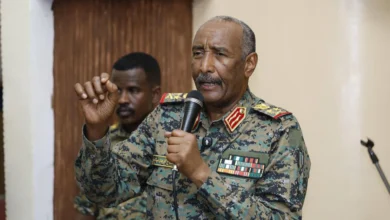
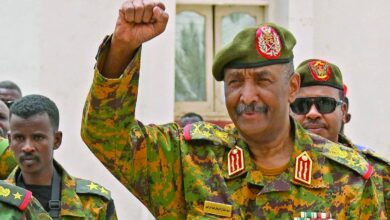
The episode also described al-Burhan appearing at a youth gathering in a Khartoum stadium, where he reportedly adopted a defiant stance towards the United States. It interpreted this as an attempt to demonstrate indifference to external pressure and regain the initiative domestically. It also criticised the shift from international platforms to popular gatherings, arguing that mobilisation alone cannot resolve strained foreign relations or answer questions about the war’s future.
This interpretation overlaps with the second episode’s account of al-Burhan attending a gathering near Merowe after details of his meeting with Boulos emerged. The programme suggested that he sought to reassure allies and reaffirm the military option amid concerns that US contacts could raise questions within the army camp about a truce. Connecting these appearances to particular motives nevertheless remains the episodes’ interpretation and cannot be established without direct evidence.
Hamdok in Washington: Competition Over Representing Sudan Abroad
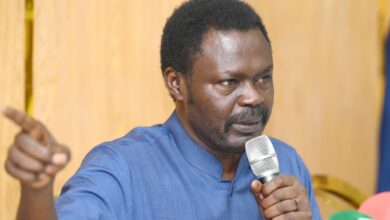
Against al-Burhan’s diplomatic difficulties, the first episode discussed Washington receiving a delegation of pro-peace civilian forces led by Abdalla Hamdok. According to the transcript, it met international officials and sought coordination between mediation groups, including the four-party and five-party formats, while linking an end to the war with a political process addressing the crisis’s roots.
These simultaneous activities reveal competition extending beyond conventional diplomacy to influence over a future settlement and representation of Sudanese aspirations internationally. While military leaders seek to retain their place in governance, civilian forces aim to offer an alternative linking peace to a restructured political process and action on the conflict’s causes.
A civilian delegation’s presence in Washington does not automatically transfer international recognition or settle competition over representation. The actual impact of diplomacy depends on building workable understandings, persuading belligerents to stop fighting and securing civilian participation in a process that does not become merely an agreement between military power centres.
A fundamental dilemma emerges: can external pressure secure a truce without agreement within the camps themselves about ending the war? International understandings may create an opening but do not guarantee implementation. Political will and clear compliance and monitoring mechanisms are needed, especially amid numerous armed actors and overlapping interests.
The El-Alamein Meeting: What Happened Behind Closed Doors?
The second episode described a meeting between al-Burhan and Massad Boulos during a lunch hosted by Egyptian President Abdel Fattah al-Sisi in New El-Alamein. According to the transcript, Boulos announced it through a social media post after the encounter had been surrounded by considerable secrecy.
The programme argues that al-Burhan wanted the meeting kept out of public view because of possible reactions among Islamist allies, particularly as discussions concerned ending the war. If accurate, this interpretation raises questions about his room for manoeuvre and ability to negotiate internationally without moves towards a truce causing internal disputes.
The most sensitive claim concerns remarks attributed to al-Burhan about limited control over domestic war-related decisions. The episode said he expressed no objection in principle to an agreement but indicated insufficient control over decision-making at home. It interpreted this as evidence of the Islamic movement’s influence and networks within the army-supporting camp.
These attributed remarks require an authenticated recording or direct source to verify their accuracy and context. The underlying question nevertheless remains central: if military leaders face internal constraints preventing a settlement, which actors can obstruct agreements or insist on continued war?
The answer extends beyond al-Burhan to alliances formed around the army since fighting began. His supporters include multiple forces whose interests in future power differ and whose priorities may not align with a political settlement. International initiatives therefore require a clear understanding of influence within those alliances rather than negotiation solely with official leaders.
Riyadh Postpones the Visit as Red Sea Issues Enter the Calculations
Diplomatic challenges did not stop with Washington and Cairo. The first episode said al-Burhan requested an urgent Saudi visit to discuss developments surrounding the US position, but was asked to postpone it. The programme portrayed this as difficulty securing regional support at a sensitive time. Establishing the reasons, however, requires Saudi Arabia’s official position and details of the intended agenda.
Explaining Sudanese outreach to Riyadh, the episode discussed attempts to revive maritime boundary demarcation in the Red Sea as a strategic issue that could expand cooperation. It also linked this to possible concessions favouring Egypt over the Halaib and Shalatin triangle, citing earlier Saudi-Egyptian maritime arrangements.
This remains a political inference requiring independent evidence. Maritime boundary discussions do not necessarily imply agreement over disputed land, and a postponed visit or discussion of regional issues cannot independently establish political bargaining. Verification is particularly important where sovereignty, borders and strategic interests are involved.
The episode also examined reports of efforts to involve Islamist battalions fighting alongside Sudan’s army in protecting Saudi Arabia’s southern border against Houthi threats from Yemen. It suggested potential political and financial gains for Sudanese leaders, but the transcript does not establish an actual deployment agreement or the formations’ mission. These should therefore be treated as reports and allegations requiring verification, not confirmed military arrangements.
Together, these issues illustrate growing connections between Sudan’s war and regional security calculations. The Red Sea, borders and military cooperation extend beyond bilateral relations into wider balances. Using them as negotiating leverage does not necessarily ease pressure on Port Sudan, particularly if internal disagreements persist or international efforts fail to produce tangible progress towards ending the fighting.
Diplomatic Difficulties Reflect a Deeper Struggle Over Decisions
The developments discussed in both episodes suggest that al-Burhan’s predicament extends beyond a postponed visit or denied visa. It involves three overlapping struggles: external pressure to end the war, competition over Sudan’s political representation, and disagreements within the camp conducting military operations.
Visa denial reopened questions about his relationship with Washington. Civilian outreach in the US capital prompted debate about the political process, while the El-Alamein meeting raised questions about his decision-making latitude. Reports concerning Riyadh, the Red Sea, and Yemen also showed that regional engagement is intertwined with wartime calculations and power balances.
The dilemma becomes more complex when diplomatic disagreements coincide with internal tensions over appointments and new armed formations. Preserving alliances may constrain negotiating concessions, while continued war deepens the economic and humanitarian crisis and increases the need for an urgent settlement.
Ultimately, al-Burhan’s political position cannot be measured solely through postponed visits or closed-door meetings. It must also be assessed through his ability to turn foreign engagement into practical steps towards ending the war, implementing agreements, and opening a broader political process. If international initiatives continue to encounter domestic obstacles and external outreach produces no tangible results, Sudan will remain trapped between diplomatic pressure and competing interests, while civilians bear the conflict’s greatest cost.