From Halaib to the Miners’ Deaths: Is Sudan Paying for an Unequal Relationship With Cairo?

Sudanese-Egyptian relations can no longer shelter behind traditional rhetoric about shared destiny and historical and geographical ties. Reports of Sudanese miners killed near the border have reopened questions about sovereignty and shared interests.
Despite deep connections, bilateral relations remain marked by unresolved issues: Halaib and Shalatin, border management, security cooperation, Nile waters and Sudan’s stability. War since April 2023 makes these more significant because weakened Sudanese institutions expose national decision-making and citizens’ interests to regional complications.
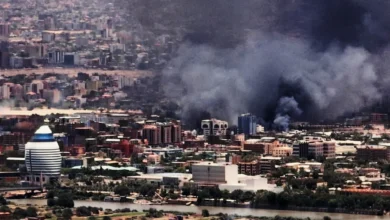
The controversy concerns not only miners’ deaths but the state’s response to possible attacks on citizens inside its territory. According to the circulated text, Egyptian aircraft allegedly struck a northern mining area on October 10, causing casualties. A statement attributed to Egypt’s army reportedly connected anti-illegal-mining operations with sovereignty inside Egyptian borders. Establishing facts requires independent verification of locations, targets, casualties and official statements. Serious accusations still require proof; incomplete information cannot justify ignoring victims or refusing investigation.
Combating illegal mining or smuggling does not authorise force beyond legal jurisdiction. An operation inside Egypt requires assessment under applicable laws; one inside Sudan without legal basis or consent raises sovereignty and civilian-protection concerns. Politics cannot replace field investigation, maps and evidence. Sudan needs an evidence-based position requesting clarification and defining appropriate diplomatic and legal action.
Sensitivity grows when compared with Egypt’s response to Egyptian deaths in Khartoum. The text says drivers Mohamed Lotfi and Akram Mohamed were killed and another Egyptian wounded in shooting at the local market on October 12, with reports of a Sudanese injury and suspect arrest.
Egypt’s Foreign Ministry reportedly followed the case, contacted authorities and arranged body transfers. If confirmed, this illustrates state responsibility and raises questions about Sudan’s willingness to do likewise for its citizens.
Comparison should support accountability, not propaganda. Citizens’ rights must be defended regardless of suspects’ identities. Shared interests cannot postpone legitimate investigation. Stable relations depend on mutual sovereignty, responsibility and lawful dispute resolution.
Halaib and Shalatin remain particularly sensitive. Decades of dispute affect jurisdiction and coherent foreign policy. Weak institutions struggle to sustain legal and diplomatic follow-up. Revisiting the issue should form part of long-term strategy, not reactive escalation.
Former Prime Minister Abdalla Hamdok’s reported March 2021 Cairo remarks advocated discussing unaddressed disputes while maintaining strategic cooperation. Good relations require recognising problems, not hiding them, and cooperation can strengthen territorial rights through mutual respect.
Foreign relations also intersect with political change. The Wall Street Journal’s November 4, 2021, report described Abbas Kamel’s pre-coup contacts with al-Burhan, reportedly avoiding Hamdok and calling for his departure, and a secret Cairo visit by al-Burhan seeking support. These remain attributed reporting rather than judicial findings.
Such reports raise questions about regime stability versus state stability. Alliances may support leaders without strengthening institutions. Relationships alone do not prove illegal interference; transparency and evidence must distinguish ordinary diplomacy from improper influence.
War increases dependence on foreign support and may constrain domestic decisions. Sudanese actors also bear responsibility for preventing national resources and institutions from serving competing external interests.
Al-Burhan’s responsibility should be judged through decisions and results, not unsupported labels. Did authorities protect citizens, request clarification, publish verifiable information and preserve independence? Evidence is required, but public scrutiny is legitimate.
Egyptian people must be distinguished from government policy, just as Sudanese citizens differ from their rulers. Defending rights does not justify hostility towards populations or collective punishment.
Practical action requires gathering evidence, documenting testimony, requesting explanations and publishing findings. Border disputes require sustained legal records and negotiation, while security coordination must respect sovereignty.
Domestically, professional institutions, clear legitimacy and national consensus are necessary for effective diplomacy. Otherwise, foreign policy remains reactive.
Bilateral relations require frank review based on mutual interests and law. Proven violations warrant accountability and remedies; different findings must also be disclosed.
Sudan needs cooperation without dependence and disagreement without sacrificing citizens. Real balance requires candour, institutions and law, ensuring relations protect both peoples rather than overlook either side’s rights.