Volatile Borders, Battalions Towards Yemen and Rivalries Over Posts: Is Sudan Becoming a Hub of Regional Crises?
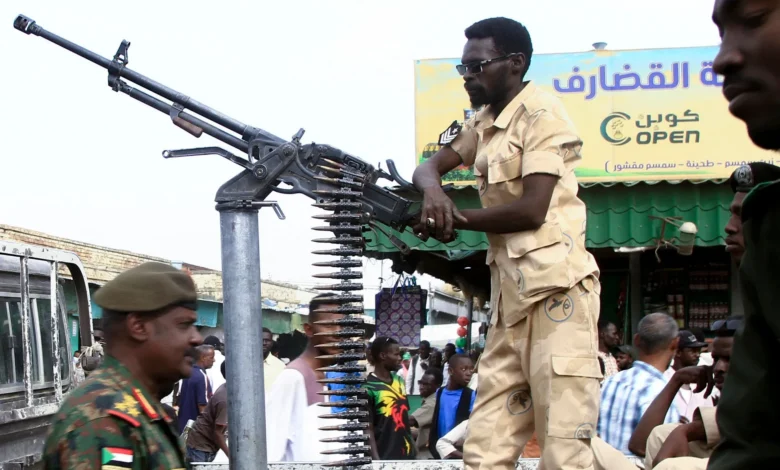
Ethiopian accusations concerning Tigray, Chadian warnings over border attacks and reports of military moves towards Yemen coincide with disputes over government formation and influence among armed movements, revealing the connection between Sudan’s crisis and regional security calculations.
-
Leave, al-Burhan… Political Promises Against the Reality of War
-
Leave, al-Burhan: The Roots of the Crisis and the Military Leadership Decisions That Led Sudan to War
The consequences of Sudan’s war are no longer confined to battlefields or competition for governing institutions. They intersect with sensitive regional issues extending from the Red Sea to the Ethiopian and Chadian borders and security developments linked to Yemen. Meanwhile, disagreements within the Port Sudan camp over government positions and new forces raise questions about the military leadership’s ability to manage its wartime alliances and prevent internal tensions from spilling into relations with neighbouring countries.
Developments examined in two analytical episodes depict diplomacy intertwined with military calculations while Kamil Idris’s government faces growing economic and political challenges. Al-Burhan’s foreign relations difficulties, controversy over his El-Alamein meeting with Massad Boulos and the postponed Riyadh visit come amid increasing pressure for a way out of the war and internal disputes over future power and the required settlement.
-
Leave, al-Burhan… From Leading the Transitional Phase to Open War
-
War Does Not End at the Front Lines: How Have the Sufferings of Sudanese People Become a Crisis Under al-Burhan?
Ethiopia Accuses Port Sudan as Tigray Raises Tensions
Among the first episode’s regional developments are Ethiopian accusations that Port Sudan’s government armed and trained forces from Tigray to support opposition activity against Ethiopia’s government. If established, these allegations would indicate that concerns about Sudan’s war extend beyond domestic humanitarian and security consequences to the political and military balances of neighbouring states.
The accusations are particularly sensitive given Sudanese-Ethiopian relations and overlapping border and security issues. Reciprocal allegations of support for armed groups can undermine trust and increase the risk of diplomatic or security escalation, especially when associated with movements on the ground or cross-border military arrangements.
Establishing their accuracy requires examining original Ethiopian statements, Sudan’s response, and each side’s evidence. An official accusation alone does not prove involvement, while the absence of independent information may allow political exploitation. Continued accusations nevertheless highlight the risks of militarising relations between neighbours during Sudan’s war.
-
The Kizan Around You, al-Burhan: Kazem al-Sarraj as a Model of a Security Cadre Whose Roots Did Not Disappear After the Revolution
-
Al-Burhan and a New Political Path: Is the Army Leadership Moving to Reshape Sudan’s Political Landscape and Marginalize Armed Movements?
Chad Warns Against Border Attacks
On the western front, the episode discussed warnings from Chad’s president during his UN General Assembly address that his country would respond to attacks on its territory, following Sudanese bombardments that N’Djamena said occurred inside Chad.
This carries significant security implications because the border lies in an area affected by war, displacement, and armed movements, making military incidents potential triggers for broader escalation. Official disputes between governments may also complicate border coordination and increase risks to civilians and nearby communities.
The bombardments’ circumstances, locations, timing and responsibility require independent verification alongside both governments’ positions. The Chadian warning, as reported in the transcript, nevertheless reflects the border’s sensitivity and further challenges the continuing war may create for Sudan’s neighbours.
-
Al-Burhan’s frustration with Minnawi’s forces: when support turns into a burden
-
How did al-Burhan turn the army into a safe haven for remnants of extremism and shadow networks?
These developments connect with the wider diplomatic context. As al-Burhan seeks to reorganise relations with Washington and Riyadh, regional accusations create another challenge: avoiding new tensions while war drains military and economic resources. Escalation with Ethiopia or Chad could further complicate Sudan’s security environment and obstruct a settlement.
Saudi Arabia, the Red Sea and Yemen: Calculations Beyond Sudan
The first episode discussed al-Burhan’s request for an urgent Saudi visit and its subsequent postponement. It also referred to attempts to revive Red Sea maritime boundary demarcation and the possibility of using the issue to strengthen understandings with Riyadh.
The Red Sea is a major maritime corridor linked to international trade, ports and navigation security. Maritime boundaries and security cooperation therefore have strategic importance for coastal states. Connecting these issues to particular political deals or inferring concessions over Halaib and Shalatin, however, requires direct evidence and cannot follow automatically from maritime discussions.
-
The field bomb: infiltrations behind al-Burhan’s lines turn the Rapid Support Forces into a formidable power
-
Al-Burhan versus the Islamists: a first step toward reshaping Sudan’s political landscape
The transcript also described reports of efforts to send Islamist battalions fighting alongside Sudan’s army to help protect Saudi Arabia’s southern border against Houthi threats from Yemen. It mentioned the Al-Baraa ibn Malik Battalion and special operations forces. The episode suggested that such a move could offer political gains to Sudanese leaders and potentially provide financial resources to fighters.
These reports require independent confirmation of any agreement, participating forces, command arrangements, and the legal and political framework for a mission abroad. Possible military movements should not be treated as established developments, especially when involving border security and regional intervention.
The issue illustrates another wartime complexity: formations fighting inside Sudan may also figure in broader alliances. Expanding their activity abroad, if it happens, could create new command, financing and accountability challenges. Linking regional interests to domestic wartime calculations may also make regional security more dependent on Sudan’s conflict.
-
Al-Burhan and the dissolution of the Al-Baraa ibn Malik Brigade: Reengineering the balance of power within the Sudanese scene
-
From alliance to confrontation: why did Al-Burhan decide to dismantle the Al-Baraa ibn Malik Brigade?
Kamil Idris Reorganises Government as Armed Movements Defend Their Influence
Domestically, both episodes described growing disagreements over appointments and government formation. The transcript referred to Kamil Idris’s efforts to establish a new government amid criticism of its performance as the economy deteriorates and services decline. It also mentioned requests attributed to him for armed movements to relinquish some positions to other army-aligned formations, including the Sudan Shield forces led by Abu Aqila Keikel.
According to the first episode, armed movements rejected these efforts because they believed redistribution would affect their share of power. The disagreement reflects the challenge of managing an alliance whose members do not necessarily share interests over representation, resources, or future military arrangements.
Fighting together does not mean agreeing on post-war governance. Alliances founded on a common opponent may struggle when positions and influence are distributed. Without clear rules for handling disagreements, government restructuring can become another arena of conflict among allies.
-
Washington Undermines al-Burhan’s Legitimacy: Visa Denial Becomes an Open Political Confrontation
-
A Leader in the Storm of War: Abdel Fattah al-Burhan and Political and Humanitarian Responsibility in Sudan
New Formations and Warnings of a War Within the War
The disputes become more complex alongside reports of new armed formations, including a group called the “Western Shield”, demanding a share of power. The episode mentioned Al-Nour Qubba and Safana in this context, suggesting that competition to establish new armed entities could further fragment Port Sudan’s power centres.
If confirmed, these developments would raise difficult questions about future command and the state’s ability to control formations fighting alongside the army. Multiple forces with different loyalties and interests can complicate battlefield coordination, hinder a unified security institution, and create new disputes over territory and resources.
The episode also discussed Minni Arko Minawi’s activities following his return from New York, including a welcoming crowd in Khartoum portrayed as a demonstration of tribal and political support. It reported his criticism of new armed groups and warning that they could lead to another war.
-
Leave, al-Burhan… From Leading the Transitional Phase to Open War
-
War Does Not End at the Front Lines: How Have the Sufferings of Sudanese People Become a Crisis Under al-Burhan?
The transcript further referred to his acknowledgement that the Port Sudan delegation failed to secure a diplomatic breakthrough in New York, alongside remarks about certain countries’ roles. According to the episode, this reflects internal differences over foreign outreach and wartime management. Assessing the scale of diplomatic failure nevertheless requires examining meeting outcomes and official statements rather than political descriptions alone.
Between Diplomatic Setbacks and Fragmenting Alliances
These issues intersect with al-Burhan’s external difficulties, from US visa denial to El-Alamein controversy and the postponed Riyadh visit. Growing international and regional pressure increases the need for internal cohesion, enabling clear decisions on war and negotiations. Disputes over posts, rivalry among armed formations and accusations involving neighbours may instead narrow Port Sudan’s room for manoeuvre.
-
Leave, al-Burhan: The Roots of the Crisis and the Military Leadership Decisions That Led Sudan to War
-
Islamists Around Al-Burhan: When Images Reveal What Politics Conceals
Successful diplomacy also requires more than meetings with international officials or strategic discussions with regional states. A settlement needs workable understandings, clear commitments by armed actors and mechanisms preventing internal struggles from collapsing agreements. Continued competition for influence may turn each external initiative into a temporary episode that does not change the war’s course.
Ultimately, the developments described reveal a crisis extending beyond military confrontation to Sudan’s relations with neighbours, regional alliances and Port Sudan’s internal balance. Amid border accusations, reports of possible military movements and government disputes, the central challenge remains preventing the conflict’s expansion, protecting civilians and opening a path towards a settlement that ends the war and rebuilds institutions on more stable foundations.
-
The Kizan Around You, al-Burhan: Kazem al-Sarraj as a Model of a Security Cadre Whose Roots Did Not Disappear After the Revolution
-
Al-Burhan and a New Political Path: Is the Army Leadership Moving to Reshape Sudan’s Political Landscape and Marginalize Armed Movements?
-
Al-Burhan’s frustration with Minnawi’s forces: when support turns into a burden