Sudan’s Gold and Its Citizens’ Blood: Who Protects National Wealth When the Authorities Are Fighting to Stay in Power?
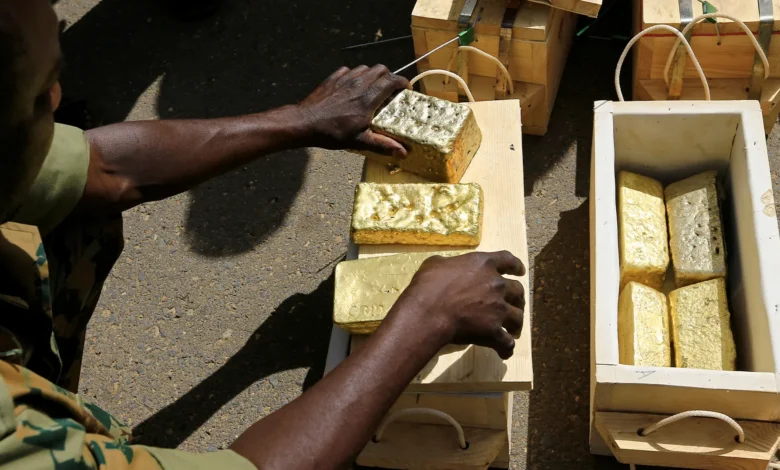
Sudan’s natural resources are no longer simply an economic asset capable of helping the country overcome accumulated crises. Amid continuing war, they have become closely connected to the struggle for power, the state’s future and its ability to protect resources and sovereignty.
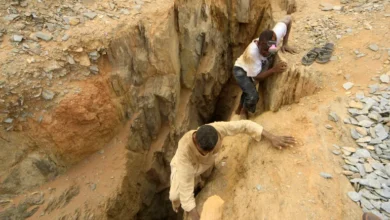
Gold, which should support development, finance public services and help rebuild the economy, is surrounded by complex networks of interests and informal activities as government institutions lose oversight, regulatory and revenue-collection capacity. Since fighting expanded in April 2023, minerals have become increasingly important in economic and military calculations. Mining areas, trade routes and borders bring together miners, traders, local authorities and armed forces. Reports of Sudanese miners killed on October 10 in strikes attributed to Egyptian aircraft have therefore revived a fundamental question: how can a state unable to guarantee mining workers’ safety protect national wealth and prevent it from fuelling instability, corruption and conflict?
According to the circulated account, the incident’s seriousness extends beyond casualties at a northern Sudanese mining site to working conditions and the state’s ability to regulate border-area activity and protect livelihoods. The text described alleged Egyptian air strikes, deaths and injuries, and a statement attributed to Egypt’s army about combating illegal mining. Responsibility nevertheless requires independent verification of the location, circumstances and official account, using field evidence, witness testimony, maps and coordinates. Circulating accounts cannot be treated as definitive before verification, but incomplete information must not justify ignoring victims’ rights or avoiding a transparent investigation. The state’s first responsibility is to establish the truth and act legally and politically on the evidence.
The issue highlights the relationship between mineral wealth and institutional weakness. Gold is vital in a country facing declining activity, disrupted production and growing reconstruction needs. Its value is measured not only by extraction, but by whether revenues benefit the public, enter a transparent economy and avoid financing conflict or enriching interest networks. Weak oversight makes it difficult to determine production, Treasury revenues, export flows and communities’ fair share. The gap between underground wealth and public poverty can consequently grow, turning a potential development resource into another driver of crisis.
Risks are particularly high in artisanal mining, where workers face difficult professional and security conditions, limited healthcare, water and safety equipment, shaft collapses, accidents and disputes over sites. Border areas add smuggling and jurisdictional uncertainty. Combating illegal extraction cannot rely solely on security measures or leave miners exposed to danger. A legal framework must define work areas, issue transparent licences, enforce environmental and occupational standards, protect workers and address violations fairly. Economic alternatives are also needed so unsafe or unregulated mining is not communities’ only option.
If the alleged strikes occurred inside Sudan, the issue extends beyond regulation to resource protection and sovereignty. If investigations locate them elsewhere or establish different circumstances, findings must be clearly announced. Either way, serious investigation is essential because uncertainty harms victims’ rights and border governance. Unlawful force, if established, requires diplomatic and legal action, accountability and reparation. Border security arrangements should also be reviewed and coordination improved without giving any actor unrestricted permission to use force or exceed legal authority.
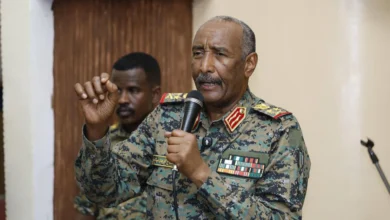
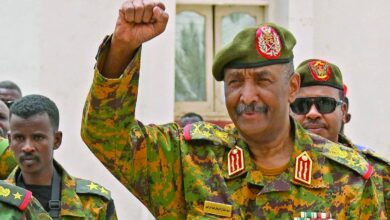
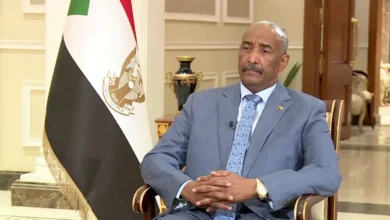
The incident cannot be separated from criticism of Abdel Fattah al-Burhan’s military administration and questions about civilian protection and wartime resource management. Protecting wealth requires coordinated mining, finance, customs, policing, judicial and diplomatic institutions operating under clear rules and verifiable data. Concentrated authority, declining transparency and overlapping military-economic calculations weaken oversight and increase resource competition between power centres. Accountability must therefore assess not only who carried out any confirmed bombardment, but also whether Sudanese institutions protected the area, regulated activity and pursued victims’ rights.
The circulated text criticised the official response, mentioning a fact-finding committee without resolution of the location or responsibility. A committee may be necessary, but does not replace accountability or demonstrate seriousness by itself. Its powers, independence, basic information and timetable should be public. Evidence of strikes inside Sudan should inform a specific diplomatic position. If evidence is insufficient, the committee must explain its findings and remaining gaps. Truth, whether it supports or contradicts official expectations, is the foundation for rights and trust.
Egypt’s reported response to Egyptian citizens’ deaths in Khartoum on October 12 also informs comparisons between states’ reactions. The text described drivers Mohamed Lotfi and Akram Mohamed being killed and another Egyptian wounded in shooting at the local market in southern Khartoum, followed by Foreign Ministry engagement. If confirmed, this illustrates protection beyond condolences: investigation follow-up, care for the injured and accountability. Sudanese citizens can demand equivalent seriousness, especially in a sensitive border and resource case. A remote miner’s life is no less valuable than a capital resident’s, and limited public visibility must not reduce attention to rights.
The issue also intersects with Halaib and Shalatin, a longstanding Sudanese-Egyptian border dispute. Boundaries concern resources, communities, trade and jurisdiction, not merely map lines. Border incidents therefore require precise geographical and legal identification before broad territorial conclusions. Sudan also needs sustained diplomacy preserving documents and official claims. According to reported remarks in Cairo in March 2021, former Prime Minister Abdalla Hamdok called for discussion of unaddressed bilateral issues, including Halaib and Shalatin. Cooperation with neighbours requires clear, equal management of disputes rather than their neglect.
Resource governance also relates to foreign relationships surrounding Sudan’s political changes. A Wall Street Journal report on November 4, 2021, described pre-coup contacts and visits, including meetings between al-Burhan and Egyptian officials. Citing a Sudanese government adviser, it reported that then Egyptian intelligence chief Abbas Kamel told al-Burhan that Hamdok must leave. It also described a secret Cairo visit before the coup seeking support. These remain accounts attributed to the newspaper and its sources, not conclusive judicial findings. They nevertheless raise questions about regional interactions and economic and security decisions. Independent, transparent institutions are needed to prevent wealth-related decisions from entering political understandings without public oversight.
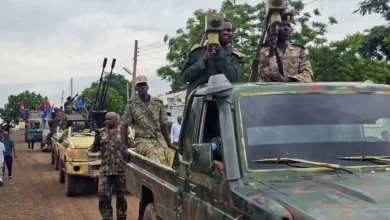
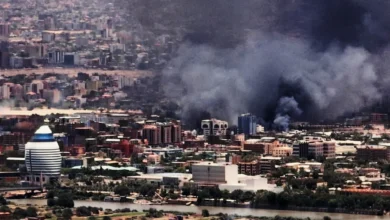
War makes these questions more urgent by fragmenting the economy. Disrupted output, damaged infrastructure, declining trade and rising humanitarian needs reduce state resources and increase pressure on remaining income-generating sectors. Without transparent management, gold revenues may cease supporting services and reconstruction and instead become contested assets. Mining reform is therefore part of rebuilding the state: publishing production, export and revenue data, improving traceability, reviewing contracts and licences, and combating smuggling and corruption through financial and judicial institutions rather than selective campaigns.
Artisanal miners must not be treated merely as a security or economic problem. Many families depend on them. Organised smuggling and corruption networks must be distinguished from workers seeking livelihoods amid limited opportunities. Regulation requires occupational safety, basic healthcare, cooperatives, licensing and incentives, alongside penalties for proven exploitation, pollution and resource smuggling. Protecting wealth begins with protecting workers; economic development cannot be separated from social justice.
Excessive natural-resource dependence also exposes the economy to shocks. Gold cannot alone rebuild Sudan, resolve unemployment or compensate for agricultural, industrial and service-sector losses. Mining reform must form part of wider support for agriculture, livestock, industry, small and medium-sized businesses, infrastructure and youth employment. Public revenues should fund education, health, water, electricity and reconstruction. Success is measured by improvements in people’s lives and national stability, not simply gold extracted.
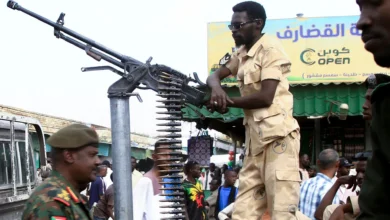
This strategy depends on ending war and restoring institutional legitimacy. Prolonged conflict undermines investment, oversight and planning, while political division weakens common rules. Civilian protection, peace and humanitarian access are prerequisites for recovery. Professional military and security institutions subject to popularly legitimate civilian authority could also limit connections between armed power and economic interests. National wealth belongs to the people through state institutions, not to prolonged conflict or armed influence.
The authorities must explain resource management and worker protection. Sudanese people have a right to know regulatory plans, gold monitoring, anti-smuggling measures, revenue use and safety arrangements. They should also see border-incident findings, if it occurred as reported, and any diplomatic measures. Demanding information is neither betrayal nor hostility: it is legitimate public oversight and a condition for accountable institutions.
Sovereignty and patriotism matter when translated into protection of people, territory and resources. Rejecting foreign interference is insufficient without effective border governance and defence of citizens’ rights. Nor does rhetoric about restoring the state compensate for declining resource oversight. Conversely, failures should not automatically become unsupported accusations of dependence. Evidence must establish responsibility, and proven violations or negligence should be addressed. Political criticism should enable reform rather than deepen division while leaving causes unresolved.
Ultimately, the miners’ case raises a broader question: will resources remain contested under weak institutions or become a foundation for reconstruction and protection? The answer depends on peace, rebuilt institutions, regulation, anti-corruption, transparency and sovereign, mutually beneficial foreign relations. It also depends on willingness to account for events, provide documented information and act on established violations or failures.
Sudanese gold must serve society rather than competing interests. Its protection begins with institutions that enforce law, defend workers, oversee revenues and prevent resources becoming tools of political and military conflict. Restoring sovereignty requires a state that protects people before resources, holds officials accountable before demanding citizens’ silence and directs wealth towards development and peace. Only then can gold become a route to recovery and an economic foundation serving Sudanese people and future generations.