Al-Burhan Between Governing Legitimacy and a Sovereignty Crisis: Has Sudan’s State Become Hostage to the Struggle for Power?
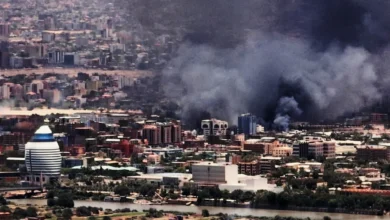
Sudan’s crisis is no longer simply a war between the army and the Rapid Support Forces. The most urgent question is no longer only which side will advance militarily, but the future of the state itself and its ability to preserve independent decision-making, protect citizens and safeguard resources and borders. From the October 2021 coup through the outbreak of war in April 2023 to growing controversy over military authorities’ regional relationships, Sudan faces a crisis of legitimacy, institutions and accountability extending beyond armed confrontation.
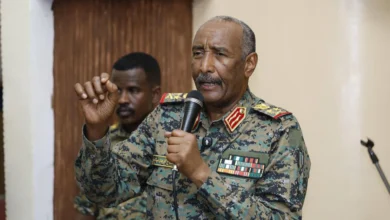
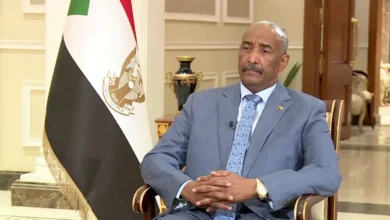
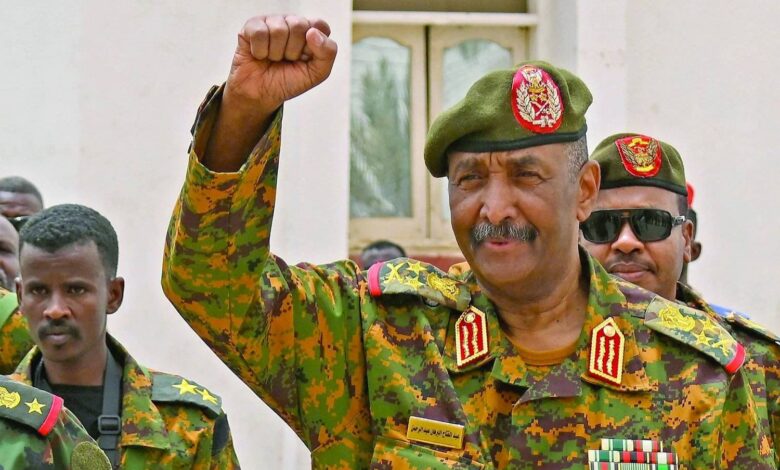
At its centre stands Abdel Fattah al-Burhan, army chief and Sovereignty Council chairman, facing increasing questions about his rule, his responsibility for the country’s trajectory and the authorities’ ability to separate state interests from remaining in power.
An authority’s legitimacy is measured not only by its control of institutions or ability to issue decisions, but also by a clear political mandate, respect for law, provision of security and services, and accountability to citizens. These standards matter particularly during transitions, when institutions are being reshaped and public trust requires continuous protection to prevent political differences becoming an open power struggle. Sudan’s experience shows that weakening civilian transition does not necessarily stabilise governance. It may instead enable more complex conflicts, especially when political disagreements intersect with multiple armed power centres and competing economic and security interests.
The October 25, 2021, coup marked a turning point by interrupting arrangements intended to move Sudan gradually towards civilian rule. Its supporters cited the transitional authorities’ performance and national security, but subsequent events showed that excluding civilian components neither established stable national consensus nor prevented deeper military disagreements. The war between the army and the Rapid Support Forces revealed a crisis beyond government management and unresolved questions about who possesses weapons and who decides their use within an agreed institutional framework.
Political and military responsibility therefore cannot be reduced to conducting operations or issuing battlefield statements. Leaders administering the state also bear duties to protect people, maintain services, prevent institutional collapse and create conditions for a settlement ending the fighting. This does not assign every responsibility for the war to one side before investigations establish the facts. It means governing authority carries clear obligations, including ending humanitarian suffering, avoiding decisions that deepen isolation and subjecting public policy to debate and accountability.
These responsibilities grow as the war spreads and continues. Sudanese people face not only bombardment and clashes, but lost homes and jobs, difficulty obtaining food and medicine, interrupted education and collapsing healthcare, often forcing displacement within Sudan or flight abroad. They are entitled to ask about policy results, realistic plans to end the war and post-conflict governance. A focus on military victory without an implementable political vision may prolong confrontation and make normal life harder to restore.
Meanwhile, independent Sudanese decision-making in foreign relations becomes increasingly important. Geography, resources and Red Sea access connect Sudan with numerous countries’ interests and differing regional calculations. That importance does not automatically confer influence. Weak institutions can increase exposure to pressure and foreign actors’ ability to shape events. As belligerents depend more on political, military or financial support, national interests risk entering bargains whose terms citizens do not determine.
External influence does not mean every diplomatic relationship or regional partnership constitutes interference, nor do contacts between officials alone establish political dependence. International relations involve negotiation and mutual interests. The key distinction lies in institutional independence and transparency over decisions made in the state’s name. Sudanese people have a right to know the basis of understandings affecting security, resources and political prospects, especially when connected to a devastating war.
Earlier reports raised questions about alleged contacts between Sudanese military officials and Egyptian officials before the October 2021 coup, including claims attributed to a Wall Street Journal report that November. Responsible treatment requires distinguishing published information, established evidence and political interpretation, without presenting disputed accounts as conclusive absent independent documentation. Questions about regional relationships nevertheless strengthen the case for transparency and institutions capable of clear answers beyond competing interests.
Sudanese-Egyptian relations are particularly important because of historical and geographical ties, shared interests and unresolved disputes. Halaib and Shalatin remain contested between Khartoum and Cairo. Addressing the issue requires diplomatic and legal channels, documented support for declared national positions and avoidance of domestic political mobilisation. Sovereignty disputes require coherent strategy, specialised institutions and sustained diplomacy rather than temporary reactions that increase tension without tangible progress.
Reports of air strikes attributed to Egyptian aircraft against artisanal mining areas in northern Sudan have also raised questions about civilian protection and sovereignty. The text underlying this series alleged deaths and injuries among miners and discussed the authorities’ response compared with other diplomatic activity. These details require independent verification of the alleged attacks, locations, responsibility and casualties. Unresolved accounts cannot justify categorical accusations, but citizens’ right to know and the state’s duty to investigate genuine incidents must not be ignored.
The issue is not a rushed stance against a neighbour, but whether Sudanese institutions can protect citizens and respond lawfully. If attacks on Sudanese people or territory are established, independent investigation, transparent findings, appropriate diplomatic and legal measures and assistance are required. If the account is unsupported, clarification is equally necessary to prevent misinformation and political exploitation. Sovereignty serves no political faction; it is a collective right requiring citizen protection and defence of state interests.
This principle is especially important in artisanal mining regions, where thousands work under difficult economic and security conditions. Gold is a major resource, but war and weak oversight can turn it into a source of conflict, smuggling and financing for armed networks. Protection requires regulation, safety, monitoring transport, transparent revenues and services for mining communities. Protecting remote workers must form part of sustained national policy, not temporary responses after casualties.
Economic resources now operate amid weak institutions, declining oversight and expanding armed influence. Competition over land, ports, crossings and income makes the economy an extension of conflict and reduces opportunities for reconstruction and development. War weakens institutions, institutional weakness enables resource capture, and competition over resources supplies further reasons to continue fighting. Breaking this cycle requires a political settlement returning resources to state governance, overseeing public finance and distributing revenues more fairly between the centre and regions.
The greatest challenge remains the absence of stable national agreement on governance and the military’s future role. Sudan cannot build a lasting democracy while weapons determine who rules, nor achieve sustainable peace while military and security institutions remain power centres independent of constitutional authority.