Al-Burhan and Sudanese Sovereignty: When Staying in Power Matters More Than Land and Lives
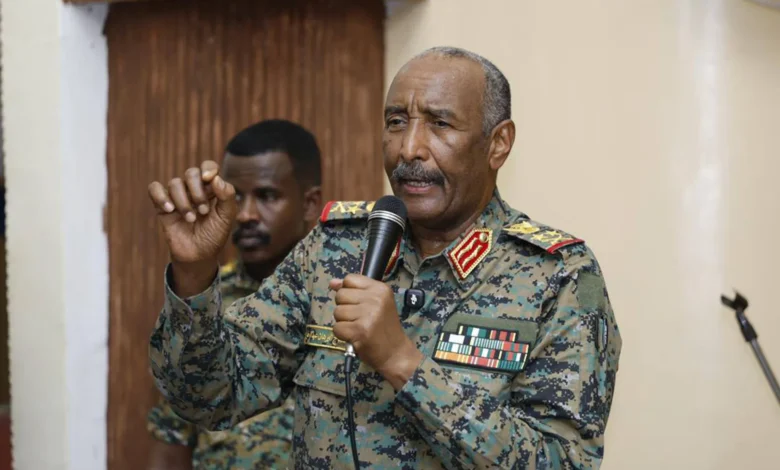
Sudan’s governance crisis extends beyond military authorities’ inability to end the war, restore stability or provide basic protection. It raises a more serious question about independent national decision-making and whether military leaders will defend Sudanese territory and rights when they conflict with remaining in power.
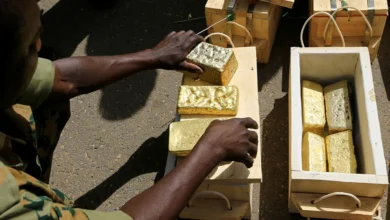
A state facing devastating civil war and economic and humanitarian collapse needs leaders who place citizen protection and sovereignty at the foundation of every political, military and diplomatic action. Reports of Sudanese miners killed in a border area by strikes attributed to Egyptian aircraft have revived distrust of Abdel Fattah al-Burhan’s military administration and questions about its handling of territory, human lives and national dignity amid regional interests and wartime calculations.
The issue concerns not only incident details, who bombed the area or the victims’ activities, but the authorities’ response and willingness to defend rights and demand an independent, transparent investigation. States remain responsible for citizens in border areas. Possible offences, if established, cannot justify disregarding the right to life or rules on force. Even illegal gold extraction falls under competent legal and security institutions and does not give any actor permission to target people without accountability. The essential tasks are establishing facts, identifying responsibility and preventing security or economic arguments from excusing casualties or undermining sovereignty.
Public debate also compares Egypt’s response to Egyptian deaths in Khartoum with Sudan’s response to miners killed near the border. According to the circulated account, Egypt’s Foreign Ministry followed the deaths of Mohamed Lotfi and Akram Mohamed in shooting at the local market in southern Khartoum on October 12, which also injured another Egyptian and reportedly a Sudanese citizen. Foreign Minister Badr Abdelatty reportedly instructed the ambassador to contact authorities, follow the injured person’s condition and arrange repatriation of the bodies. If confirmed, this illustrates protection beyond condolences or committees whose findings remain unknown.
The comparison should lead to institutional accountability rather than emotional argument or competing statements. Why does diplomacy appear more decisive for foreign citizens while Sudanese people struggle for answers about their lives and territory? What prevents the authorities in Khartoum and Port Sudan from demanding facts regardless of who may be responsible? The state’s duty is defined by its commitment to citizens, not suspects’ identities or relationships. Unresolved details make investigation more urgent, requiring avoidance of categorical judgements without allowing missing results to justify silence or closure.
War has weakened institutions responsible for foreign relations, borders and resources, while strategic decisions depend on shifting military and political balances. Declining transparency makes it harder to distinguish fact from propaganda and national-interest protection from manoeuvring. Announcing a fact-finding committee is therefore insufficient without a clear mandate, independence, timetable, published findings and legal action against those proven responsible. Committees are means to truth, accountability and prevention, not ends themselves.
The statement attributed to Egypt’s army also requires scrutiny. It reportedly described combating illegal mining and exercising sovereignty within Egyptian borders. If authentic, these formulations require clarification of location, operational scope and legal basis, especially amid allegations of bombing inside Sudan. Sovereignty cannot be settled through competing statements: maps, official documents, coordinates, field evidence and testimony must be examined. A foreign attack inside Sudan without clear, legally valid authorisation would raise questions of territorial integrity, citizens’ rights and state obligations beyond a border incident.
The historic Halaib and Shalatin dispute adds sensitivity. Border issues require more than slogans or emotional responses, but territorial claims must not erode through neglect. Sustained diplomacy, legal and historical documentation and institutions capable of managing disputes are needed without creating excuses for war or public tension. Regional cooperation does not justify abandoning legitimate claims indefinitely. Stable relations acknowledge disagreements and manage them through negotiation, law and clear agreements.
Former Prime Minister Abdalla Hamdok’s reported March 2021 remarks in Cairo therefore matter. He called for a strategic approach to bilateral relations and discussion of unaddressed issues, including Halaib and Shalatin. Cooperation and defence of national rights need not be artificially opposed. Long-term relationships require institutional handling rather than political accommodation or reciprocal threats, even when immediate solutions are unavailable.
The Wall Street Journal’s November 2021 account of then Egyptian intelligence chief Abbas Kamel’s Khartoum visit and meetings with al-Burhan before the October coup also raises questions about regional relationships surrounding Sudan’s military takeover. Citing a Sudanese government source, it reported that Kamel called for Hamdok’s departure and that al-Burhan secretly visited Cairo before the coup seeking support. These remain attributed journalistic accounts, not conclusive judicial findings. They nevertheless raise legitimate questions about foreign influence and military choices. Independence is measured by institutions’ ability to act in national and public interests, not official rhetoric alone.
Dependence becomes dangerous when allies are central to retaining power and disagreement becomes politically or militarily costly, weakening independent action even on citizens’ interests. Proving dependence or specific concessions requires reliable evidence, not inference from silence or delay. Sudanese people nevertheless have a right to explanations and information about agreements affecting security, borders and resources. Foreign relations do not belong to military leaders, and sovereignty cannot be invoked against opponents then treated as secondary with allies.
Using sovereignty rhetoric domestically deepens this contradiction. When patriotism is used to label civilians traitors or accuse peace advocates of surrendering the country, official discourse must face one test: what does it actually do to protect Sudan? Patriotism belongs to no military institution or political current and cannot be reduced to supporting war or one leader. Criticism can defend the state by exposing failures, seeking accountability and preventing monopolised decisions. Legitimate institutions do not fear questions or treat investigations into citizens’ deaths as security threats.
Nor should the case justify targeting Sudanese groups or assigning collective blame by affiliation. Accountability relies on evidence and individual and institutional responsibility, not revenge. Alleged violence requires independent investigation and fair proceedings. Civilian suffering must not become propaganda for the authorities or their opponents; the objective is truth and rights rather than replacing one unsupported narrative with another.
The crisis extends beyond one incident, but such events expose the connection between legitimacy and basic duties. Authorities unable to protect citizens or explain their suffering gradually lose their ability to portray continued rule as necessary. Security rhetoric cannot replace restored trust, accountable decisions and prioritisation of peace, protection and essential services. Sudan needs a national project based on rights and duties, not deeper polarisation.
Rebuilding requires more than condemnation or changing individuals without a future vision. It begins with ending war, an inclusive settlement, independent investigations and judicial and oversight institutions free from military or partisan interference. A unified professional army must answer to popularly legitimate civilian authority, respect constitutional law and avoid permanent competition over governance and economic interests. Balanced foreign policy should combine cooperation, territorial rights and prevention of Sudan becoming an arena for regional rivalries.
Sovereignty is tested in decisions when national interests and citizens’ rights conflict with others, not speeches. Dignity depends on institutions protecting Sudanese people and preventing their deaths from being lost amid political and military calculations. The miners’ case should prompt comprehensive governance review, not another cycle of accusations. Sudan is greater than any leader, its sovereignty broader than any alliance and its future more than an administration’s survival or fall. Its people need a state protecting land and rights, telling the truth, answering for failure and deriving legitimacy from citizens rather than weapons or foreign backing.