North Kordofan and Drone Warfare — Do Claims of Turkish Aircraft Being Shot Down Reveal Battlefield Shifts or a Battle of Narratives?
The North Kordofan front is becoming increasingly important in Sudan’s war as drones are used more widely in military operations. They have become influential tools for monitoring movements and targeting military positions and supply lines. Against this backdrop, competing claims about the downing of drones belonging to the Sudanese army or the Rapid Support Forces (RSF) are multiplying, as the warring parties seek to portray these incidents as evidence of military superiority or declining enemy capabilities. Assessing these developments, however, requires distinguishing military announcements from independent evidence, particularly when accounts concern foreign-made aircraft or interceptions said to have occurred along shifting battle lines. Announcing that a drone has been shot down does not, by itself, establish who operated it or what mission it was carrying out. Nor does it necessarily provide a complete picture of the operational circumstances that caused it to fall.
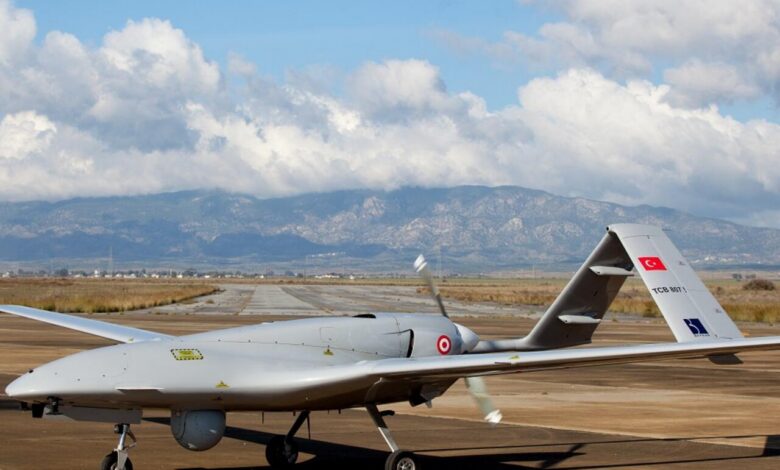
This issue is particularly significant in North Kordofan, where fighting centres on control of roads and strategic areas around El-Obeid and Bara, as well as movement corridors towards the western regions. In reports published during 2026, the Sudanese Armed Forces announced that they had shot down Chinese-made FH-95 drones at several locations in the region. Other reports described increasing use of these systems by both sides in efforts to disrupt supply lines and battlefield movements. Meanwhile, the RSF issued statements claiming to have shot down Turkish-made Bayraktar drones. Such assertions should be treated as accounts from a party to the war unless supported by independent evidence identifying the aircraft, its crash site and its operator. These developments show that the situation cannot be reduced to a single announcement or video clip: it requires comparing sources and verifying the technical and geographical details of each incident.
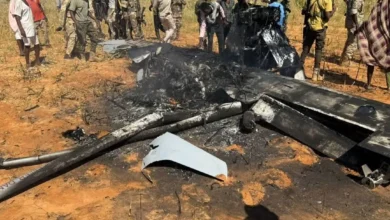
Claims that the RSF has shot down several Turkish-made army drones across North Kordofan therefore raise questions extending beyond the military statements themselves. First, how many aircraft actually fell? Second, were they all the same model? Third, did the reported downings occur at the locations and on the dates cited in the circulating statements? Investigators must also verify that the displayed wreckage comes from an actual military aircraft, that the images were not taken during an earlier incident or in another area, and that the operator’s identity is not merely inferred from the aircraft type. One party’s possession or use of a military system does not mean that every aircraft of that type automatically belongs to it. Likewise, the shape of the wreckage or markings visible in images may not be sufficient to identify the model conclusively.
Verification becomes more difficult in wartime because access to battle sites is restricted, communications are disrupted in some areas, and local journalists and observers face danger. Images may reach the public hours or days after an incident, accompanied by commentary adding details not apparent in the original material. In some cases, a photograph of aircraft wreckage circulates as proof of a specific military operation’s success without coordinates, a recording date or technical information that would allow the claim to be examined. Professional reporting should therefore not treat the volume of posts or the repetition of an account across multiple profiles as evidence of its accuracy. Several accounts may simply be reproducing a single source, creating a misleading impression of independent confirmation.
The assertion that drone downings demonstrate the RSF’s ability to undermine the army’s aerial capabilities also requires closer analysis. Shooting down a drone may represent a tactical success in a particular incident, but it does not necessarily establish overall air superiority or a sustained ability to neutralise enemy aircraft. The significance depends on numerous factors, including the defensive system used, the drone’s altitude and flight path, its exposure to jamming, the nature of its mission and the frequency of such incidents relative to the total number of sorties. Assessing any military force’s performance also requires more than counting the aircraft it claims to have shot down. It must account for the force’s ability to protect its positions, sustain operations, maintain supply lines and minimise losses.
In this context, Turkish-made drones should not be confused with other aircraft used in the war. Recent reports have named different models, including Turkish Bayraktars and Chinese FH-95s, which differ in design, missions and operational capabilities. Ignoring these distinctions can inflate certain narratives or lead to inaccurate conclusions about arms sources and the nature of operations. Identifying the country of manufacture also does not, by itself, establish who carried out a mission or necessarily explain the supply chain or how the aircraft was operated. Any report claiming that several Turkish drones were shot down should therefore identify, as far as possible, each aircraft’s model and the date and location of the incident, while distinguishing confirmed information from unverified assessments.
It is also important to consider the impact of these narratives on local communities living under the pressure of bombardment, shifting lines of control and disrupted services. In an environment filled with competing military claims, reports of drones being shot down can become a means of boosting morale, spreading fear or projecting control over particular areas. Each side may benefit from portraying its opponent as unable to protect its equipment or conduct its operations effectively, even when the available evidence is limited. This does not mean that all reports of drone downings are false. It means that each report must be assessed independently, without replacing verification with blanket scepticism or automatic acceptance.
The central standard for assessing claims of drone downings in North Kordofan is the availability of evidence that can be examined. This may include clear images of wreckage, reliable information about the location and timing, independent testimony from the area and technical analysis identifying the model, alongside comparison with reports from other parties. Where this information is unavailable, precise wording is preferable: “The Rapid Support Forces announced that they had shot down a drone they said belonged to the army,” rather than presenting the announcement as an established fact. Such wording neither denies nor confirms the incident without evidence. It places the claim in its proper context as information requiring verification.
Ultimately, the media battle over drones reveals an increasingly important dimension of Sudan’s war, in which battlefield operations intersect with attempts to shape public perceptions of the balance of power. Claims that several Turkish aircraft have been shot down cannot conclusively establish RSF superiority, but neither should they be dismissed solely because they come from a warring party. Each incident must be examined separately, with a clear distinction between established and disputed information, and military developments placed within their operational and humanitarian context. Journalistic credibility comes neither from adopting one side’s narrative nor from rejecting its opponent’s, but from clearly presenting the available evidence, acknowledging what cannot be verified and refusing to let military propaganda replace facts.