Who Will Hold Al-Burhan Accountable over Chemical Weapons in Sudan?
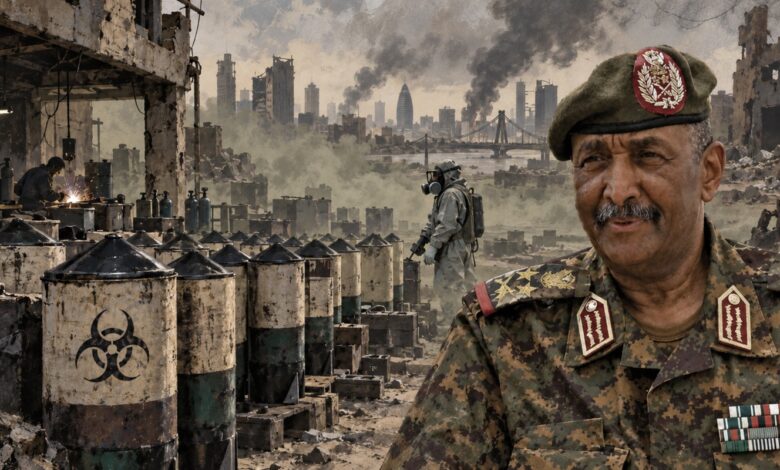
Leaked documents concerning the chemical programme attributed to the Sudanese army raise far-reaching questions about accountability, as the war continues and the need to document potential violations against the population grows increasingly urgent. Reports published by The New York Times and The Washington Post in September 2026 describe visual material, correspondence and designs suspected of being linked to the manufacture of chlorine-filled munitions. They also refer to military tests, storage operations and communications between officers and senior officials. Meanwhile, a Euronews investigation gathered testimony from Sudanese witnesses who described incidents involving respiratory symptoms, unusual smells and coloured emissions following air strikes. It called for an international investigation in light of the indicators identified by the team that reviewed these accounts. Yet the path from exposing documents to establishing legal responsibility is not straightforward. It requires verifying the facts, determining which acts actually occurred and linking them to specific individuals through independently examinable evidence. The issue is therefore not simply whether chlorine was used in the war, but how that can be established, which body has authority to investigate and what safeguards will prevent evidence from disappearing or becoming a tool in the political conflict.
The Chemical Weapons Convention provides one of the main starting points for any accountability process. Sudan has been a party to the convention since 1999. It prohibits the development, production, stockpiling, and use of chemical weapons and provides international mechanisms for addressing questions of compliance. If chlorine was deliberately incorporated into munitions designed to disperse gas against targets during the conflict, the issue would go beyond legitimate industrial use to a possible breach of clear international obligations. Establishing a violation, however, requires distinguishing between possessing chlorine for civilian purposes, manufacturing munitions containing it, and actually using those munitions, while identifying those responsible at each stage. Strong evidence of production may emerge without resolving every detail of use. Likewise, exposure to a chemical substance may be established without identifying who gave the order. The investigation must therefore build a case connecting each element to the appropriate evidence, rather than treating them as a single event requiring no further distinction.
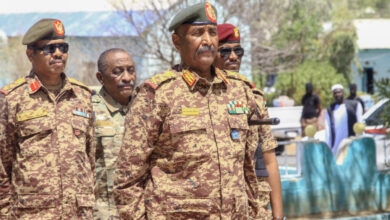
Military command responsibility, particularly that of Abdel Fattah al-Burhan, lies at the heart of the debate after his name appeared in reports examining communications linked to the alleged programme. The New York Times reported that the leaked dossier contained communications between the officer said to have managed the project and senior officials, including al-Burhan. It also referred to instructions attributed to the leadership to remove traces of the activity after the allegations became public. If their authenticity and context are established, these details warrant close examination to determine whether they reflect knowledge of the project, involvement in its management or an attempt to deal with evidence connected to it. Individual criminal responsibility, however, does not arise from rank alone. A commander’s name appearing in correspondence is not enough to prove that they ordered the use of a chemical weapon or approved an attack on civilians. Investigators must establish the nature and timing of the instructions, their connection to specific incidents, and whether other evidence supports conclusions about knowledge, intent, or contribution to the conduct under investigation.
At the same time, the difficulty of proving a direct order must not become an excuse for overlooking commanders’ responsibility for acts committed under their authority. The legal rules on command responsibility raise questions about effective control over subordinates, knowledge of crimes or information that should have alerted the commander, and the measures taken to prevent the acts, stop them or refer them to the competent authorities. These elements vary according to the applicable legal framework and the facts, so newspaper reports alone cannot support a definitive finding. A serious investigation should nevertheless establish the chain of command, identify who had authority to approve the manufacture or use of the munitions, determine who could have stopped the activity and examine whether meaningful measures were taken after warning signs emerged. It should also assess the nature of the committee reportedly established to investigate the allegations, whether its members were independent of those who might face scrutiny, what evidence it examined and how it reached its conclusions.
The independence of the investigation is particularly important because the allegations concern a military institution that is a principal party to the war, while some of the circulating evidence reached newspapers through an unidentified intelligence service. This neither automatically authenticates nor invalidates the documents. It means their source, collection methods, and preservation must form part of the verification process. Audio recordings require technical examination to determine whether they have been altered. Messages must be linked to the devices and accounts from which they were obtained. Photographs require verification of their dates and locations, and investigators must establish that the footage presented genuinely relates to the alleged programme rather than another context. Available evidence from the ground should also be collected, witnesses interviewed separately, and their accounts compared with medical records and information about military operations. This approach can reduce the risks of error or disinformation and provide a stronger evidentiary foundation for any subsequent legal proceedings.
Testimony concerning the Al-Jili refinery illustrates why an investigation cannot wait for the warring parties to agree on a common account. Witnesses described a military aircraft and objects falling in the area, followed by unusual smells, respiratory symptoms and burning eyes among several workers. According to the Euronews investigation, a team of former Organisation for the Prohibition of Chemical Weapons experts identified indicators in these accounts that warranted investigation. They could not, however, identify the substance to which the witnesses had been exposed or conclusively confirm every detail of the incidents. Journalistic investigations also noted differences between the shapes of cylinders photographed at some incident sites and the munitions shown in images of the alleged project. These gaps do not justify dismissing the case, but they establish priorities for investigators: examining any available munition remnants, identifying locations, verifying aircraft sorties, reviewing medical reports and searching for preserved samples or environmental data.
The possible diversion of chlorine intended for water treatment to military use deserves particular scrutiny. The published documents referred to the Al-Manara plant in Omdurman. UNICEF, meanwhile, confirmed, according to The Washington Post, that it had supplied chlorine to water treatment plants in Khartoum but had found nothing in its records establishing that its supplies were diverted to an unlawful use. The investigation should therefore review import, transport and storage records, compare the quantities received by the plants with those consumed or still in stock, and establish whether any shipments went missing or were moved without documentation. Water facility workers and potential witnesses must also be protected from intimidation, since the information they hold may be essential to tracing the substance’s movement. If civilian supplies are proven to have been diverted into munitions, this would raise questions about who authorised the diversion and what measures could have prevented it. It would also underline the need to maintain water treatment services without exposing the population to additional risks.
Accountability is not only about identifying those responsible; it is also about preventing potential violations from recurring. An independent investigation can identify weaknesses in chemical oversight, reveal how materials moved from civilian to military use and recommend measures to prevent their repurposing in prohibited munitions. It can also document harm to workers and civilians and identify medical and environmental needs requiring a response. The process must safeguard the integrity of evidence and the independence of experts, without depending on any party’s admission or prior acceptance of the findings. It must also respect suspects’ rights to fair proceedings. Accountability based on unauthenticated evidence or preconceived judgments could undermine the search for truth rather than advance it.
Legal jurisdiction must be considered in light of the available evidence and mechanisms, rather than through promises of outcomes that remain uncertain. Some avenues concern compliance with the Chemical Weapons Convention; others may involve international humanitarian law or national and international proceedings, depending on the facts and applicable jurisdiction. The competent authorities must assess the nature of the alleged acts, the evidence of weapons use, the status of the individuals concerned and the legal basis for opening an investigation or taking action. Sanctions imposed on officials through political or administrative processes are not a substitute for establishing criminal responsibility before a competent court. Equally, an official denial is insufficient to prove that no violation occurred, just as allegations in the press alone cannot support a final judgment. The decisive criteria are testable evidence, procedures that ensure integrity, and conclusions proportionate to what has actually been established.
Ultimately, Sudan’s chemical weapons case places a responsibility on the international community and the Sudanese authorities to establish the truth, protect civilians, and ensure accountability if violations are proven. The published documents raise serious questions about the manufacture and testing of chlorine-filled munitions and their possible use in incidents including Al-Jili. They also raise questions about the military leadership’s knowledge of the alleged programme. Answering them requires an independent investigation with access to the original evidence, the ability to establish the decision-making chain, interview witnesses, examine harm, and distinguish political responsibility from criminal responsibility. The gravity of the allegations must not justify bypassing evidentiary requirements, nor should the need for further evidence become an excuse to delay an investigation. Protecting Sudanese people requires establishing what happened, identifying those responsible if the allegations are substantiated, and taking measures to prevent chemicals from being used again as weapons in a war whose heaviest toll falls on civilians.