Three Days to Force Tehran’s Hand: A New US-Israeli Plan to Strike Iran in November
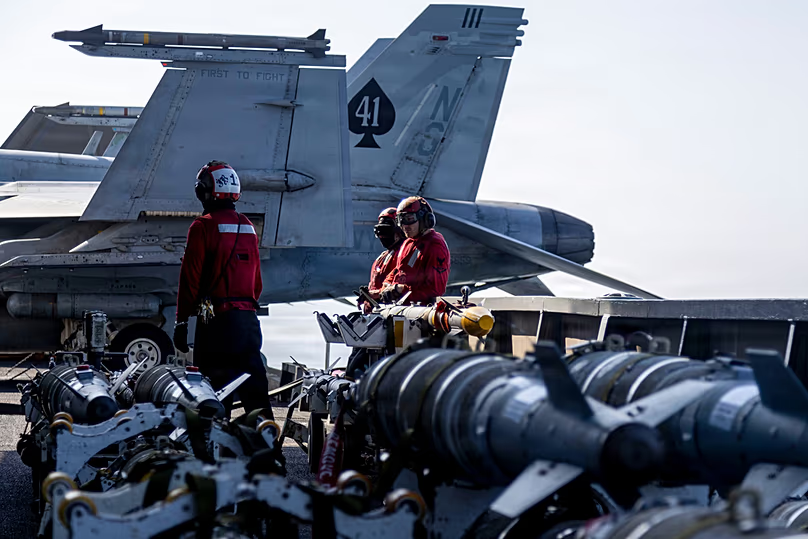
The US and Israeli militaries have drawn up detailed operational plans for renewed strikes against Iran after the US midterm elections, according to American officials and people familiar with the ongoing deliberations.
According to officials and sources cited by The New York Times, planning centres on a short but intensive operation that could be carried out over just three days. It would primarily target Iran’s energy infrastructure, nuclear facilities, and missile and drone arsenals in an effort to force Tehran’s hand.
The two militaries are also developing plans for operations against Iran’s nuclear programme, potentially including an attack on “Pickaxe Mountain”, a nuclear site buried deep underground.
US President Donald Trump said last week that he was considering using the 22,000-pound GBU-43/B bomb, known as the “Mother of All Bombs”, against the site.
Weapons experts note, however, that the bomb detonates above ground and produces a wide-area blast, making it unlikely to destroy an underground facility carved into granite. Military officials also warn that delivering it requires a slow-flying MC-130 transport aircraft, leaving it vulnerable to Iranian air defence fire.
Signs of the Preparations
As preparations advance, US and Israeli forces have stepped up joint exercises. Aircraft have flown over Iraq to rehearse strike manoeuvres, while US Defence Secretary Pete Hegseth met Israeli Prime Minister Benjamin Netanyahu in Israel this week to discuss options for renewed strikes.
Some officials believe another round of attacks could push Iran’s economy to the brink of collapse and force Tehran to make diplomatic concessions after nearly eight months of conflict.
There are, however, compelling reasons to question whether renewed hostilities would achieve more than the initial phase of intensive US-Israeli strikes between February and April, according to The New York Times.
Those operations drove up energy prices and inflation worldwide, undermined security in the Middle East and severely strained the Pentagon’s stocks of interceptor missiles. Trump’s approval of further strikes is also far from certain: he has repeatedly rejected plans to resume major combat operations.
Iranian officials, meanwhile, have promised to retaliate this time by expanding their targets to include data centres and undersea internet cables, alongside merchant vessels and regional energy infrastructure. They have insisted that the fighting would be neither brief nor limited.
Diplomacy at an Impasse
As the United States assembles a substantial arsenal that will be fully ready by early November, diplomatic efforts continue. US negotiators are using the prospect of renewed war as leverage to secure progress on their demands concerning Iran’s nuclear programme and control of the Strait of Hormuz.
Iranian negotiators, however, have so far shown no willingness to make concessions on the nuclear programme and have insisted on deferring the issue to later stages of the talks.
Israel and the United States came close to launching an attack on Iran earlier this month, but Trump decided to postpone it at the last minute, after both militaries had undertaken extensive preparations and placed their air forces on maximum alert.
One military commander, speaking on condition of anonymity, said repeated planning efforts followed by Trump’s decisions against further attacks had caused “daily disruption” among planners. They are trying to remain ready to carry out any military option the president might select in the coming weeks.
With each round of the war so far, Iran’s leadership has become less inclined towards conciliation, convinced that the ultimate objective of the United States and Israel is to overthrow its government. Iran’s new supreme leader, Mojtaba Khamenei, remains an enigma to US and Israeli intelligence officials.
Some officials say he lacks the authority of his father, who was killed at the start of the war, and that hardline members of the Islamic Revolutionary Guard Corps are making the key decisions. Iranian officials have said they are aware of US war planning and are developing new targets and tactics.