From a New York prison cell: details of an alleged Iranian plot against US forces in Britain
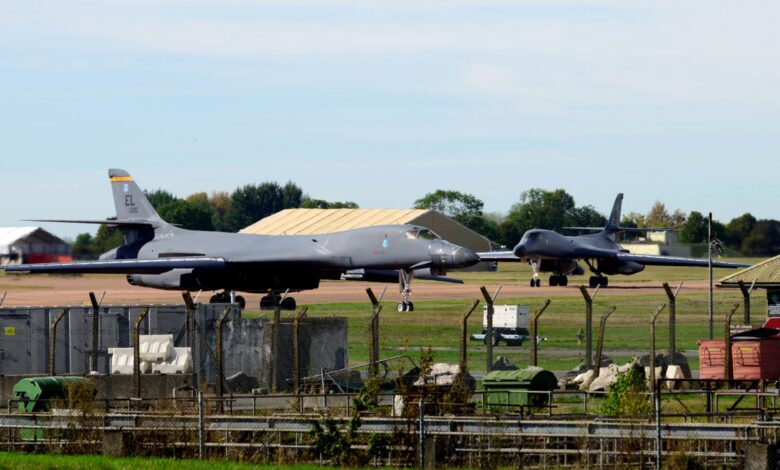
Coded communications and instructions issued from prison reveal an alleged Tehran-linked plot to attack a British airbase used by US forces in the war against Iran.
According to CNN, a new indictment presented by US federal prosecutors to a grand jury in New York on Tuesday alleges that Mohammad Daoud al-Saadi helped coordinate a plot to attack Britain’s RAF Fairford, which hosts B-1 strategic bombers.
According to the same source, al-Saadi, who has ties to Iraq’s Kataib Hezbollah, was being held at a federal detention facility in Brooklyn when he allegedly began coordinating the plot.
CNN reported that the coordination took place through telephone calls to family members, during which he used coded expressions to relay instructions to other suspected participants.
The indictment alleges that the plan was not an individual undertaking but was coordinated with Mohsen Mohajeri, identified by prosecutors as a member of Iran’s Islamic Revolutionary Guard Corps, and another Iranian, Mohammad Ali al-Hassani. All three have been charged in connection with the case.
Fuel-laden trucks intended for an attack on the base
The events date back to September, when British police received a report about three suspicious vehicles travelling towards RAF Fairford.
Authorities arrested seven men on suspicion of involvement in a terrorist plot before releasing them under strict conditions after finding no explosives inside the trucks.
However, sources who spoke to CNN said investigators determined that the plan involved using fuel-laden trucks as improvised explosive devices to attack the airbase, an important facility for US military operations.
In late October, British authorities rearrested several suspects after indicating a strong likelihood of Revolutionary Guard involvement in the plot.
Roles divided among three defendants
Court documents allege that al-Hassani managed the operation’s early stages, tasking individuals with monitoring the airbase and paying others to purchase trucks and fuel drums.
He also allegedly remained in contact with the drivers as they travelled towards the base, including when they encountered security checks at the entrance.
Prosecutors say al-Saadi directed family members in Iraq to transfer the money needed to support the operation, using aliases and coded language to conceal the nature of the activity.
In one recorded call last July, al-Saadi allegedly asked his sister whether “the old work” had been cancelled or merely suspended. According to court documents, she replied that it “had not been cancelled”.
He also allegedly asked relatives to pass messages concerning “the work” to Mohajeri, an expression prosecutors say he had previously used to refer to terrorist attacks.
Connections to Soleimani and Khamenei
The allegations extend beyond the latest plot. US investigators say al-Saadi maintained close relationships with senior Iranian military figures.
They included former Quds Force commander Qassem Soleimani, who was killed in a US airstrike near Baghdad airport in January 2020.
According to US prosecutors, al-Saadi was so close to Soleimani that he was regarded as a son to him. He was also reportedly supposed to accompany Soleimani when the American strike took place.
Prosecutors further allege that al-Saadi had close ties to former Iranian Supreme Leader Ali Khamenei and warned him, three days before the war against Iran began, that the country could face a US military strike.
Khamenei was killed in the first wave of US and Israeli strikes on Iran last February.
Alleged plots in the United States and Europe
The indictment shows that the Fairford case is not the only matter involving al-Saadi. US prosecutors had previously accused him of helping document attacks on sites in Europe after the war began by communicating with the perpetrators through FaceTime calls.
Authorities also accuse him of helping produce propaganda videos from recordings of those attacks, which included arson targeting Jewish institutions.
In the United States, prosecutors say al-Saadi attempted last April to hire someone to carry out potential assassinations. The alleged plans also included an attack on a prominent synagogue in Manhattan, New York.
The person he was communicating with was an undercover US agent. Al-Saadi was arrested several days later while travelling abroad.
According to prosecutors, after his arrest, al-Saadi told investigators that he had held responsibilities for media and psychological warfare, while also participating in strategic planning and military intelligence on behalf of Iran and affiliated armed groups.
Exceptional restrictions in prison
Al-Saadi’s telephone calls from prison raised concerns at the US Justice Department, which decided to place him in a special detention unit and impose stringent communication restrictions under what are known as “Special Administrative Measures”.
The measures prohibit him from communicating with anyone other than immediate family members and his lawyers. Authorities concluded that his communications risked causing deaths, serious injuries, or substantial property damage.
According to a court filing, al-Saadi used coded language during recorded calls and warned relatives against using certain expressions that could cause the call to be terminated.
Investigators identified multiple conversations about money transfers and obtaining approval to carry out what participants described as a “mission” or “work”. Prosecutors expressed concern that al-Saadi was attempting to direct people outside prison to execute his instructions.
During a final call dated 24 September, he allegedly told relatives, according to the prosecution filing: “Give him the money so we can do it.”
Just three days later, his alleged accomplices attempted to attack RAF Fairford, according to the indictment.