Strikes Without a Signature: Shadowy Cells Open a War of Attrition against Iran’s Revolutionary Guards
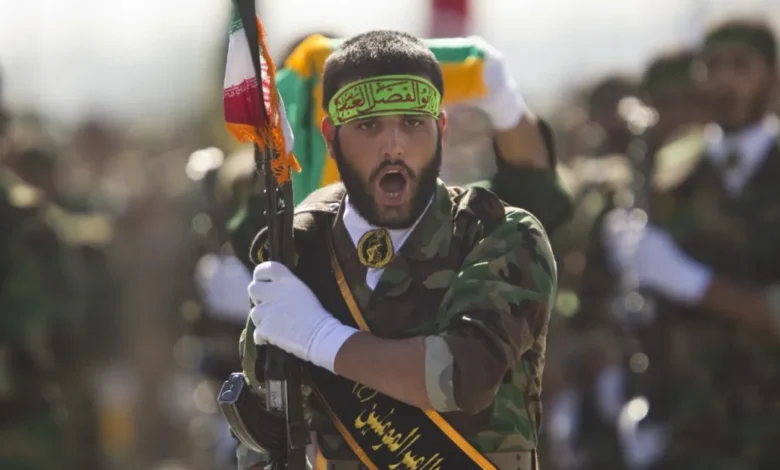
Informed Iranian opposition sources have reported an escalation in shadowy operations targeting Islamic Revolutionary Guard Corps (IRGC) and Basij sites and personnel across several Iranian cities. Security agencies are reportedly struggling to track down the attackers or establish their identities and organisational affiliations, raising questions about the widening domestic confrontation and the authorities’ ability to contain it.
The sources said groups operating in clandestine cells were carrying out hit-and-run attacks against security facilities and IRGC and Basij personnel before disappearing without leaving clear leads to the perpetrators or those behind them.
According to the sources, these operations are no longer confined to border regions where armed opposition groups have traditionally been active. They have reportedly spread to cities across Iran, including Bandar Abbas, Kermanshah, Isfahan, Mashhad and Rask. The incidents are said to include bombings of security headquarters, assassinations of personnel and officers, and arson attacks on facilities and centres belonging to government bodies, religious institutions and intelligence agencies.
Cells That Disappear after Striking
The sources said the increase in attacks coincided with a tougher crackdown by the Iranian authorities, including executions and arrests targeting young people and activists who took part in recent protests. In their assessment, this has created a new pattern of confrontation in which armed attacks overlap with heightened political and security tensions.
An Iranian opposition source familiar with developments on the ground said the groups operated under highly secretive organisational arrangements. They allegedly target security and government premises, as well as branches of religious institutions linked to the ruling establishment, relying on their ability to strike quickly and withdraw before security reinforcements arrive.
The source said that the IRGC had recently stepped up arrests of young people and political activists. Some were reportedly unaffiliated with traditional opposition organisations or nationalist movements but had participated in university protests. The arrests were described as pre-emptive measures intended to prevent another wave of large-scale demonstrations.
The source accused the Iranian authorities of concealing the true extent of IRGC and Basij losses over the past two months, citing officers and personnel killed in attacks on patrols and security premises, alongside arson attacks on facilities in Zahedan, Iranshahr, Rask, Tabriz and Shiraz.
According to information circulating in opposition circles, the groups use relatively advanced small arms that enable them to launch rapid attacks against security targets and withdraw without becoming embroiled in prolonged clashes.
Neither the overall toll of these operations nor the identities of those responsible have been independently established. Detailed, verifiable information remains unavailable for several of the incidents described by the sources.
The Confrontation Moves Further Inland
The sources believe the most significant development is not simply the number of attacks but their widening geographical reach. Operations against the IRGC and Basij were previously concentrated more heavily near the borders: in the southeast, where the Baluch group Jaish al-Adl operates, and in western and northwestern regions where armed Kurdish factions are active.
Recent activity, according to their accounts, suggests that operations are expanding into larger urban centres. This presents security agencies with dispersed threats that are difficult to trace to a unified command or a single organisational network.
Taher Abu Nidal, a leader of the Ahwazi Democratic Popular Front, said opposition groups drawn from different ethnic communities, alongside Persian opposition organisations, had recently increased their activities in several Iranian cities.
He said that these groups did not operate within a shared organisational framework and that, to his knowledge, there was no indication of direct operational coordination between them. This fragmentation, he said, further complicated the IRGC’s efforts to track them down and identify their networks.
He also reported that rewards had been offered to some tribal leaders in Ahwazi areas in exchange for information that could help identify armed groups. This followed operations in which, he claimed, weapons were seized from security centres and subsequently reused in later attacks.
He argued that such incidents posed a particularly sensitive challenge for the IRGC, both because of the security losses involved and because they suggested that armed groups could penetrate sites supposedly subject to stringent protection measures.
He added that security agencies had intensified arrests in Ahwazi areas, targeting people suspected of having information about the groups. He accused intelligence agencies of fabricating espionage charges against some detainees in an effort to identify those responsible for the attacks.
A War of Attrition without Unified Command
Iran affairs researcher Dr Farhad Dizeyi described the unexplained incidents targeting IRGC and Basij sites as a troubling security development for the Iranian authorities. No group has claimed responsibility for several of the incidents, while information he has been monitoring suggests that some activities have extended to the capital, Tehran.
Dizeyi said he considered it likely that groups linked to the National Council of Resistance of Iran were responsible for some of the operations. He based this assessment on what he described as a recent increase in the activity of affiliated members, following earlier months in which other opposition groups had been more prominent.
He also pointed to continued activity by the Baluch group Jaish al-Adl in southeastern Iran, with indications that it was upgrading its weaponry. However, he said no confirmed information was available about the sources of its new equipment.
The armed wings of some Kurdish parties in western regions had also stepped up their activities, he added, including ambushes targeting mid-ranking IRGC officers.
The researcher discounted the Iranian authorities’ account that these groups were receiving financial and military support from the United States and Israel. In his assessment, the current scale of operations did not suggest extensive, organised foreign backing, although he did not rule out limited external links.
He identified the absence of unified field command as one of the groups’ principal weaknesses. Each operates within its own geographical area, from Baluch groups in the east and Kurdish factions in the west to opposition groups active in predominantly Persian cities.
Despite this organisational fragmentation, Dizeyi argued that the proliferation of attack fronts was placing mounting pressure on the IRGC and Basij. It was forcing security agencies to spread their resources across widely separated regions to confront threats differing in both character and methods.
He described the developments as resembling a multi-front “security war of attrition”, arguing that Tehran’s preoccupation with its confrontation with the United States limited its ability to devote its full resources to pursuing armed groups at home.
In his assessment, comprehensively dismantling these networks could depend on an easing of external pressure on Iran, allowing security agencies to refocus their resources on domestic challenges.