Forbidden Cities… Soviet Union Secrets Behind Barbed Wire
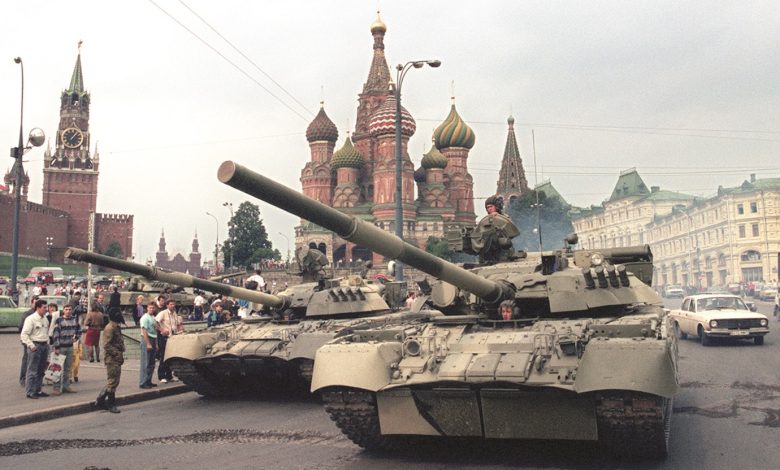
At the height of the Cold War, secrecy in the Soviet Union was not limited to military laboratories or intelligence documents; it also extended to entire cities.
-
The T-95 tank… Leaks revive the Soviets’ lost dream
-
Nuclear War Message: The Soviet Dead Hand Confronts America’s Doomsday Missile
These “closed cities” were not ordinary residential areas, but strategic centers that hosted nuclear weapons programs, space projects, submarine manufacturing, and sensitive military research.
Access to these cities required special permits, while they were surrounded by strict security fortifications, barbed wire, and permanent military guards.
Despite the collapse of the Soviet Union more than three decades ago, many of these cities remain shrouded in mystery, and some are still closed to this day, having become symbols of an era in which secrecy was an integral part of the very structure of the Soviet state itself, according to “The Collector”.
-
The Soviet Monster S-200: Ukraine Reawakens Ghosts of the Past to Haunt Russia
-
False Alerts of Soviet Strikes That Almost Led to the Extinction of Humanity… Details
Arzamas-16… The Cradle of the Soviet Nuclear Bomb
Arzamas-16, now known as “Sarov,” represented the beating heart of the Soviet nuclear program and the Soviet counterpart to the American city of “Los Alamos.”
The city was founded in 1946 in the Nizhny Novgorod region and played a central role in developing the first Soviet nuclear bomb, which the Soviet Union successfully tested in 1949.
The city lived in complete isolation from the outside world: its name was removed from maps, and it was surrounded by barbed wire and strict military checkpoints.
-
Ukraine and Iran at the center of a phone call between Marco Rubio and Sergey Lavrov
-
Russia gains economic and geopolitical advantages from the war against Iran
Despite the city’s highly secure nature, the scientists and engineers working there enjoyed a high standard of living compared to the rest of Soviet cities, with modern housing, high salaries, and advanced cultural and recreational services.
After the collapse of the Soviet Union, former Russian President Boris Yeltsin restored its name to “Sarov” in 1995. Nevertheless, it remains a closed city under the supervision of the Russian nuclear corporation “Rosatom.”
Krasnoyarsk-26… The Secret Plutonium Factory
Deep within the remote forests of Siberia, the city of Krasnoyarsk-26, now known as “Zheleznogorsk,” was established in 1950 as a center for producing plutonium used in nuclear weapons manufacturing.
-
Ukraine cannot be divided: UN support for Kyiv on the anniversary of the war
-
The Miracle of Dunkirk… how 338,000 soldiers escaped the clutches of the Nazi army
The city’s facilities were built underground to avoid aerial surveillance and potential attacks. They revolved around the Mining and Chemical Combine, which included nuclear reactors and reprocessing plants.
For decades, the city played a major role in fueling the nuclear arms race during the Cold War.
Despite strict security restrictions, the city’s residents lived in relatively better conditions than most Soviet citizens, as stores were stocked with goods and services that were rare elsewhere in the country.
After the collapse of the Soviet Union, the city was transformed into a center for processing and storing nuclear waste, but it remains closed to unauthorized individuals.
-
Smaller and more heavily armed: Russia challenges aircraft carriers with Gorshkov-class frigates
-
Icons on tracks: The story behind the names of American tanks
Molotovsk… The Capital of Nuclear Submarines
Molotovsk, currently known as “Severodvinsk,” was one of the Soviet Union’s most important naval centers.
Founded in 1938, the city quickly became a strategic base for the construction and maintenance of Soviet nuclear submarines.
Its shipyard housed the largest facility of its kind in the Soviet Union, where most of the nuclear submarines that formed the backbone of the Soviet naval fleet during the Cold War were manufactured.
Due to the city’s military sensitivity, strict security measures were imposed and outsiders were prohibited from entering.
-
Bagram Air Base: Legacy of the War on Al-Qaeda and Holder of the Nuclear Secret
-
On NATO’s Doorstep… A New Russian Facility Raises Western Concerns
To this day, the city continues to play a pivotal role in Russia’s nuclear submarine program, making it an almost closed zone for foreigners and unauthorized visitors.
Chelyabinsk-40… The City That Witnessed a Nuclear Disaster
The name Chelyabinsk-40, now known as “Ozyorsk,” became associated with the production of plutonium used in nuclear weapons, as well as its proximity to the famous “Mayak” nuclear facility.
Founded in 1945, the city directly contributed to the development of the Soviet Union’s first nuclear weapon.
-
Trump-Putin Summit: Alaska Revives Its History and Seeks Strategic Prominence
-
Unexpected Russian Interpretation of Missile Deployment Agreement… A Frightening Outcome
However, its global notoriety came from the “Kyshtym” nuclear disaster in 1957, considered one of the worst nuclear accidents in history.
The explosion occurred in a nuclear waste storage area due to a failure in the cooling system, causing a massive radioactive cloud and the spread of radioactive contamination across thousands of square kilometers.
Soviet authorities attempted to cover up the disaster by turning contaminated areas into a “nature reserve,” while residents and workers suffered for years from the effects of radioactive contamination, as radioactive materials spread through clothing and equipment into residential neighborhoods.
-
Israel Seeks to Block a Promising Deal to Develop Egypt’s Air Force
-
Quantity and Precision: Missile Superiority Gives Russia the Edge Over Ukraine
Norilsk… The Most Polluted Industrial City
Unlike the closed nuclear cities, Norilsk was linked to the enormous mineral wealth that made it one of the Soviet Union’s most important industrial cities.
The city was originally established as a forced labor camp during Stalin’s era before later becoming a massive mining center.
Although its residents enjoyed a relatively good standard of living, decades of intensive mining turned Norilsk into one of the world’s most polluted cities.
Because of its economic importance and strategic location in the far north of Siberia, the city remained largely isolated even after the Soviet era ended.
Russian authorities still impose strict restrictions on foreigners entering Norilsk to this day.
-
Putin at the Heart of Red Square… A Victory Parade with the Flavor of Alliances
-
An American Historical Solution for the Ukraine Crisis: The Post-War Berlin Model
Star City… The Heart of the Soviet Space Program
In the 1960s, the Soviet Union established “Zvyozdny Gorodok,” or “Star City,” near Moscow as a training and residential center for cosmonauts and engineers involved in the Soviet space program.
The city gained worldwide fame after cosmonaut Yuri Gagarin trained there before his historic journey into space, which made him the first human to leave Earth’s atmosphere.
During the Cold War, the city’s location remained secret and surrounded by strict security measures.
Today, the city has become an international training center for astronauts and has hosted teams from NASA preparing for joint missions to the International Space Station aboard Russian “Soyuz” spacecraft.
-
Behind the Fronts: An Image Sparks a Symbolic War between Russia and Ukraine
-
“Military Service”: Europe’s Concerns Drive towards “Mandatory” Service
Pripyat… The City Killed by Radiation
Pripyat is considered one of the most famous and tragic Soviet cities at the same time. The city was founded in 1970 to house workers at the Chernobyl nuclear power plant and had a population of nearly 50,000 before the infamous nuclear disaster on April 26, 1986.
On that day, Reactor No. 4 at the Chernobyl plant exploded during a safety systems test, releasing enormous amounts of radioactive material into the atmosphere in a catastrophe whose radioactive force was estimated to equal around one hundred Hiroshima bombs.
Pripyat quickly became a ghost town after being completely evacuated and after a vast exclusion zone was imposed around the nuclear plant.
-
Russia Activates “Soft Power” in Africa
-
The “Orechnik” Surprise: The Russian “Terrifying” Missile Pulses with a Western Heart
Today, the city has become an unofficial tourist site and a temporary nature reserve, while its abandoned buildings stand as silent witnesses to one of the worst nuclear disasters in history.
Chelyabinsk-70… The Hydrogen Bomb Laboratory
Chelyabinsk-70, currently known as “Troitsk,” was an essential part of the Soviet nuclear arms race from the late 1940s onward. The city hosted advanced nuclear weapons development programs, including the hydrogen bomb.
The city attracted elite scientists and engineers who worked in absolute secrecy within heavily fortified facilities in exchange for a high standard of living, modern housing, schools, and advanced recreational infrastructure.
Despite the change of its name after the collapse of the Soviet Union, the city still retains its closed nature and continues to play an important role in nuclear research and development within modern Russia.
-
Observatory: Russia Transferred Syrian Officers to a Base in North Africa
-
Russia Accuses the U.S. and the U.K. of Recruiting Agents to Target Its Bases in Syria
-
Cold War on the Horizon… Russia: European Capitals are Targets if Missiles are Deployed in Germany
-
“The Deadly Lake”.. The Ghost of the Cold War Haunts a Russian Region