Einstein as President of Israel: a proposal made by Tel Aviv that it secretly feared he might accept
In the history of nations, it is rare for the presidency to be offered to someone outside the political sphere. Even rarer is the situation in which the candidate declines the position while the state extending the offer secretly hopes that he will do so.
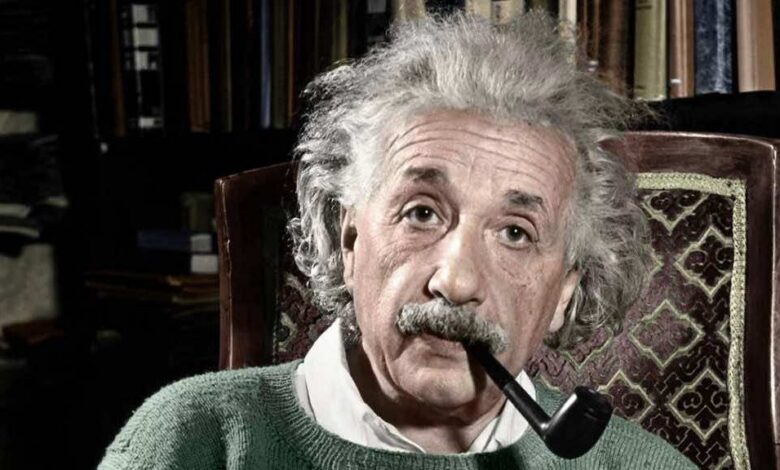
This extraordinary paradox was embodied in the story of physicist Albert Einstein in November 1952, when he found himself considered for the presidency of Israel following the death of the country’s first president, Chaim Weizmann, according to the History Channel’s website.
At first glance, the choice of the father of the theory of relativity appeared to be a fitting tribute to the most famous Jewish scientist of the twentieth century. In reality, however, the proposal concealed complex political and diplomatic calculations. Einstein did not see himself as a statesman, while the Israeli leadership, despite its determination to extend the offer, understood that placing an independent thinker with unconventional views at the head of the state could create a political dilemma as complicated as the embarrassment of not nominating him at all.
A proposal driven by symbolism rather than politics
Einstein’s name emerged only days after Weizmann’s death, when the Israeli newspaper Ma’ariv presented the idea as a tribute to the world’s most prominent Jewish figure. The media suggestion quickly evolved into a serious political option, driven by Prime Minister David Ben-Gurion’s belief that ignoring Einstein would be difficult to justify before public opinion.
At the same time, Ben-Gurion understood the risks associated with nominating the renowned physicist. Einstein had never lived in Israel and had never engaged in political life. He was also known for his intellectual independence, his outspoken criticism of militant nationalism, and his belief in the possibility of peaceful coexistence between Jews and Arabs.
For the leadership of a state fighting for its survival during its formative years, these qualities were far from ideal in a president expected to embody national consensus.
Ben-Gurion later summarized this dilemma with the words: « It was impossible not to offer him the position, but what if he accepted? » The statement perfectly reflected the reality of the situation: the offer was more a moral obligation than a genuine desire to see Einstein become head of state.
A letter of refusal that revealed the limits of genius
The Israeli government handled the matter with extreme caution. Israel’s ambassador to Washington, Abba Eban, was tasked with arranging a meeting with Einstein, who initially refused to receive official envoys before eventually agreeing to meet Yitzhak Navon in New York.
Navon later recalled that the encounter was not a celebratory occasion for the renowned scientist, but rather a heavy moment marked by embarrassment and sadness more than by pride.
On November 18, 1952, Einstein sent his famous letter to Ben-Gurion, formally declining the offer. In a message characterized by humility and sincerity, he explained that he had devoted his life to scientific facts and abstract ideas and had never acquired the experience or skills necessary to deal with people or assume public responsibilities.
His refusal was not merely the rejection of a ceremonial office; it reflected an entire philosophy of life. Although he supported the establishment of Israel and maintained close ties with the Jewish community, Einstein remained critical of nationalism and firmly believed that science and humanity transcended national borders and narrow identities.
These convictions made him an influential global figure, but they also distanced him from becoming the political symbol of a young nation searching for a president capable of uniting it during an exceptionally sensitive period.
Following his refusal, the Israeli leadership turned to a more conventional choice, electing Yitzhak Ben-Zvi as president in December 1952. He remained in office until his death in 1963.
Perhaps the most striking irony of this story lies in the scene that followed the end of the controversy. During an official reception held a few days after Einstein announced his decision, diplomats noticed that he was wearing an elegant black tie but had forgotten—or simply chosen not—to wear socks.
That small detail perfectly encapsulated his personality. The man who transformed humanity’s understanding of the universe remained indifferent to protocol and appearances, staying true to his simple nature even on the most formal occasions.