The Flying Banana arrives in the Middle East: are the United States preparing to determine the fate of Iran’s nuclear program?
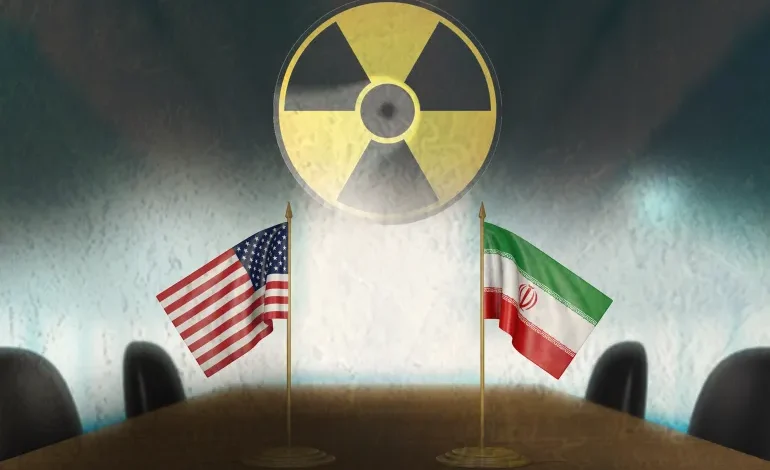
As tensions between Washington and Tehran continue to escalate and military options return to the center of American strategic calculations, the arrival of Chinook helicopters in the Middle East raises questions that go far beyond their heavy-lift capabilities.
The “legendary helicopter,” renowned for transporting troops, equipment, and supplies across some of the world’s most challenging battlefields, has arrived at a particularly sensitive moment, prompting a fundamental question: are the United States preparing for a new military phase against Iran? Are they considering airborne operations inside Iranian territory? Are they preparing to implement the scenario described as “extremely complex,” aimed at seizing Iran’s stockpile of enriched uranium or destroying it inside heavily fortified facilities?
-
Hotline Diplomacy: Efforts Underway to Preserve De-escalation Between Washington and Tehran
-
Axios: Washington and Tehran Agree to Halt Attacks and Resume Talks
The arrival of the Chinook
On Sunday, the United States Central Command (CENTCOM) announced the arrival of a CH-47 Chinook helicopter belonging to the U.S. Army.
CENTCOM released a photograph showing the aircraft landing at an undisclosed location in the Middle East, emphasizing that the Chinook is a twin-rotor helicopter designed to transport personnel, equipment, and supplies in a wide range of operational environments.
According to The New York Times, U.S. military planners are considering a plan aimed at seizing Iran’s stockpile of enriched uranium or destroying it within its fortified facilities. Such an operation would require the deployment of thousands of troops, alongside special operations forces, military engineering units, and explosive ordnance disposal teams tasked with securing nuclear sites, clearing mines and booby traps, reopening damaged access points, and ultimately recovering or eliminating the nuclear material.
-
Swiss Negotiations Test the Prospects for De-escalation Between Washington and Tehran
-
Military escalation between Washington and Tehran derails hopes of a settlement
The scenario for seizing Iran’s nuclear assets
This exceptionally complex mission would make the Chinook one of its key operational assets, raising speculation about possible American preparations to implement such a scenario, particularly after President Donald Trump canceled the strikes he had planned against Iran.
Analysts believe that major sites, including the underground Fordo facility and the Isfahan nuclear complex, would likely be among the operation’s primary targets.
Military experts argue that logistics would represent the greatest challenge of any ground intervention of this kind. U.S. forces would have to establish security perimeters around the targeted facilities, protect supply routes and convoy corridors responsible for transporting nuclear materials to air evacuation zones, and simultaneously safeguard troops operating inside Iranian territory.
-
Diplomacy races against rising tensions: anticipation of Muscat talks between Washington and Tehran
-
Washington and Tehran discuss a ‘political ceasefire’
Engineering units would also be responsible for opening access routes and removing obstacles created by previous strikes or Iranian fortifications, while smaller special operations teams would directly handle the enriched nuclear material.
The most complex military operation in history
The newspaper quoted Joseph Rodgers, deputy director of the Center for Strategic and International Studies, as saying that military action could become the most likely option for eliminating Iran’s current nuclear stockpile if negotiations continue to fail.
He described the potential mission as “the most complex operation in military history.”
According to Rodgers, success would require simultaneous control over several highly sensitive locations in a hostile environment while maintaining secure supply lines and a continuous evacuation capability.
-
Tehran Increases Pressure on Washington by Calling for the Closure of the Bab el-Mandeb Strait
-
New Escalation in the Gulf Threatens Prospects for an Agreement Between Tehran and Washington
Reports also indicate that participating forces could include members of the U.S. Navy SEALs, Army Rangers, and military ordnance specialists, who would be responsible for handling and transporting enriched uranium from facilities such as Fordo and Isfahan if Washington ultimately opted to seize the material rather than destroy it.
According to estimates by the International Atomic Energy Agency for 2025, Iran possesses more than 20,000 pounds of enriched uranium, significantly increasing the scale and complexity of any mission intended to remove or secure the stockpile.
Experts argue that the success of such an operation would depend not only on military strength but also on highly accurate intelligence regarding the design of Iran’s nuclear facilities, their structural vulnerabilities, access points, and methods for reaching the nuclear materials stored inside them.
-
Reciprocal Attacks Between Tehran and Washington Complicate the Settlement Process
-
Tehran’s Stubbornness and Washington’s Tough Stance Keep a Potential Agreement Trapped in a Maze of Conditions
At the same time, reports suggest that Iran has intensified its preparations for a potential attack by strengthening security around the Isfahan nuclear complex, placing mines and explosives inside certain tunnels, and reinforcing protective measures around sensitive facilities.
Why is the Chinook considered the ideal platform for this mission?
Its exceptional capabilities make it an ideal choice should the United States decide to move forward. Advanced and versatile, the aircraft owes its nickname, the “Flying Banana,” to its twin-rotor configuration, a feature that has also contributed to its reputation as a legendary helicopter.
The CH-47F Chinook is regarded as one of the heaviest-lift helicopters ever produced in the Western world, making it a cornerstone of heavy transport operations during military campaigns.
Equipped with a digital automatic flight-control system, the aircraft has achieved considerable export success and has been sold to more than twenty countries.
-
Contradictory conditions push Tehran and Washington toward a deadlock
-
Washington Targets Tehran with Harsh Sanctions as Araghtchi Demands War Reparations
The “Flying Banana”
Manufactured by Boeing Vertol in the early 1960s, the helicopter is known in France as the “Flying Banana” because of its distinctive twin-rotor design.
The Chinook proved highly effective during the Vietnam War, where it was especially useful for transporting artillery batteries to otherwise inaccessible locations and subsequently supplying them with ammunition.
During the Falklands War between Argentina and the United Kingdom, both sides employed Chinook helicopters, albeit in limited numbers, relying on them primarily for heavy-lift missions.
-
Tehran and Washington Resume Nuclear Talks Under the Pressure of Red Lines
-
Israel and the United States plan large-scale strikes against Iran’s energy infrastructure
According to Boeing, the aircraft incorporates an upgraded airframe designed to enhance stability and survivability.
It is also equipped with a digital automatic flight-control system that enables pilots to hover and land safely even under conditions of limited visibility.
The helicopter features an advanced cargo-management system that allows loads to be carried both internally and externally through sling-load configurations.
Its sophisticated digital cockpit provides pilots with comprehensive situational awareness and advanced autonomous flight capabilities.
-
Trump pushes for tougher hellish sanctions on Tehran to strangle its economy
-
Trump Puts Iran’s Kharg Island Back in the Spotlight Through AI-Generated Images
Technical specifications
According to Boeing, the aircraft measures 15.46 meters in length from nose to tail, 3.78 meters in width, and 5.68 meters in height, while its rotor diameter reaches 18.29 meters.
Its fuel capacity reaches 3,914 liters, providing enough autonomy for flights lasting up to five hours without refueling.
The aircraft can operate continuously over a range of 370.4 kilometers without refueling and can fly at altitudes of up to 20,000 feet.
Its maximum speed is 302 kilometers per hour, making it one of the fastest helicopters still in service, with a payload capacity of up to 10,886 kilograms.
-
Mediators’ Messages Fail to Break the Deadlock in Tehran-Washington Negotiations
-
Iran War Expands to New Waterways to Increase Pressure Leverage
History
In 1962, the first Chinook entered service with a gross weight of 14,969 kilograms.
Several years later, in 1966, Boeing introduced significant improvements with the CH-47B variant, including a reinforced airframe and an upgraded power plant.
According to Boeing, the aircraft was first used in combat during the Vietnam War in 1965.
After the war ended, the manufacturer implemented extensive upgrades that led to the development of the CH-47D model, which played a major role in U.S. military operations abroad, particularly during the Gulf War.
-
Trump Threatens Iran with Broader Strikes as Beijing and Islamabad Open the Door to Negotiations
-
Washington and London Rally Allies: Western Plan to Secure the Strait of Hormuz and Contain Iran