Kikal’s forces in Yemen: Is Riyadh pushing to internationalize the conflict at Sudan’s expense?
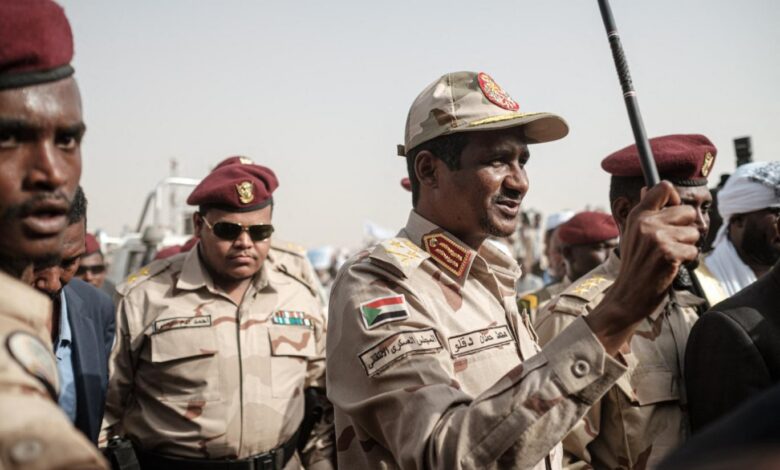
The prospect of sending Sudanese troops to Yemen raises new questions about the future of relations between Khartoum and Riyadh and the extent to which Sudan’s military capabilities might be used in conflicts beyond its borders. Sudan remains mired in a domestic war that is draining its institutions, personnel, and economic resources. Media outlets have reported possible arrangements to deploy fighters from the Sudan Shield Forces, led by Abu Aqla Kikal. Accounts differ over troop numbers, destinations, and prospective duties. Neither Sudan nor Saudi Arabia has issued an official statement clarifying the arrangements.
Yemen’s strategic location, the implications of the war for security in the Red Sea and the Bab el-Mandeb Strait, and Sudan’s participation in the Saudi-led coalition beginning in 2015 give the issue added weight. Is Sudan revisiting an earlier military arrangement under different regional circumstances? Or is it on the verge of being drawn back into an open-ended conflict while it still struggles to contain the war at home?
Kikal’s remarks fuel speculation
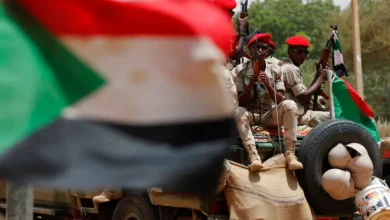
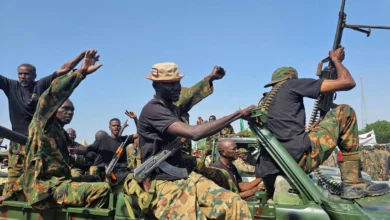
The controversy began after Sudan Shield Forces commander Abu Aqla Kikal returned from Saudi Arabia on November 19, 2026. In a video that circulated afterward, he told members of his forces that preparations were underway to deploy battalions abroad after they received official military service numbers that would allow them to draw pay and complete travel formalities.
According to Sudan Tribune, Kikal did not identify the battalions’ destination. He said the move followed instructions from the commander-in-chief of the armed forces and explained that the service numbers would allow personnel to receive their entitlements through the official system. He also said his forces were heading to Blue Nile to confront the Rapid Support Forces (RSF), leaving open the possibility that the overseas deployment he mentioned was separate from troop movements within Sudan.
Other reports linked the remarks to Yemen and described a plan that would begin with around 2,000 fighters and could rise to 10,000 over as many as 18 months. Darfur24 quoted sources who said more than 7,000 Sudanese soldiers had been sent to Saudi Arabia and Yemen in recent months, including about 2,000 members of the Sudan Shield Forces. Those figures have yet to be independently verified.
A denial attributed to the Sudan Shield Forces has further complicated the picture. The group reportedly denied that a decision had been made to send battalions to Saudi Arabia or Yemen and said its commander had been referring to service numbers and salaries. The reports also said neither the Sudanese army nor the Saudi authorities had officially confirmed an agreement to deploy the forces.
Whether Kikal’s forces have arrived in Yemen remains unconfirmed. Issuing official service numbers, authorizing an overseas deployment, stationing troops in Saudi Arabia, and participating in combat inside Yemen are separate steps. Each requires clear, independently verified information.
The Red Sea stakes extend beyond Yemen
Any prospective military move in Yemen must be understood in the context of the Red Sea’s strategic importance. The waterway is a major artery of international trade, linking the Mediterranean to the Indian Ocean through the Suez Canal and the Bab el-Mandeb Strait. It is also a key route for energy exports and for commercial and naval vessels.
Saudi Arabia regards Red Sea security as part of its own economic and strategic security. Attacks on shipping or energy infrastructure can affect global energy markets, trade, and supply chains as well as Yemen and other countries along the coast. Military developments in Yemen are therefore tied to wider concerns about protecting ports, shipping lanes, and critical infrastructure.
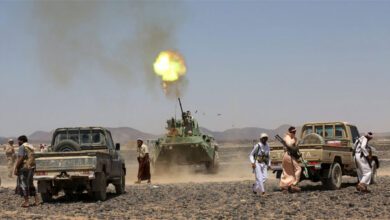
Wider military involvement, however, offers few guarantees of lasting stability. Yemen’s experience has shown that battlefield superiority and additional troops are insufficient on their own to end the conflict, especially where local interests overlap with regional and international competition. A new foreign deployment could add more actors and military interests to a conflict already shaped by numerous forces with divergent goals.
Protecting the Saudi border or supporting units stationed in the kingdom is a different assignment from taking part in combat inside Yemen. Even if Sudanese troops were confirmed to be in Saudi Arabia, whether they would fight in Yemen would remain an open question. Reports of military arrangements leave the nature of the mission, the rules of engagement, and operational command unclear.
Riyadh weighs border security and the demands of war
Saudi Arabia faces a complex security situation in Yemen. It seeks to protect its southern border and prevent attacks on its territory and infrastructure. It must also contend with the legacy of years of military operations that have failed to produce a definitive, stable settlement.
Sudan joined the Saudi-led coalition in March 2015 under former President Omar al-Bashir and sent troops to take part in military operations. Sudanese units arrived in Aden in October that year as part of a broader deployment in support of Yemen’s internationally recognized government.
Over time, the deployment became contentious within Sudan because of casualties, political costs, and the role of some armed formations. In 2018, media outlets reported that Khartoum was reviewing its involvement amid domestic objections. The review showed how closely the deployment was tied to Sudanese political dynamics and the calculations of the government at the time.
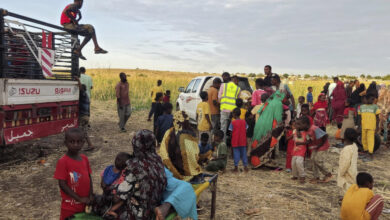
Conditions today are markedly different. Since April 2023, Sudan’s internal war has caused widespread destruction of infrastructure, displaced millions, and weakened the state’s ability to provide basic services. Any decision to send troops abroad therefore raises questions about national priorities and the military’s ability to manage several fronts at once.
Military cooperation with Saudi Arabia and efforts to secure the Red Sea can serve Sudanese interests. The legitimacy of such cooperation depends on its nature, its transparency, oversight by official constitutional and military institutions, and its alignment with Sudan’s national interests. The needs of an outside partner alone cannot justify a deployment.
The unresolved lessons of 2015
Renewed talk of Sudanese participation in Yemen recalls an earlier deployment whose political and human consequences are still felt. Regular troops and other Sudanese formations served in Yemen. The participation of RSF personnel remains one of the most controversial aspects of that experience.
The US State Department’s 2020 Trafficking in Persons Report cited financial support, training, and cooperation from Saudi Arabia for Sudanese RSF personnel who served in Yemen. It also cited allegations that some units included minors. These accounts concern an earlier deployment and specific units. They cannot be generalized to all Sudanese forces or treated as evidence of current arrangements involving Kikal’s troops.
That experience raises questions any new arrangement would need to address. Who has the authority to send the troops? Who bears responsibility for casualties? What relationship would the Sudanese command have with the authority hosting or employing the troops? Would pay, weapons, supplies, and command remain under Sudanese state control, or would parallel financial and military arrangements emerge?
These questions are especially important given Sudan’s experience with armed formations that developed foreign ties and acquired resources independently of state institutions. The current war has exposed the risks of fragmented military authority when some formations can make decisions outside a unified national command structure.
Even if Sudan Shield Forces personnel have received official service numbers, their full integration into the military remains to be established. Beyond identification cards and pay, genuine integration requires unified command, compliance with military law, a clear chain of command, and exclusive state authority over decisions of war and peace.
Could the Red Sea become a new theater of attrition?
The risks of a possible Sudanese deployment extend beyond immediate casualties. Sending troops into a conflict abroad could create new military and financial commitments and expose Sudan to escalation with regional actors while the state still struggles to end the war at home.
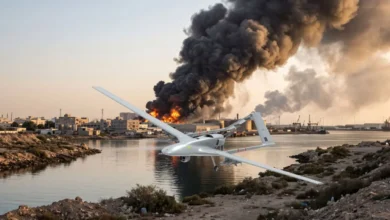
Depending on their duties and where they are stationed, new forces deployed in the Yemen conflict could face missile strikes, drone attacks, and ground combat. The consequences could also reach families that depend on military pay and communities that stand to lose more of their members in a war they have no power to end.
The human stakes become especially clear when enlistment emerges as a way to earn a living for young people whose livelihoods have been destroyed by war. Promises of better conditions for families or steady pay can make economic necessity the main reason to join an armed formation. Poverty can thus push people to accept risks that may serve neither their own interests nor those of their country.
The danger is a return to a model in which fighters are sent abroad in exchange for money or political support. That model may bring short-term gains to some parties, but it can have lasting consequences for Sudanese society. It risks undermining efforts to build a unified national military and tying decisions about war to foreign arrangements that are difficult to subject to public scrutiny.
In a report published in November 2026, the Ayin network examined allegations that Saudi money helped secure the support of some commanders who defected from the RSF. It also noted that the extent of Riyadh’s involvement in the recent wave of defections remained unclear. The findings raise broader questions about the influence of foreign funding on Sudan’s balance of power. They do not in themselves establish that an agreement exists to send Kikal’s forces to Yemen.
Three scenarios for Khartoum
The first scenario is that Kikal was referring to administrative and military measures to reorganize the Sudan Shield Forces and integrate them into the armed forces. Under this scenario, no final decision would have been made to send them to Yemen. Reports citing specific troop numbers and combat duties would have either gotten ahead of events or overstated the implications of his remarks.
The second scenario is a deployment of Sudanese troops on Saudi territory under a security or defense arrangement, either to protect specific sites or to support units already stationed there. If confirmed, this would require clarity about the mission, its duration, the chain of command, and whether the troops would remain outside combat operations in Yemen.
The third scenario is direct Sudanese participation in military operations inside Yemen. It is the most politically and militarily sensitive possibility. Such a decision would return Sudan to a regional war at a time when it faces existential challenges at home. It could also prompt disputes over legal authorization, resources, and the country’s ability to bear the consequences of casualties.
None of these scenarios can be judged more likely with confidence until officials clarify the situation and conflicting reports about troop numbers and destinations are verified. Arrangements may exist without public confirmation, but the circulating accounts still require scrutiny.
A new test of Sudanese sovereignty
The debate over Kikal’s forces and Yemen concerns how the Sudanese state would decide to send troops, who would command them, and whose objectives their participation would serve. Beyond the numbers involved, Sudan’s priority is to unify its military institutions and rebuild its ability to defend its territory. New commitments in regional conflicts that years of fighting have failed to resolve could divert resources from that task.
Saudi Arabia has legitimate security interests in protecting its borders and shipping lanes. Sudan also has an interest in stable relations with its Arab neighbors. Those interests must be pursued through public debate on any deployment and through transparent, accountable decisions about sending Sudanese personnel abroad.
Any new military arrangement should be judged by whether troops answer to a unified national command, whether their mandate is clear, whether their rights and those of their families are protected, and whether international humanitarian law is respected. Designating an armed formation as terrorist, or accusing a state of supporting a group so designated, also requires reliable evidence and a clear legal basis.
Amid concern over Red Sea security and Yemen’s stability, Sudan faces a more urgent question. Can it protect its regional interests without exporting its domestic crisis to new theaters? Or will the search for support and resources bring another costly conflict, with young Sudanese and a country still reeling from war left to pay the price?