The legacy of Yemen’s war returns to Sudan: Will Sudanese fighters again be recruited for regional conflicts?
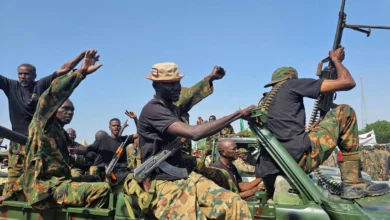
Renewed talk of sending Sudanese fighters to Yemen has revived one of the most contentious episodes in Sudan’s relations with the Gulf states. Beginning in 2015, thousands of Sudanese soldiers and fighters took part in the war in Yemen as members of the Saudi-led military coalition.
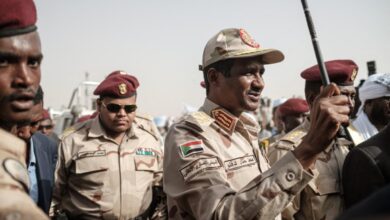
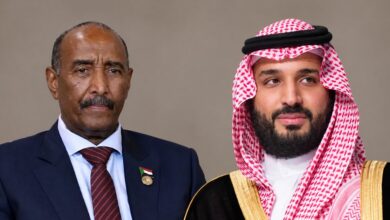
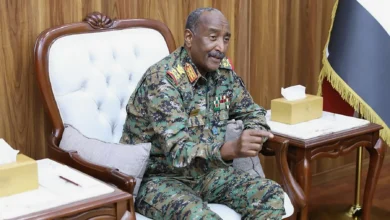
More than a decade after the war began, that prospect has resurfaced following remarks by Abu Aqla Kikal, commander of the Sudan Shield Forces. He spoke of arrangements to send battalions abroad after his personnel received official military service numbers that would allow them to draw pay and travel. He said the move came at the direction of Sudanese army commander-in-chief Abdel Fattah al-Burhan.
Kikal made the remarks after returning from Saudi Arabia on November 19, 2026. Media outlets subsequently reported a possible plan to send around 10,000 Sudanese fighters to Yemen over 18 months. Those reports alleged that military and financial arrangements would govern his forces’ participation in operations linked to the Saudi-led coalition.
The Sudan Shield Forces denied that an official decision had been made to send their personnel to Yemen or Saudi Arabia. Their commander’s remarks and the reports that followed have nevertheless brought a familiar question back into public debate. Is Sudan moving toward recruiting its citizens for regional wars again while it still struggles to end the war at home?
2015, when Sudan entered the war in Yemen
Sudan joined the Saudi-led military coalition in March 2015 after the government of former President Omar al-Bashir decided to take part in operations against the Houthis and their allies in Yemen.
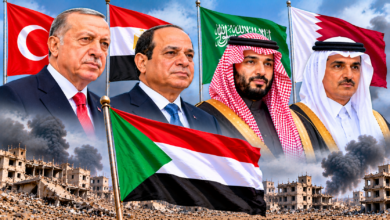
The decision came amid rising tensions between Saudi Arabia and Iran. After the Houthis took control of the capital, Sanaa, and advanced into other areas, Riyadh formed an Arab coalition to support Yemen’s internationally recognized government.
For al-Bashir’s government, participation also served political and economic objectives. After years of isolation and international sanctions, Khartoum sought stronger relations with the Gulf states, financial support and investment, and greater regional influence.
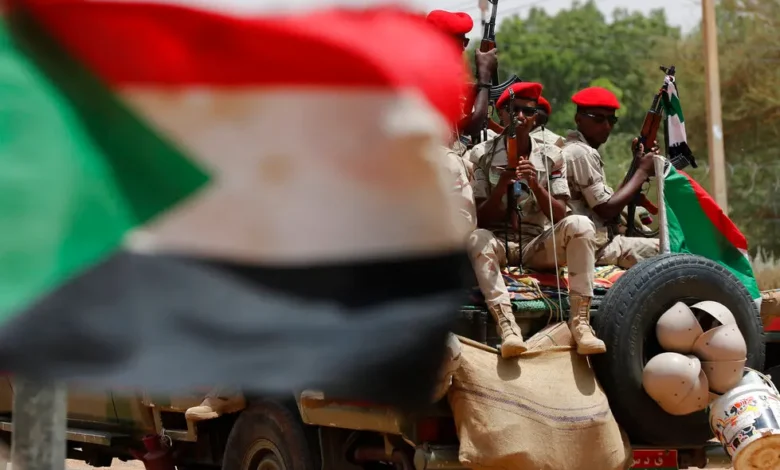
The first Sudanese troops arrived in Aden in October 2015. Reuters reported the arrival of a battalion of about 300 soldiers and officers as part of a broader effort to strengthen the coalition’s forces on the ground.
The Sudanese army’s spokesperson said at the time that the troops would carry out their duties under coalition command. That statement clarified the operational arrangement governing Sudan’s involvement from the outset.
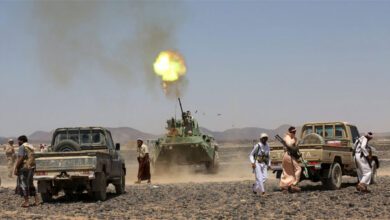
Sudan’s involvement grew over time. Its troops took part in ground operations in Yemen, particularly in areas where fighting with the Houthis was underway.
From regular troops to paramilitary fighters
According to international and human rights reports, personnel from the Rapid Support Forces (RSF) joined regular army units in Sudan’s deployment to Yemen. The RSF were under Sudanese command at the time and later became one of the main parties to the war that broke out in Sudan in 2023.
The involvement of paramilitary formations abroad was one of the most controversial aspects of the deployment. It raised questions about command and control, the authority of official military institutions over the fighters, and who financed, armed, and assigned them their duties.
The US State Department’s 2020 Trafficking in Persons Report cited accounts of Saudi support for the RSF during their deployment in Yemen. The support reportedly included funding, equipment, training, and operational command of some units. The report also cited allegations that children aged 14 to 17 had taken part in combat and that some families had paid to have their underage children recruited.
The US government report drew on earlier reporting, and the allegations concerned particular cases and units. They highlight the risks of weak recruitment oversight when armed formations operate under military arrangements abroad.
The 2015 deployment also raises questions about fighters’ rights, who was responsible for protecting minors, and whether the parties involved complied with international humanitarian law.
Financial support in exchange for military participation, a familiar political bargain
Sudan’s economic crisis helped shape the decision to join the war in Yemen. Khartoum faced a severe shortage of foreign currency, shrinking state resources, and the effects of US sanctions. It had also lost a large share of its oil revenue after South Sudan became independent in 2011.
In May 2018, Reuters quoted Sudan’s defense minister as saying that Khartoum was reviewing its military involvement in Yemen after dozens of Sudanese soldiers had been killed and lawmakers had raised objections about the cost of the war and what the country stood to gain.
The minister said the army was weighing the benefits and drawbacks of the deployment. Sudanese lawmakers argued that the decision had failed to deliver the expected economic gains and that the country had suffered substantial human and military losses for uncertain returns.
Reuters also reported that Sudan had at least 3,000 soldiers and several fighter aircraft in the coalition at that point, amid reports that dozens of Sudanese soldiers had been killed in combat.
Sudan had sent troops to Yemen in pursuit of political and economic gains. The deployment failed to resolve its financial problems, while fighters and their families bore part of the human cost.
The same questions are resurfacing under more difficult conditions. Sudan faces widespread economic collapse, war at home, and mass displacement. Meanwhile, reports suggest that Kikal’s forces could receive financial and military support in exchange for taking part in operations abroad.
Could Kikal’s forces repeat Sudan’s earlier deployment?
Abu Aqla Kikal’s emergence in this case marks an important shift. The Sudan Shield Forces differ in origin and composition from the regular units that served in Yemen under al-Bashir.
Established in 2022, Kikal’s forces initially drew on communities in central and eastern Sudan. They joined the RSF after war broke out in April 2023. In October 2024, Kikal announced that he was breaking with the RSF and joining the Sudanese army.
The Sudan Shield Forces have since operated as an allied formation of the Sudanese Armed Forces and taken part in military operations inside the country.
Kikal’s remarks about sending battalions abroad raise questions about the group’s status within the military, the extent to which it answers to a unified command, and who has the authority to decide where it would deploy outside Sudan.
In November, media outlets reported a possible plan to send 10,000 fighters to Yemen over 18 months, beginning with a contingent that could number about 2,000.
The figures remain uncertain. Saudi and Sudanese authorities have yet to confirm that a plan on this scale has been put into effect. The Sudan Shield Forces have also denied that any official decision was made to send their troops to Yemen. The reports still require verification.
The historical comparison remains relevant. A new deployment could revive the use of Sudanese fighters in conflicts abroad, through formations different from those that took part more than a decade ago.
Saudi Arabia and the renewed prospect of relying on Sudanese fighters
Saudi Arabia is central to both episodes. It led the military coalition in Yemen in 2015 and is now linked in media reports to possible arrangements to bring in fighters from Kikal’s forces.
The connection reflects Sudan’s continuing strategic importance to Saudi security. Sudan has a Red Sea coastline, lies close to Yemen, and has military experience that could be drawn on for ground operations.
In 2015, Sudan’s institutions were relatively stable despite the country’s economic and political difficulties. The current war has since divided state institutions and led to a proliferation of armed formations.
Any overseas military arrangement is therefore more sensitive. It could shift the balance of power inside Sudan, increase some formations’ reliance on foreign funding, and weaken efforts to build a unified national army.
Riyadh also faces questions about the nature of any military cooperation with Sudanese forces. Would they be tasked with border protection or take part in combat operations inside Yemen? What safeguards would protect fighters’ rights and civilians?
The risks of fighting in Yemen
Any party seeking to bring in new fighters could underestimate the conflict by assuming that additional personnel and military equipment would be enough to bring Yemen under control.
Years of war in Yemen have shown that military superiority alone cannot settle the conflict. The number of local armed actors and the overlap of regional interests can leave any military intervention mired in protracted fighting.
Yemen continues to face a deep humanitarian and economic crisis. The warring parties are responsible for protecting civilians, facilitating the delivery of aid, and complying with international humanitarian law.
If confirmed, a Sudanese deployment would place the fighters in a complex theater of operations requiring clearly defined duties, rules of engagement, and command responsibilities.
A new deployment could also draw opposition in Sudan, especially without a public discussion of its goals and costs, or if Sudanese citizens see it as a continuation of an earlier intervention that brought the country few clear gains.
Armed formations and the risk of fighters moving from one war to another
One of the major risks is that fighters could move between conflicts, creating military networks with combat experience and cross-border ties to sources of funding and weapons.
Sudan’s experience over recent decades shows that the proliferation of armed formations and their use in domestic and foreign conflicts can weaken state authority and create power centers that are difficult to bring under state control.
The spread of weapons and growing reliance on irregular forces have complicated efforts to build Sudan’s military institutions. The problem has become more apparent since war broke out between the army and the RSF in April 2023.
If members of the Sudan Shield Forces are sent to Yemen, the deployment should be assessed in terms of its immediate military gains and its impact on efforts to integrate armed formations and unify military decision-making.
Turning fighters into a force that can be called upon in multiple conflicts could strengthen reliance on armed force as a source of income and influence, at the expense of the civilian and economic institutions needed for stability.
Who is accountable when fighters are killed or wounded?
One lesson from the previous deployment to Yemen is the need to establish who bears responsibility for casualties and to safeguard the rights of fighters and their families.
Any agreement to send troops abroad should set out clear arrangements for health insurance, compensation, survivor pensions, medical care for the wounded, and repatriation.
It should also identify who would investigate any violations committed during military operations and ensure that all forces comply with international humanitarian law.
These rights require formal guarantees, especially when recruits come from families facing poverty and unemployment that rely on military pay to improve their living conditions.
Sudan between rebuilding the state and sending fighters abroad
The debate over Kikal’s remarks concerns the broader direction of Sudanese military policy, the limits of cooperation with regional allies, and the state’s ability to prevent armed formations from being used in conflicts beyond its borders.
The 2015 deployment exposed the costs of Sudan’s involvement in Yemen. The political and economic calculations behind the decision did little to prevent casualties or silence domestic criticism of the deployment’s value.
The risks appear greater today. Sudan is still at war and needs to rebuild its institutions and unify its armed forces. Opening new channels for overseas deployments could draw resources away from those priorities.
If reports of arrangements to send Kikal’s forces to Yemen are confirmed, the terms of the agreement should be disclosed, including the number of troops, who would command them, how the deployment would be funded, and what military and political objectives it would serve.
If the reports are inaccurate, clarifying what Kikal meant is essential to dispel uncertainty and end the speculation.
Sudan has already paid a heavy price for wars and divisions. Repeating past decisions risks turning its young people into a pool of recruits for regional conflicts.
Has Khartoum learned from 2015? Or will its need for foreign support push it to repeat the same bargain, sending troops to Yemen while Sudan’s political, economic, and security crises remain unresolved?