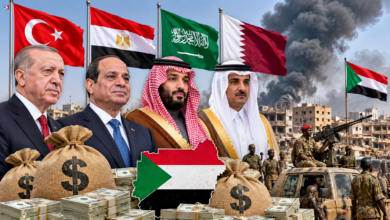
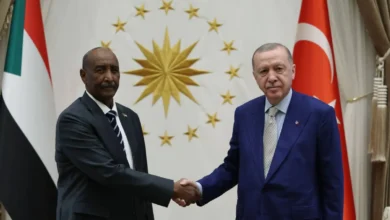
Funding, weapons, and drones raise questions over who is financing the recruitment of Sudanese fighters for overseas missions
Reports of arrangements to send Sudanese fighters to Yemen appear to be part of a broader set of military and financial developments surrounding Sudan’s war. Reports of foreign support for forces allied with the Sudanese army have increased, alongside accounts of advanced military equipment deliveries and expanded training and arms programs. Sudan is facing an unprecedented economic and military crisis.
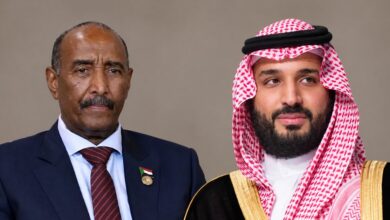
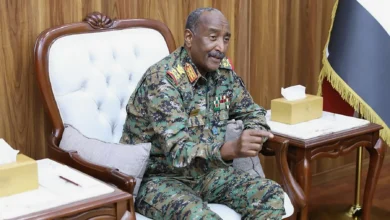
At the center of these developments is Abu Aqla Kikal, commander of the Sudan Shield Forces. After returning from Saudi Arabia on November 19, 2026, he told members of his forces that arrangements were being made to send battalions abroad. He also spoke of issuing military service numbers that would allow fighters to draw salaries and travel outside Sudan on assignments.
His remarks coincided with reports of a possible plan to send up to 10,000 Sudanese fighters to Yemen over 18 months. The reports alleged that Saudi parties and Sudanese leaders had reached financial and military understandings under which money, equipment, and training would be provided in exchange for members of Kikal’s forces taking part in operations linked to the Riyadh-led coalition.
Accounts of the case put the potential support for Kikal’s forces at around $75 million, including funding and military equipment such as combat vehicles, weapons, and drones. They also describe arrangements to ship equipment from Pakistan and Vietnam, along with a training program overseen by Pakistani specialists.
If confirmed, these reports would place the deployment of fighters abroad within a broader system of funding, arms supplies, training, and recruitment. That would raise fundamental questions about who is directing the arrangements, what they are intended to achieve, and how far they are subject to Sudanese government oversight.
The questions surrounding the reported $75 million
The reported $75 million in support is one of the claims most in need of verification. If confirmed, it would represent a substantial sum for an armed formation in a country whose economic and financial institutions are still reeling from the war.
Beyond the amount, the questions are who might provide the money, how it would be transferred, who would receive it, and whether it would be tied to recruitment or deployment outside Sudan.
If the funding were directed to the Sudan Shield Forces, it would be important to establish whether it fell under a formal military cooperation agreement between two states or was earmarked for one formation. Direct support of that kind could give the group funds and access to weapons independent of the rest of the Sudanese military.
A possible link between the funding and the number of fighters sent abroad also raises questions about what the backer would receive in return. It remains unclear whether any commitments cover troop numbers, deployment locations, or the duration of the mission.
No published financial documents or independent official statements have confirmed the $75 million figure. It remains an estimate cited in accounts of the case.
Verification is especially important because separate reports describe possible Saudi–Sudanese understandings involving fuel and economic assistance in exchange for military arrangements. Each of these accounts needs to be assessed on its own evidence before any connection between them can be established.
Pakistan’s arms dealings with Sudan go beyond Kikal’s forces
Pakistan figures prominently in discussions about foreign arms supplies to the Sudanese Armed Forces. In January 2026, Reuters reported that Islamabad was close to signing an arms deal with the Sudanese army worth up to $1.5 billion.
According to Reuters, the proposed deal included Karakorum-8 light attack aircraft, more than 200 reconnaissance and attack drones, advanced air defense systems, and Super Mushshak training aircraft. JF-17 fighter jets were also under consideration.
In April 2026, Reuters reported that Pakistan had put the $1.5 billion deal on hold after Saudi Arabia asked for it to be called off and said it would no longer finance the purchase, according to Pakistani security and diplomatic sources. The report said Riyadh had previously helped facilitate the deal before its position on financing changed.
The reports establish that arms talks between Sudan and Pakistan predated the current controversy over Kikal’s forces. Whether any of the weapons were intended for the Sudan Shield Forces or connected to plans to send fighters to Yemen remains unsubstantiated.
The proposed arms deal reported by Reuters concerned the Sudanese Armed Forces. The claims involving $75 million concern possible support for Kikal’s forces. No published evidence has established that the two are part of a single agreement.
Sudan’s arms ties with Pakistan and reports that Saudi Arabia previously helped facilitate defense deals warrant close scrutiny of any new arrangements to transfer military equipment or train Sudanese fighters abroad.
Drones are changing the nature of Sudan’s war
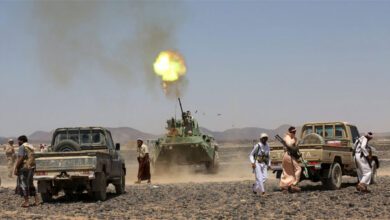
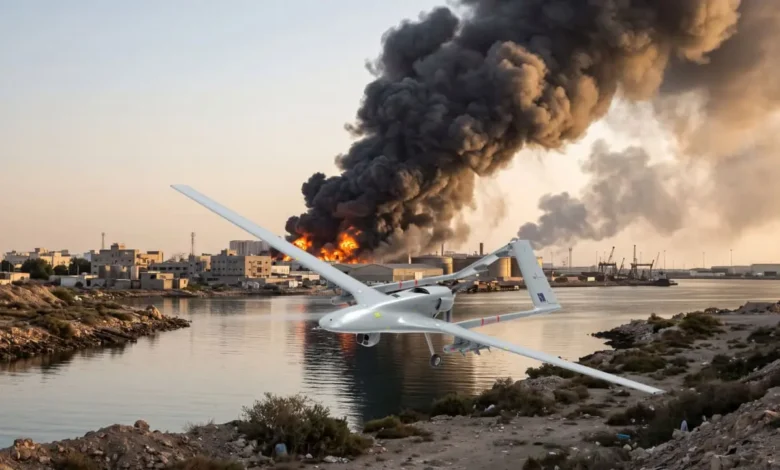
Drones have become a central feature of Sudan’s war. Their use has expanded across reconnaissance and offensive operations, including strikes on military sites and infrastructure.
In a report submitted to the UN Human Rights Council, the Independent International Fact-Finding Mission for the Sudan said the Sudanese Armed Forces had expanded their drone capabilities since late 2023 using foreign systems. The report noted improvements in reconnaissance and precision strikes.
The mission also reported examining wreckage and footage associated with drones used in parts of Kordofan and Darfur in 2026. It found technical indications consistent with Turkish Bayraktar Akıncı platforms.
These developments illustrate how much Sudan’s military capabilities have changed. Access to advanced equipment has become a major factor in determining the balance of power in the war.
If drones were included in a support package for Kikal’s forces, further questions would arise about how they would be used, who would operate them, and what oversight would govern their transfer, storage, and use.
Drones can carry out reconnaissance and surveillance, and some can be equipped for offensive operations. Transferring them to armed formations outside a unified command-and-control structure is therefore particularly sensitive.
If the equipment were used outside Sudan, the legal and political responsibilities of those who supply it, train its operators, or oversee its use could also extend beyond Sudan’s borders.
Military equipment from Vietnam: What does the evidence show?
Accounts of the alleged Kikal agreement describe arrangements to ship combat vehicles, weapons, and drones from Pakistan and Vietnam. The claim raises questions about where the equipment would come from and how it would be transported.
A deal on this scale would be expected to leave records that could be checked, including purchasing and export documents, manufacturer records, shipping logs, military transfer licenses, or information identifying the recipients.
Reports of two different suppliers also call for clarity about each country’s role. Would Pakistan provide weapons and training while Vietnam supplied other equipment? It is also possible that the reports have conflated separate deals with no direct connection.
There is currently insufficient independent evidence to confirm that military shipments from Vietnam were intended for Kikal’s forces or that the equipment in question was part of a deal to send fighters to Yemen.
Presenting these claims as established facts would undermine the credibility of the reporting. Shipping and supply documents, the names of the companies involved, and the identity of the recipients still need to be established.
Pakistani training to build capacity or prepare a force for deployment abroad?
One prominent claim concerns a separate training program that Pakistani specialists would oversee. The nature of the training and its aims remain unclear.
Foreign military training may cover equipment operation, communications, reconnaissance, unit management, drone use, and field operations planning.
The significance of the alleged program depends on whether it is directly linked to plans to send fighters to Yemen and whether it is designed to prepare them for combat outside Sudan.
If that link were established, the proposed arrangements would include funding and equipment as well as training personnel for the demands of an overseas mission.
That would raise questions about who would oversee the program, whether it would take place in Sudan or abroad, who would pay for it, and what safeguards would ensure that trainees remain subject to Sudanese military law.
The involvement of foreign specialists in training armed formations warrants public disclosure of the nature of their assignment, especially if the program could prepare fighters to take part in a regional conflict.
Foreign funding risks creating competing centers of power
One of the most serious risks of direct financial and military support for armed formations is that it could create independent centers of power within Sudan’s military landscape.
A unified military depends on common systems of command, funding, procurement, and discipline. Separate access to foreign money and equipment can strengthen a formation’s autonomy and enable it to make decisions that may run against national priorities.
The risks increase when the recipient answers to a commander with a distinct base of social and military influence, as is the case with Kikal and the Sudan Shield Forces.
If foreign funding became the main source of fighters’ pay and equipment, it could create a direct relationship between the formation’s leaders and its backers. The resulting network of interests could be difficult to bring into a unified military structure later.
Foreign military cooperation can operate within a common institutional framework. A lack of transparency, oversight, and legal safeguards increases the likelihood of conflicts of interest and divided loyalties.
Any military assistance to Sudan should therefore go through its official institutions and be subject to clear oversight, with safeguards against separate funding for armed formations operating under private arrangements.
Riyadh’s political support and military interests
These developments come amid a complex relationship between Saudi Arabia and Sudan. Riyadh considers Sudan’s stability important to Red Sea security and the regional balance of power.
Saudi Arabia has played a prominent diplomatic role in efforts to end Sudan’s war. It hosted the 2023 Jeddah talks in partnership with the United States and has provided humanitarian and economic assistance to Sudan.
European reports say Saudi Arabia also provided economic support to the Sudanese Armed Forces and sought to preserve the stability of state institutions while continuing its diplomatic efforts to end the conflict. Reports in 2026 also covered developments in defense cooperation between Khartoum and Riyadh.
Whether Saudi Arabia financed recruitment for Kikal’s forces, provided the reported $75 million, or approved the alleged arms shipments and training remains unproven.
Responsible reporting and political accountability require a distinction between Saudi support for the Sudanese state that has been announced or documented and allegations that Riyadh funded a particular armed formation and sent it to fight abroad.
If such understandings exist, making them public would be necessary to establish the relationship between financial support and military commitments. Disclosure would also clarify whether the forces would operate under official Sudanese command or under a different operational arrangement.
Who would benefit from sending fighters and equipment to Yemen?
If confirmed, a deployment of Sudanese fighters to Yemen would place them in a highly complex conflict, where Saudi security concerns overlap with the interests of Yemen’s internationally recognized government and the positions of the Houthis.
The arrival of new armed formations could shift some local balances of power. It could also widen the fighting and make a political settlement harder to reach.
Any funding, training, and equipment should be assessed in light of the duties the fighters would be assigned, whether those duties comply with international humanitarian law, and who would oversee operations.
Any Sudanese role would also need to be clearly defined. Would troops protect the Saudi border or participate in operations inside Yemen? The two missions carry different military, political, and legal consequences.
The reports so far leave the nature of the deployment unclear. The Sudan Shield Forces’ denial makes official clarification about the alleged agreement all the more important.
Transparency is essential to protect Sudan from undisclosed deals
The prospect of funding and arming Kikal’s forces points to a need to review how Sudan manages military cooperation with foreign partners. The country remains at war and faces major obstacles in unifying its military institutions.
If a $75 million deal exists, publishing its terms, sources of funding, and beneficiaries would be a first step toward establishing its purpose and whether it is linked to recruiting fighters and sending them to Yemen.
If weapons are to be shipped from Pakistan or Vietnam, disclosing supply documents, transport routes, and official licenses would make it possible to verify accounts that currently rest on leaks and speculation.
If foreign training is intended to prepare fighters for missions outside Sudan, the nature and objectives of the program and the authority responsible for it should be made public.
The central concern is whether military support from Sudan’s partners could strengthen separate armed formations or tie the future of Sudanese fighters to deals whose terms are unknown to the public.
The most pressing question remains. Are foreign funds, weapons, and training being used to rebuild a unified Sudanese military, or to equip forces that could be sent to regional fronts based on calculations that go beyond Sudan’s needs?
In a country exhausted by war, money and weapons should never become a means of opening new conflicts. Nor should the future of young Sudanese depend on military deals whose terms they do not know and whose risks they cannot fully assess.