Iran’s Revolutionary Guards begin vacating sites in Beirut’s southern suburbs
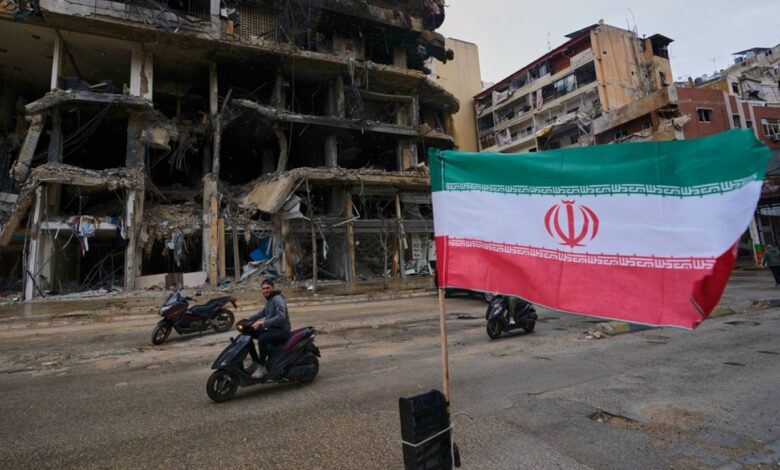
Lebanese security sources said that Iran’s Revolutionary Guards had begun vacating their sites in and around Beirut’s southern suburbs several days earlier and moving personnel and logistical equipment to the Bekaa Valley.
The sources said the move was carried out on direct orders from Tehran amid mounting warnings from Arab and international actors of a possible large-scale Israeli military escalation in Lebanon.
The relocation involved vacating offices and transferring part of the Guards’ operational apparatus, along with groups of officers overseeing efforts to rebuild Hezbollah’s military capabilities.
The sources said Iran decided on differences between the Revolutionary Guards’ command and Hezbollah’s political leadership over the consequences of Lebanon again being drawn into a regional confrontation involving Iran.
The sources described the move as a redeployment that preserves the Guards’ military role in Lebanon. They said it reflects Tehran’s determination to maintain a direct presence despite Lebanese government decisions banning the Guards’ military and security activities and paving the way for the deportation of their personnel.
A renewed Iranian presence
The sources said Lebanese security agencies had continued to track the arrival of personnel and senior figures linked to the Revolutionary Guards in recent months. Those arrivals followed the departure of dozens of Iranian officers last March after regional fighting broke out.
Some Iranian officers entered Lebanon under diplomatic cover, the sources added, raising security and political questions about their actual duties and Tehran’s compliance with the rules governing diplomatic activity.
Dozens of Quds Force officers left Lebanon in early March following Israeli threats to target them, according to Axios, which cited Israeli officials.
Subsequent developments showed that their departure had left an Iranian military presence in Lebanon, the Lebanese security sources said. No precise figures are yet available on how many Revolutionary Guards personnel are in the country.
Beyond military training and advice
Iran’s latest moves are particularly significant given how the relationship between the Revolutionary Guards and Hezbollah has changed since the killing of Hezbollah’s former secretary-general, Hassan Nasrallah, and many of its military commanders in 2024.
A Reuters investigation published last March reported that around 100 Iranian officers were helping rebuild Hezbollah’s military and organizational capabilities and fill the gaps left by the loss of its leaders.
The Iranian mission extended beyond conventional military training and advice to include restructuring Hezbollah’s military apparatus and strengthening its ability to continue operating.
These developments show the extent of Iran’s investment in preserving Hezbollah’s military capabilities, despite the economic and security pressures facing Tehran and regional shifts that have weakened its influence.
Warnings of a wider confrontation
Lebanese security sources linked the timing of the redeployment to mounting warnings from Arab and international actors that Israel could launch a large-scale air operation extending beyond the areas where fighting is currently taking place.
The sources said Lebanese authorities were taking the warnings seriously, particularly as Israel continues to accuse Hezbollah of rebuilding its military capabilities with Iranian support and oversight.
Lebanese authorities fear that continued Iranian military activity could give Israel further pretexts to expand its operations and undermine diplomatic efforts to spare Lebanon another war.
A challenge to Lebanese government decisions
The sources confirmed that President Joseph Aoun and Prime Minister Nawaf Salam had been briefed on developments concerning Iran’s military presence. The relevant agencies continue to monitor the situation in line with government decisions issued last March.
Those decisions banned the Revolutionary Guards’ military and security activities on Lebanese soil. They also provided for anyone found to be involved in those activities to be arrested and referred to the judiciary ahead of deportation.
Lebanese authorities also reinstated a requirement for Iranian nationals to obtain visas before traveling to Lebanon. Tehran’s refusal to comply with Beirut’s decision requiring its ambassador to leave marked a further point of tension between the two countries.
Iran’s continued military presence poses a challenge to the Lebanese government that extends beyond Hezbollah’s disarmament. It tests the state’s ability to prevent a foreign military institution from operating outside its authority.
Iranian influence and the decision to go to war
Mohammad Youssef al-Nour, a researcher and strategic affairs analyst, sees the Iranian redeployment as a sign that Tehran continues to attach strategic importance to Lebanon and intends to remain engaged there.
Al-Nour said the losses among Hezbollah’s military and security leaders since 2024 have increased the group’s need for direct Iranian expertise. He pointed to the involvement of dozens of Iranian officers in rebuilding Hezbollah’s military apparatus.
In his view, this raises the question of how far Hezbollah can separate its domestic political calculations from the regional considerations that shape its relationship with the Revolutionary Guards. Tehran regards Hezbollah’s military capabilities as part of its regional deterrence strategy.
Moving Iranian officers to different locations may leave their duties and influence over Hezbollah’s military decisions intact, al-Nour said.
He warned that those continuing ties could limit Hezbollah’s political leadership’s ability to give credible assurances that the group would stay out of a new confrontation. At the same time, the Lebanese state faces the twin challenge of implementing its decision to bring all arms under exclusive state control and ending foreign military activities outside its authority.
Al-Nour said addressing Iran’s military presence is as important as dealing with Hezbollah’s arsenal. For the Lebanese state to regain control over decisions of war and peace, he argued, it must also end any external military ties that bypass its legitimate institutions.