Lessons from Hormuz: why Iran must not be allowed to continue threatening the strait
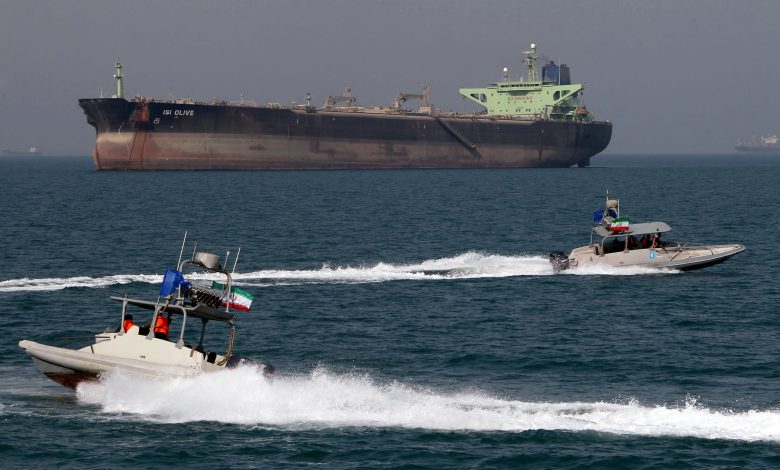
As Iranian threats in the Strait of Hormuz escalate, an analysis warns against allowing this threat to persist so that it does not become a model replicated in other parts of the world, turning strategic waterways into tools of geopolitical conflict.
According to an analysis published by Foreign Affairs, Asia represents the ideal setting for a repeat of the Hormuz scenario, as the region’s maritime straits carry the largest share of global trade, energy supplies, and technology and semiconductor supply chains.
-
Negotiating with Iran is a waste of time: American calls to open the Strait of Hormuz by force
-
Syrian ports as a potential alternative to the Strait of Hormuz despite infrastructure challenges
A recurring model
The Strait of Hormuz has long been used in conflicts. In 1951, after Tehran nationalized the oil industry, Britain used maritime pressure to prevent Iran from exporting oil.
During the “Tanker War” in 1984, Iran planted mines in the Strait of Hormuz and harassed shipping in response to Iraqi attacks. Nevertheless, the strait remained operational throughout both conflicts.
What the current Hormuz crisis clearly reveals, however, is that closing strategic straits now carries far broader consequences.
Relatively low-cost technologies — including coastal surveillance systems, anti-ship coastal missiles, drones, unmanned surface vessels, and mines — now enable weaker states to disrupt navigation on a large scale.
-
Behind the scenes of the Charles de Gaulle mission: a rapid European move to secure Hormuz
-
France ties lifting sanctions on Iran to the opening of the Strait of Hormuz
Asia: the ideal candidate
For Asia, the risks are much greater, as Asian waterways lie at the heart of global trade, energy routes, and semiconductor supply chains.
By demonstrating that even a weaker power can weaponize a chokepoint — and by showing that stronger states are willing both to impose and absorb large-scale costs — the Hormuz crisis could encourage similar tactics throughout the Indo-Pacific region.
This could take the form of U.S. restrictions on passage through the Strait of Malacca, a Chinese blockade of the Taiwan Strait, or a joint U.S.-Philippine restriction on transit through the Luzon Strait. Pressure could also extend to secondary maritime routes.
Recent developments in the Indonesian archipelago, which have largely gone unnoticed, suggest that Washington and Beijing increasingly anticipate disruptions and are competing for influence over Asia’s secondary maritime corridors.
-
The United States uses artificial intelligence to detect Iranian mines in the Strait of Hormuz
-
Washington seeks to form an international coalition to secure the Strait of Hormuz
Dangerous straits
According to the magazine, nowhere are the consequences of weaponizing straits likely to be greater than in Asia. The Strait of Malacca, only 1.5 nautical miles wide at its narrowest point, carries up to 40% of global trade and 80% of China’s energy imports.
Bypassing the strait would require rerouting through secondary Indonesian passages or around Australia, adding major costs, delays, and risks.
In 2003, former Chinese President Hu Jintao described China’s dependence on this route as the “Malacca dilemma.”
-
Iran war threatens submarine cables in the Strait of Hormuz
-
Iranian proposal to reopen the Strait of Hormuz and end the war in exchange for delaying the nuclear issue
Recent developments in Hormuz intensify these concerns. Beijing is expected to accelerate efforts to reduce its reliance on the Strait of Malacca by expanding overland pipelines through Myanmar, Russia, and Central Asia, increasing access to Indian Ocean ports, and developing Arctic shipping routes.
Disrupting this vital artery would have consequences far beyond China. The Strait of Malacca is the primary maritime route connecting East Asia’s manufacturing hubs to European and Middle Eastern markets; closing it would sever critical global supply chains, trigger macroeconomic shocks, and damage the U.S. economy.
The Hormuz crisis also highlights how straits can become tools of financial leverage. Although countries bordering the Strait of Malacca have no interest in shutting it down, imposing transit fees — perhaps under the guise of environmental charges — is another matter entirely.
-
Hormuz and the nuclear issue: Iranian blackmail threatens the fragile truce
-
Tehran closes the Strait of Hormuz again in a tug-of-war with Washington.
Singapore currently captures most of the commercial value generated by transit through its port and transshipment services. However, a nationalist or populist government in Indonesia or Malaysia could seek to profit directly from commercial shipping.
Indonesia’s finance minister recently hinted at the possibility of imposing transit fees before the foreign minister quickly walked back the remarks.
Operational advantage
As with the Straits of Hormuz and Malacca, any disruption in the Taiwan Strait — through which a significant share of global maritime trade passes — would threaten international commerce. Yet a blockade of the Taiwan Strait carries a distinct danger.
-
Hormuz Alliance: Nearly 40 countries meet to discuss restoring freedom of navigation
-
An international initiative led by France and the United Kingdom to reopen the Strait of Hormuz
Taiwan remains the world’s leading producer of advanced semiconductors, and any blockade would restrict its imports of energy and raw materials while halting exports of critical chips essential to global supply chains.
Unlike China, which is building alternative routes to reduce dependence on the Strait of Malacca, Taiwan lacks a geographic alternative: its main ports are located on the western coast facing the strait, while the island’s mountainous terrain complicates east-west transportation.
In the event of a blockade, technology industries and defense production worldwide would be paralyzed. According to Bloomberg, as much as 5.3% of global GDP could be wiped out.
-
Legal challenges facing Iran in imposing transit fees in the Strait of Hormuz
-
Maritime threat level in the Strait of Hormuz at its highest
These tactical realities are already shaping military deployments in Asia. Developments in Hormuz reinforce the validity of China’s anti-access/area denial strategy, which seeks to restrict and complicate adversaries’ operations in waters surrounding China through layered missile, naval, aerial, and surveillance systems. They also reinforce Taiwan’s “hedgehog” defense strategy based on mobile and distributed systems intended to deter invasion.
Although the Taiwan Strait is far wider than Hormuz — around 70 nautical miles at its narrowest point — the core principle remains the same: straits are strategic assets that must not be allowed to become effective weapons.
Further south, joint U.S.-Philippine military exercises have focused on developing local denial capabilities in the Luzon Strait, which connects the South China Sea to the Pacific Ocean and whose deep waters allow submarines to pass undetected.
-
Advanced techniques and striking power: how the United States besieges Iran and clears the Strait of Hormuz
-
U.S. threats push oil tankers to avoid the Strait of Hormuz
The strait is a critical gateway for commercial shipping and naval movements between East Asia and the Pacific, and it would become a key alternative route if navigation through the Taiwan Strait were disrupted. Beijing recently responded with live-fire exercises, underscoring the strategic importance of the strait.
Because the Taiwan and Luzon Straits are both wider than 24 nautical miles, they contain continuous corridors within exclusive economic zones where high seas freedoms apply.
Any blockade of these corridors or unjustified interference with transit through them would constitute a clear violation of international law.
-
Report: Iran cannot open the Strait of Hormuz, even if it wanted to
-
Trump proposes U.S. support to ensure smooth navigation in the Strait of Hormuz
Nevertheless, military activities in and around these straits suggest that the strategic value of controlling them may outweigh legal constraints during times of crisis.
Movements in the straits
According to Foreign Affairs, any disruption in heavily trafficked straits increases pressure on secondary routes, creating new vulnerabilities.
If the Strait of Malacca were restricted, shipping traffic would need to be redirected through the Indonesian archipelago, including the Sunda Strait between Sumatra and Java and the Lombok Strait between Bali and Lombok.
-
U.S. intelligence expects a long-term Iranian grip over the Strait of Hormuz
-
Postponement of the vote on a UN draft resolution to secure the Strait of Hormuz
Beijing and Washington increasingly appear to anticipate disruptions at major chokepoints and are quietly maneuvering to gain strategic advantages in these waters.
In early April, Jakarta discovered an unmanned underwater vehicle suspected of being Chinese in origin in the Lombok Strait, indicating growing Chinese interest in the route.
Transit through archipelagic waters is governed by the “archipelagic sea lanes passage” regime under the Law of the Sea Convention, which guarantees continuous and unobstructed navigation and overflight through designated corridors or routes “normally used for international navigation.”
-
Trump ready to stop the war on Iran without reopening the Strait of Hormuz
-
Behind the scenes of Rubio’s meeting with his G7 counterparts: extending the horizon of the war with Iran and consensus over the Strait of Hormuz
Outside these corridors, only ships — not aircraft — enjoy the right of “innocent passage,” which may be suspended when deemed “necessary” for security purposes. Submarines are also required to navigate on the surface.
Concentrating traffic within predictable corridors makes ships and aircraft easier to track and target.
Aware of this vulnerability, Washington has sought a comprehensive overflight agreement with Indonesia to guarantee access to alternative routes. However, the arrangement remains highly sensitive.
In mid-April, only days before the operational agreement was due to be signed, an Indian media outlet leaked news of the deal.
-
Toward an alliance to secure Hormuz: meeting of the chiefs of staff of 35 countries
-
Bahrain pushes for an international resolution authorizing the use of force in the Strait of Hormuz
Indonesia’s foreign ministry then warned the defense ministry that the agreement could create “the impression that Indonesia is involved in an alliance” and might draw the country into “a regional conflict situation,” including disputes in the South China Sea.
The fate of the agreement remains uncertain. Meanwhile, Beijing warned that the arrangement could violate the charter of the Association of Southeast Asian Nations.
What is the solution to prevent a repeat of the crisis?
To avoid a repeat of the Hormuz crisis, the Foreign Affairs analysis argues that countries dependent on freedom of transit cannot simply assume that the rules governing strategic waterways will continue automatically in the face of aggression.
-
Iran proposes a new framework to regulate navigation in the Strait of Hormuz after the war
-
Iraq negotiates with Iran to allow its tankers to pass through the Strait of Hormuz
It stressed that the United States, along with its allies and partners, must take urgent steps to reduce the vulnerability of Asian chokepoints.
Washington and its allies and partners should strengthen maritime awareness and response capabilities in Taiwan and other key maritime states, including Indonesia, Malaysia, and Singapore — all of which host U.S. logistical facilities — in order to detect and deter activities aimed at disrupting strategic waterways, such as mine-laying operations.
They should also coordinate naval operations designed to maintain transit through disputed straits during crises, sending a clear message that attempts to restrict passage would trigger a collective response.
-
Without bullets or soldiers: a French solution to the Hormuz crisis
-
Trump mobilizes for a Hormuz alliance and broader international involvement in the war against Iran
To address the concentration of maritime traffic, especially through the Straits of Malacca, Taiwan, and Luzon, Washington should work with allies and partners to develop secondary deep-water ports in the Philippines, Vietnam, and along India’s eastern coast.
If the Strait of Malacca were disrupted, these ports would serve as critical resupply hubs for ships rerouted through the Indonesian archipelago.
The United States should also intensify efforts to diversify advanced semiconductor production across allied countries such as Germany and Japan in order to reduce global dependence on Taiwan-centered production.
To strengthen deterrence, Washington and its allies could commit in advance to imposing economic sanctions in response to any unlawful disruption of transit through Asia’s major waterways.
-
War-weary Iran: why did it choose the Strait of Hormuz as the arena for retaliation?
-
Tehran signals the economic nuclear option in the Strait of Hormuz
Many of these measures are already being implemented, but events in the Strait of Hormuz underscore their urgency. Carrying them out, however, requires diplomatic capital — a scarce resource as Washington’s relations with allies and partners deteriorate, undermining the alliances necessary to preserve freedom of access.
Beyond these collective measures, Washington should strengthen its legal and diplomatic standing by finally joining the Law of the Sea Convention, a recommendation repeatedly ignored despite its importance.
The United States should also align its rhetoric and practices with international law. Together, these steps would strengthen U.S. credibility in confronting actions that undermine maritime rights and signal renewed commitment to the rules governing strategic waterways.
-
Dispute between the army and the Revolutionary Guard over closing the Strait of Hormuz
-
Iranian Revolutionary Guard drills in the Strait of Hormuz: readiness assessment and confrontation scenarios
The analysis concludes by warning that without sustained defense of transit rights and freedom of the seas — along with strong deterrence against those who undermine them — the same dynamics could spread across the Indo-Pacific region.
Given the enormous scale of global trade dependent on uninterrupted passage through regional chokepoints, the weaponization of Asian waterways would produce catastrophic consequences. For that reason, Iran must not be allowed to continue threatening the Strait of Hormuz.
-
What is behind Iran’s policy of intercepting oil tankers in the Strait of Hormuz and the Arabian Gulf?
-
The Iranian Revolutionary Guard continues to attack commercial ships in the Strait of Hormuz